PRS Guitars - love in millimeters or one day at the Paul Reed Smith factory (Part 2)
Automatic translation. Russian original
PRS Guitars - love in millimeters or one day at the Paul Reed Smith factory (Part 2)
In this article, I will try to share my impressions and some facts about the production of PRS guitars - directly from the moment there is only wood until the moment of receiving the finished product - a new PRS guitar.
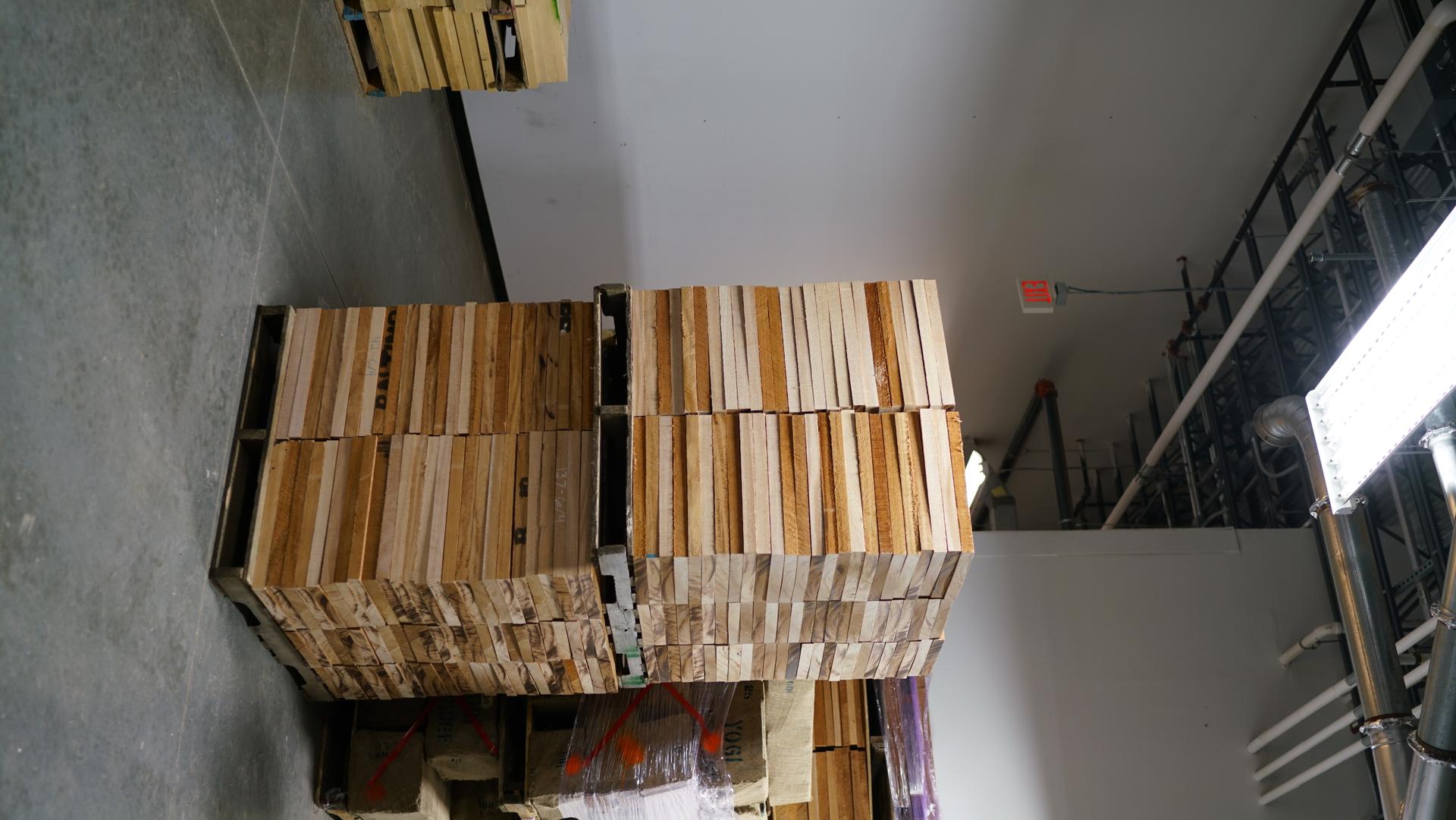
As I already noted in the previous article , all wood arrives at the PRS factory from all corners of the globe. These are special wood storage areas scattered across the planet. Expensive and rare wood species like Black Limba, Koa, Hormigo, Brazilian Rosewood, Sapele, Tulip, Blackwood, Snakewood, ... there are so many of them, it is probably impossible to list them all. They are already choice wood at these storage sites themselves, so PRS, after receiving them, simply ensures their preservation until the moment this wood is ordered for a guitar. Of course, most often this is PRS Private Stock, but sometimes some species are available for PRS Wood Library editions.
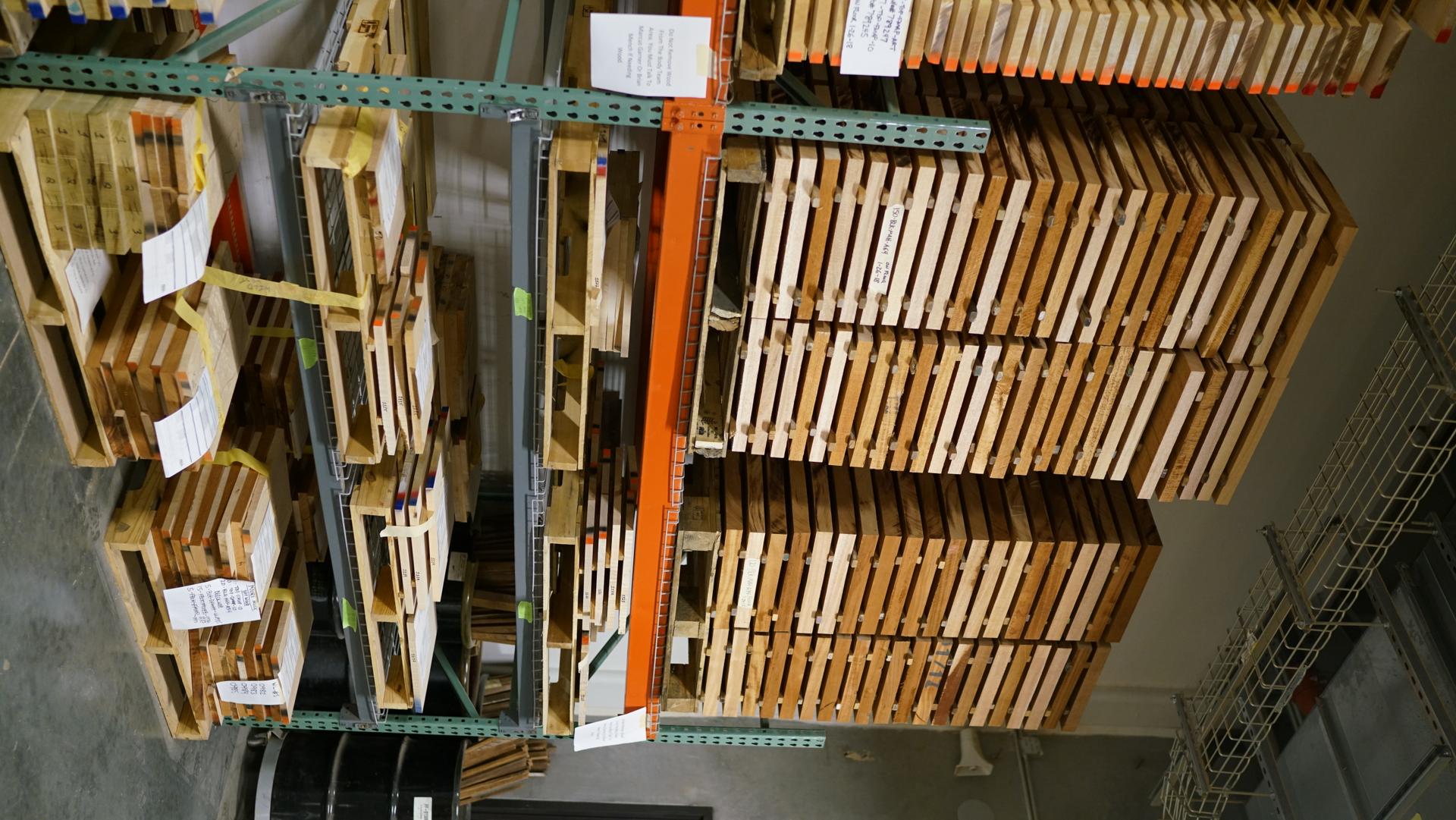
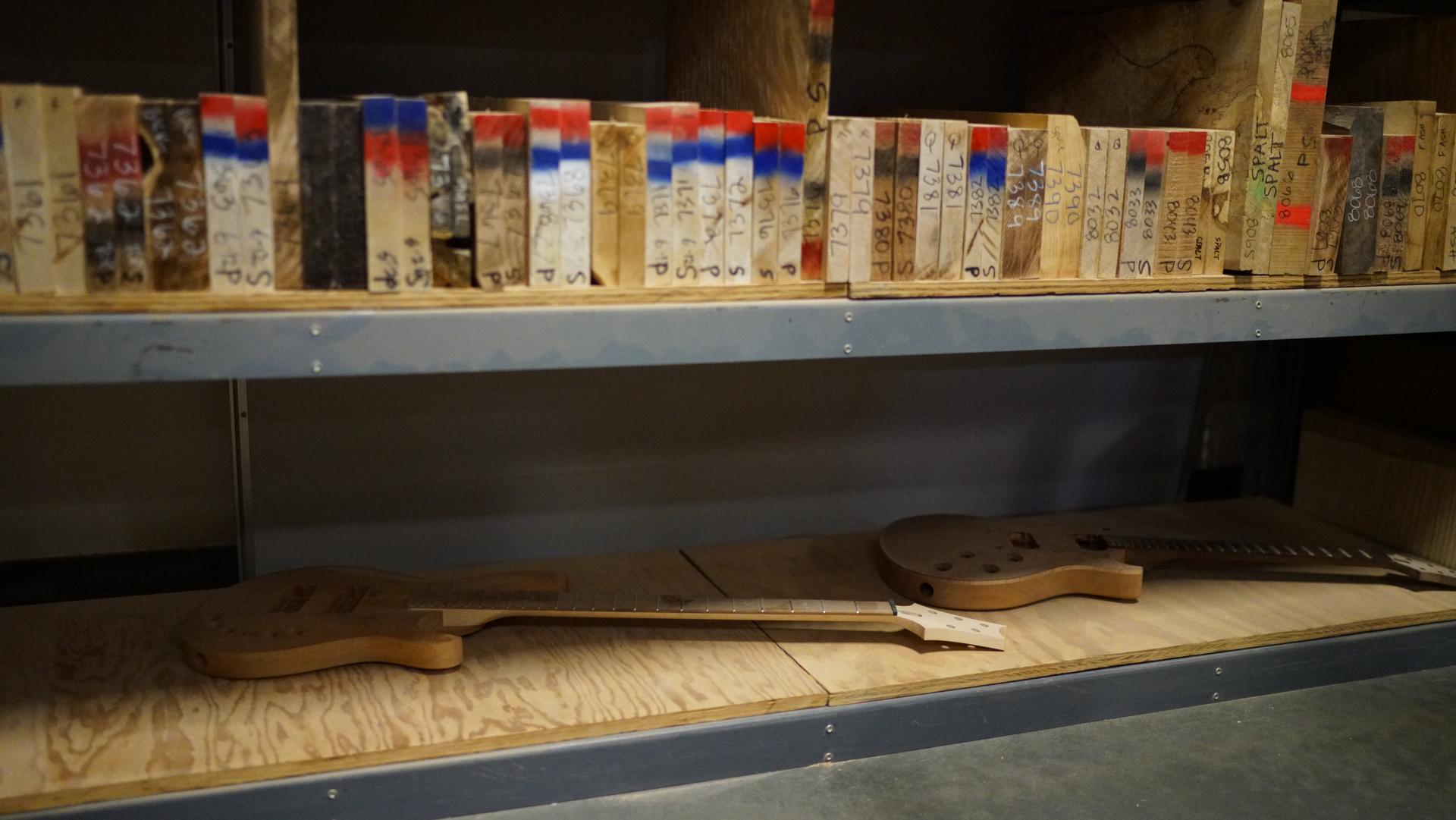
Rare wood is stored in the "PRS Vault" room, which is like a cabinet with shelves where the temperature and humidity are like in the best houses in Paris. The rest of the wood is located downstairs at the factory or in special closed chambers (mainly mahogany, which there is the most of). Maple tops, both regular and 10-tops, as well as Artist Grade and Artist Quilt tops, are kept on a separate shelf in the Wood Library Room. The tops are divided into West Coast and East Coast; they are very similar to each other, and their sound is identical. However, if you are looking for an extraordinary top that is not just straight lines, but has something unique - it will most likely be West Coast. East Coast often has a cross-pattern like a grid or a straight, even one; here, everyone chooses according to their own tastes. Sometimes it is impossible to distinguish between East Coast and West Coast by the pattern.
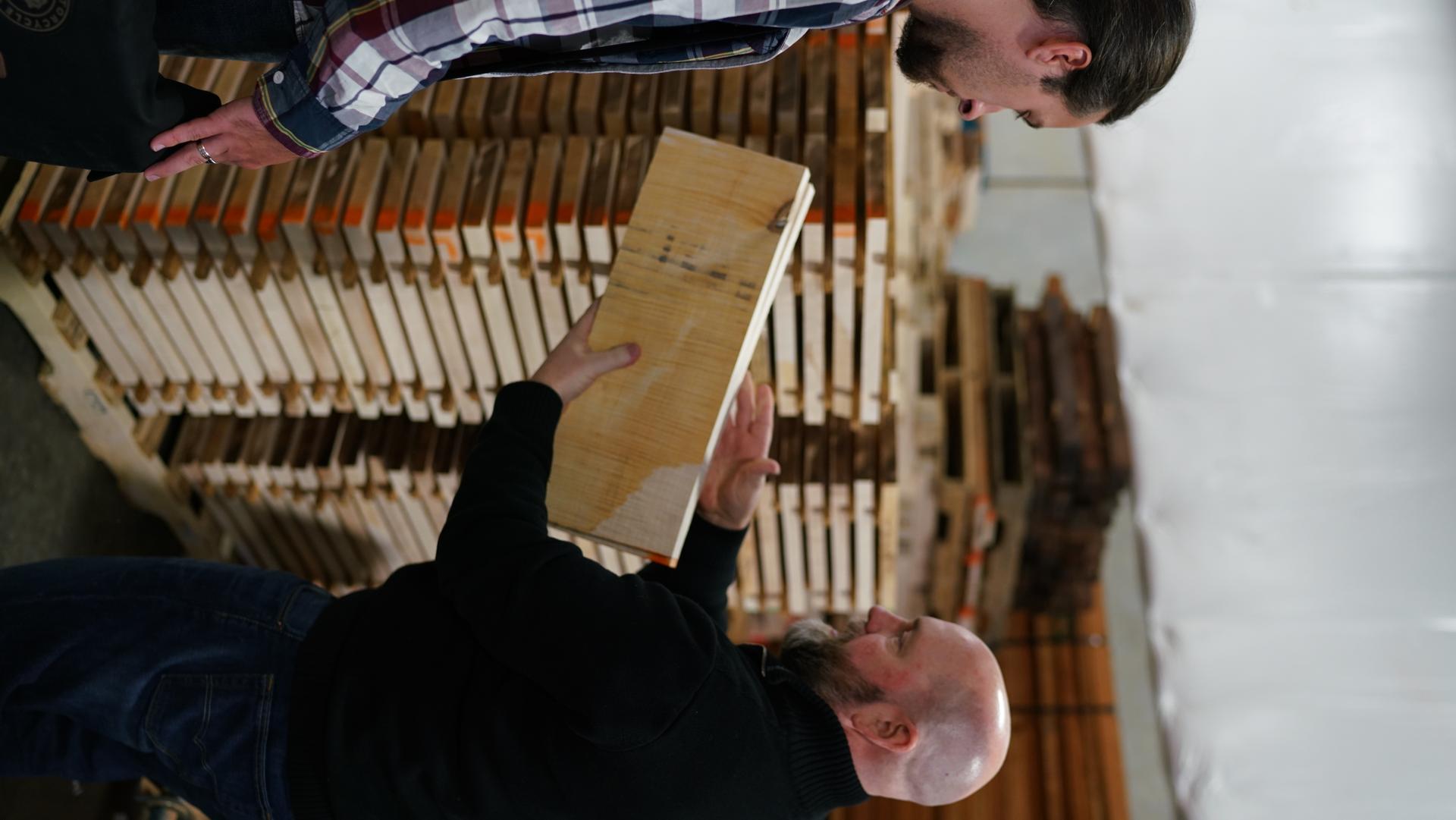
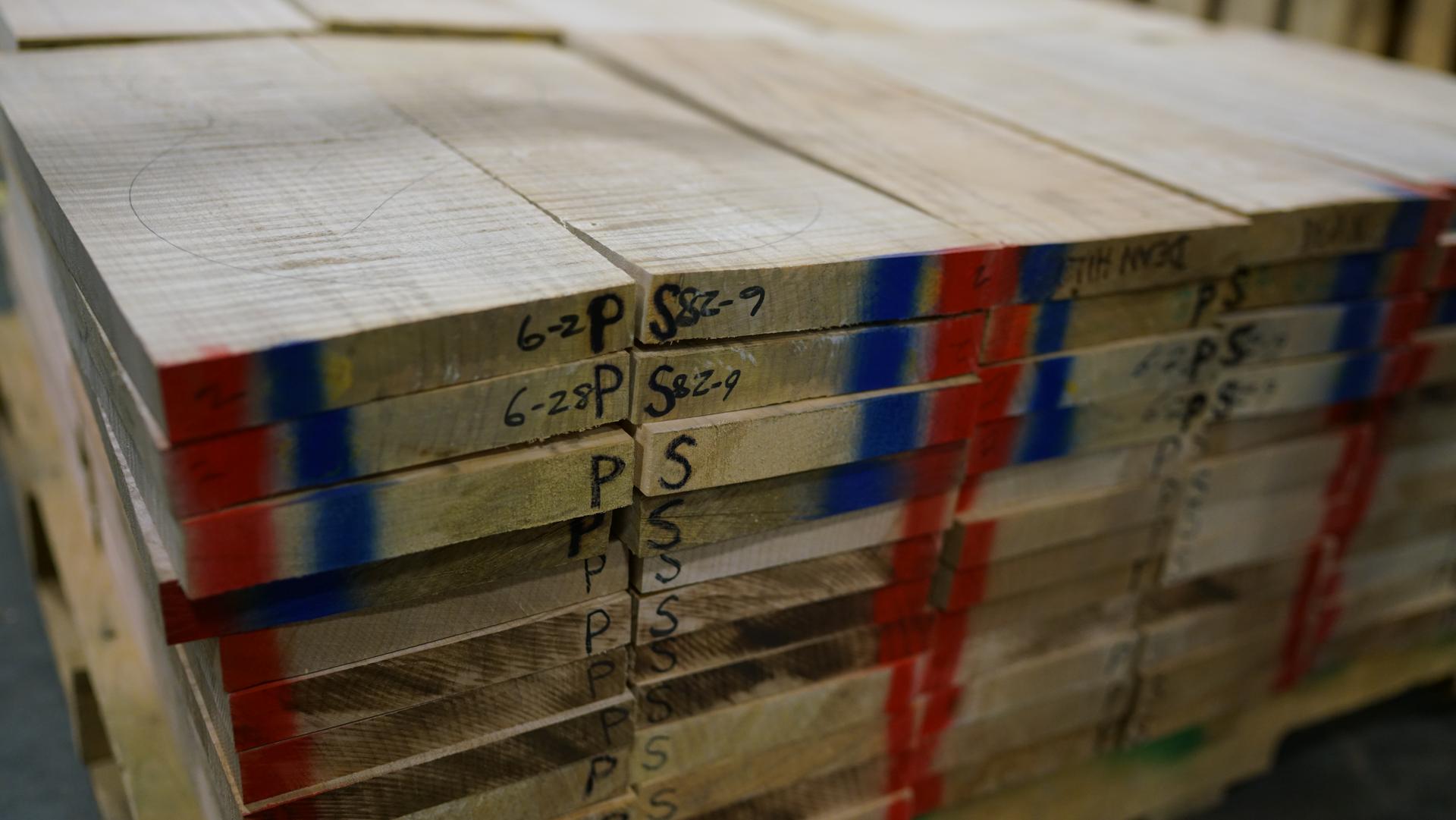
The most frequent question I am asked is - What is the difference between a 10-top and a non-10-top and Artist? I answer - the difference is in the beauty of the top and its price))) The division into top classes happens when the wood arrives at the factory - non-10 top you don't need to be a genius - they do not have a perfectly even pattern of the top, most likely have "spots", can be wavy in one place and straight in another - such tops cost the least on Core Models. 10 Top - this is when there are no spots on the top, it is more or less even. Artist Grade Top is possible only on Artist Package and Wood Library orders - these are the most beautiful, perfectly even tops, or if they are not even, they are extraordinary with a unique pattern. And of course, for Private Stock, you can order any kind of top. That is how I ordered a PS for myself in the shape of a waterfall, or maybe a sun, depending on what you prefer to call it.... and they found it! The selection of the top at the factory is a rather subjective moment, so sometimes a 10 TOP does not look like a 10-top, and a non-10 top can look even cooler than a 10-top. Hand on heart, I will say honestly that in the first place, this is still marketing and beauty. When there was no Artist Package series, PRS used to select gorgeous 10 TOPs, just like the AP now and 10-tops are becoming rarer to be gorgeous. One master will consider a top a 10-top, and another will call it Artist Grade... in general, one way or another, these divisions happen immediately upon the arrival of the wood at the factory, and the corresponding markings are placed on the wood - East Coast (red and blue stripes) & West Coast (Red stripe).
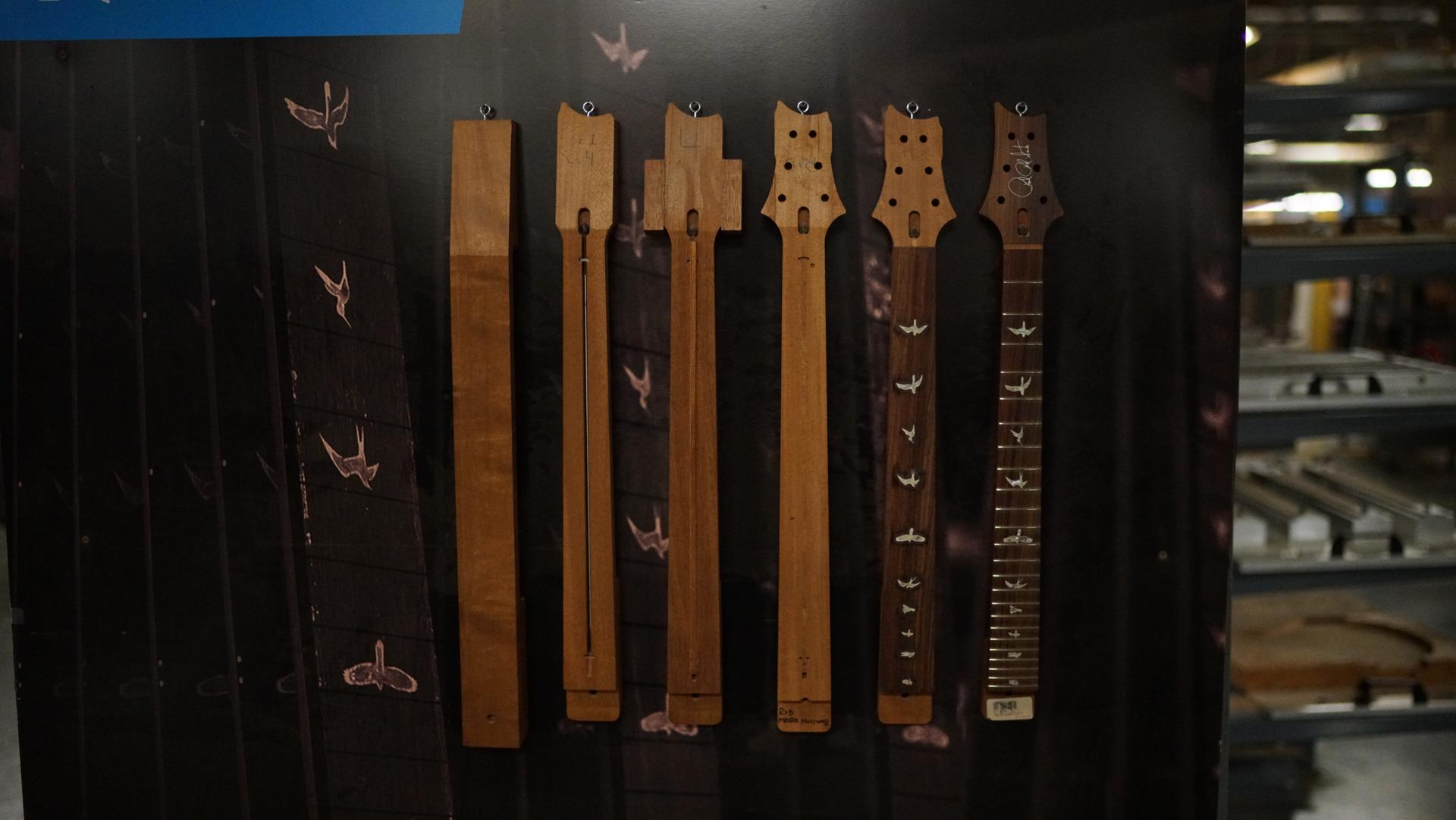
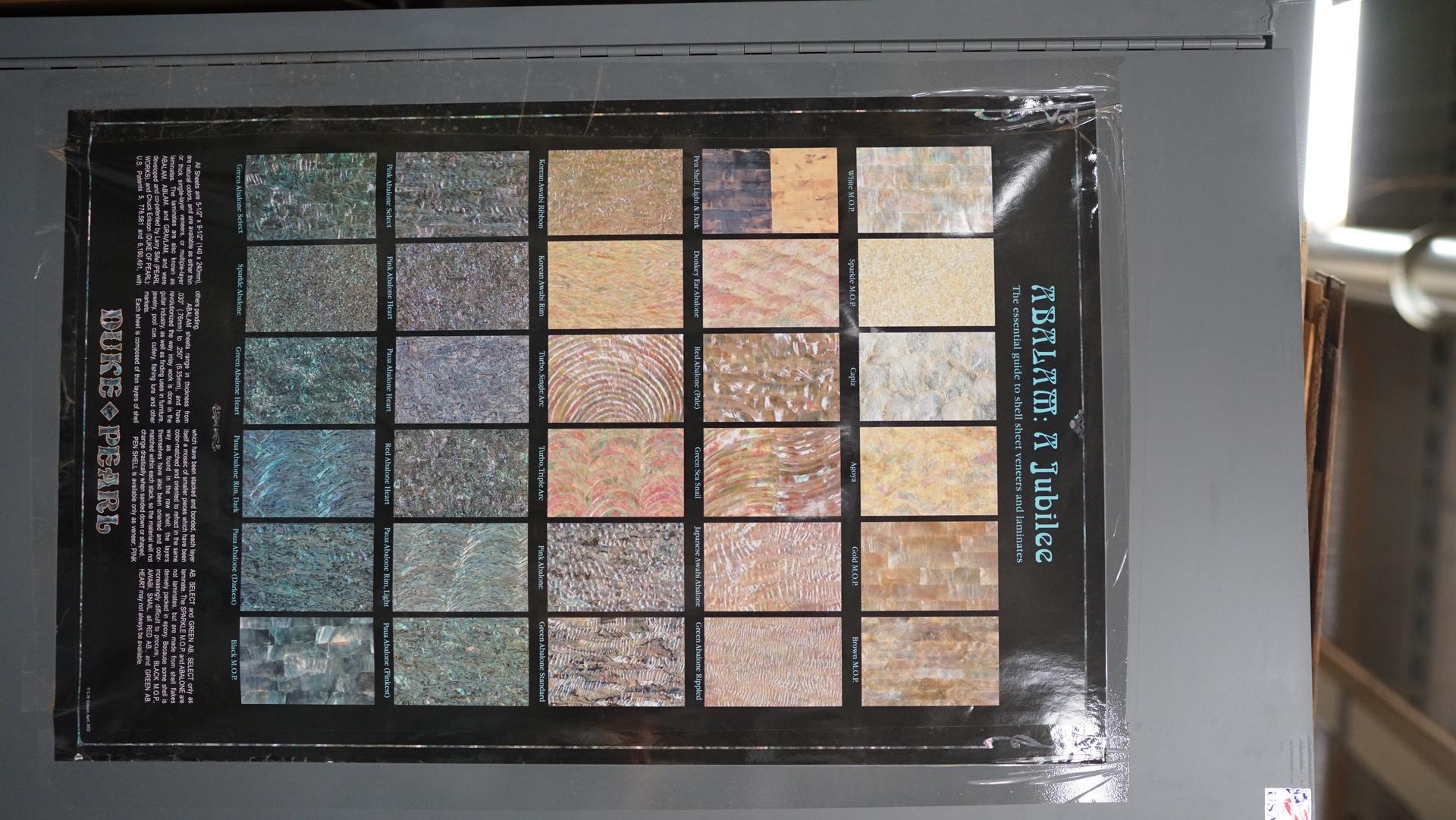
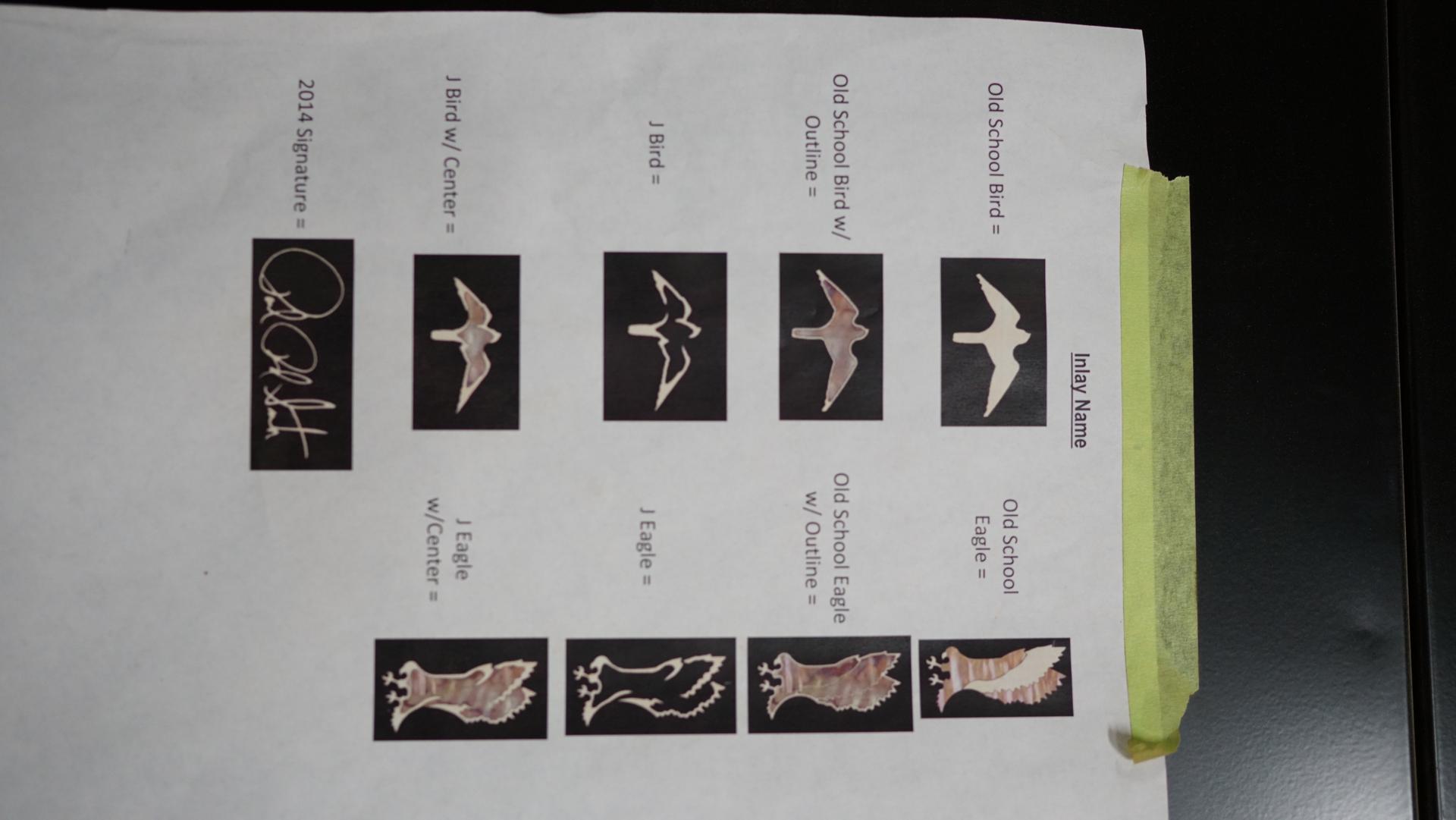
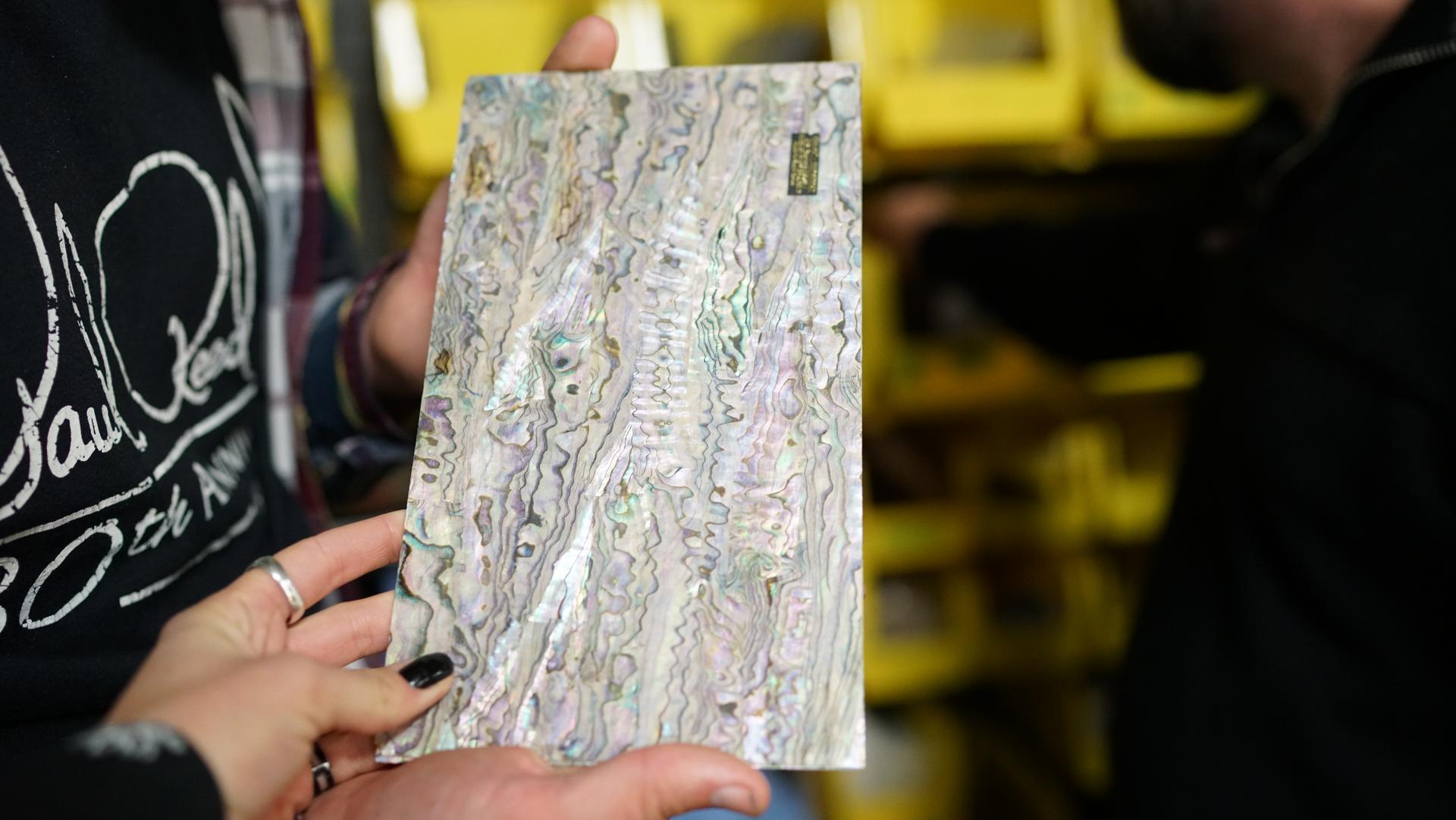
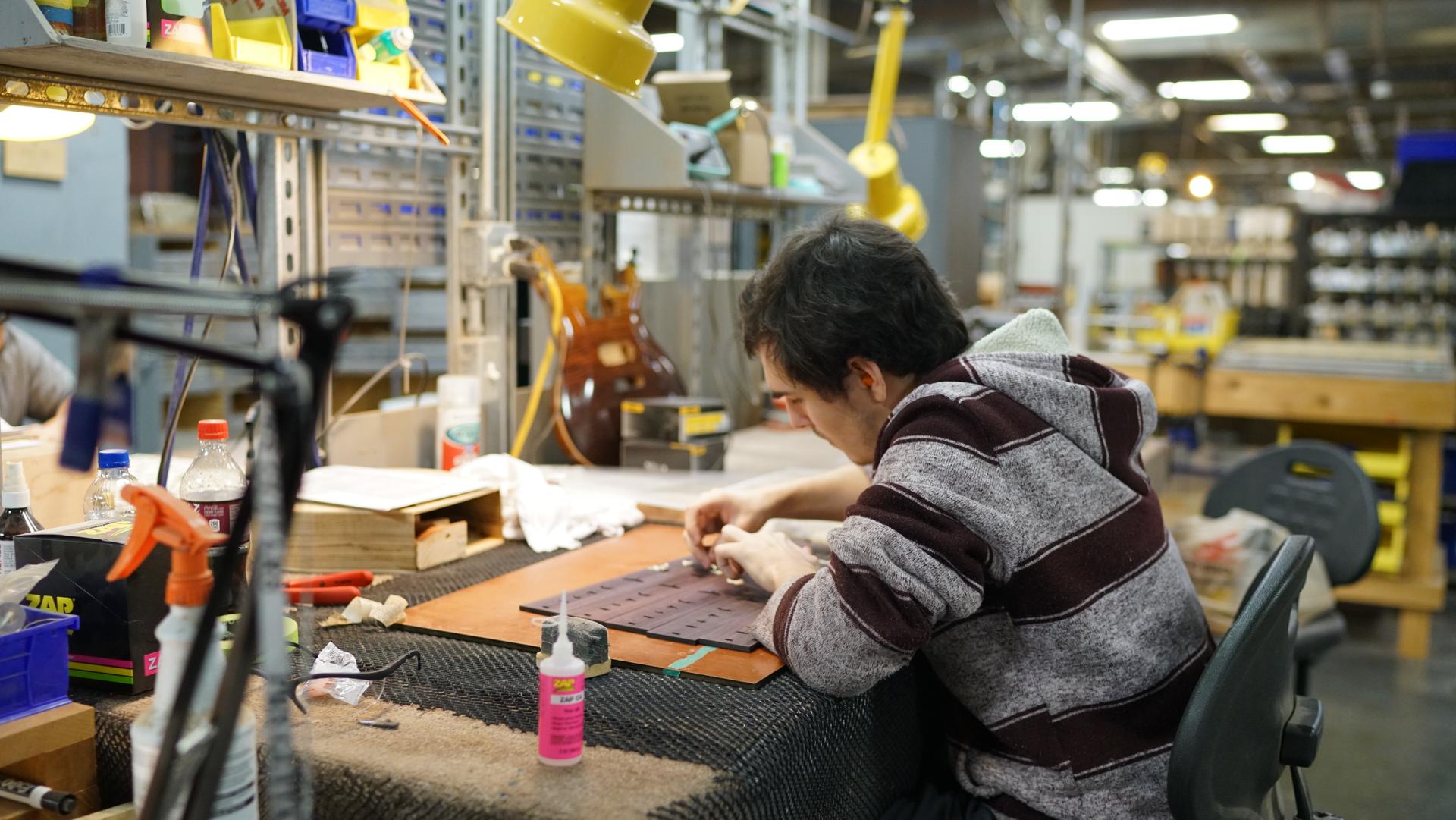
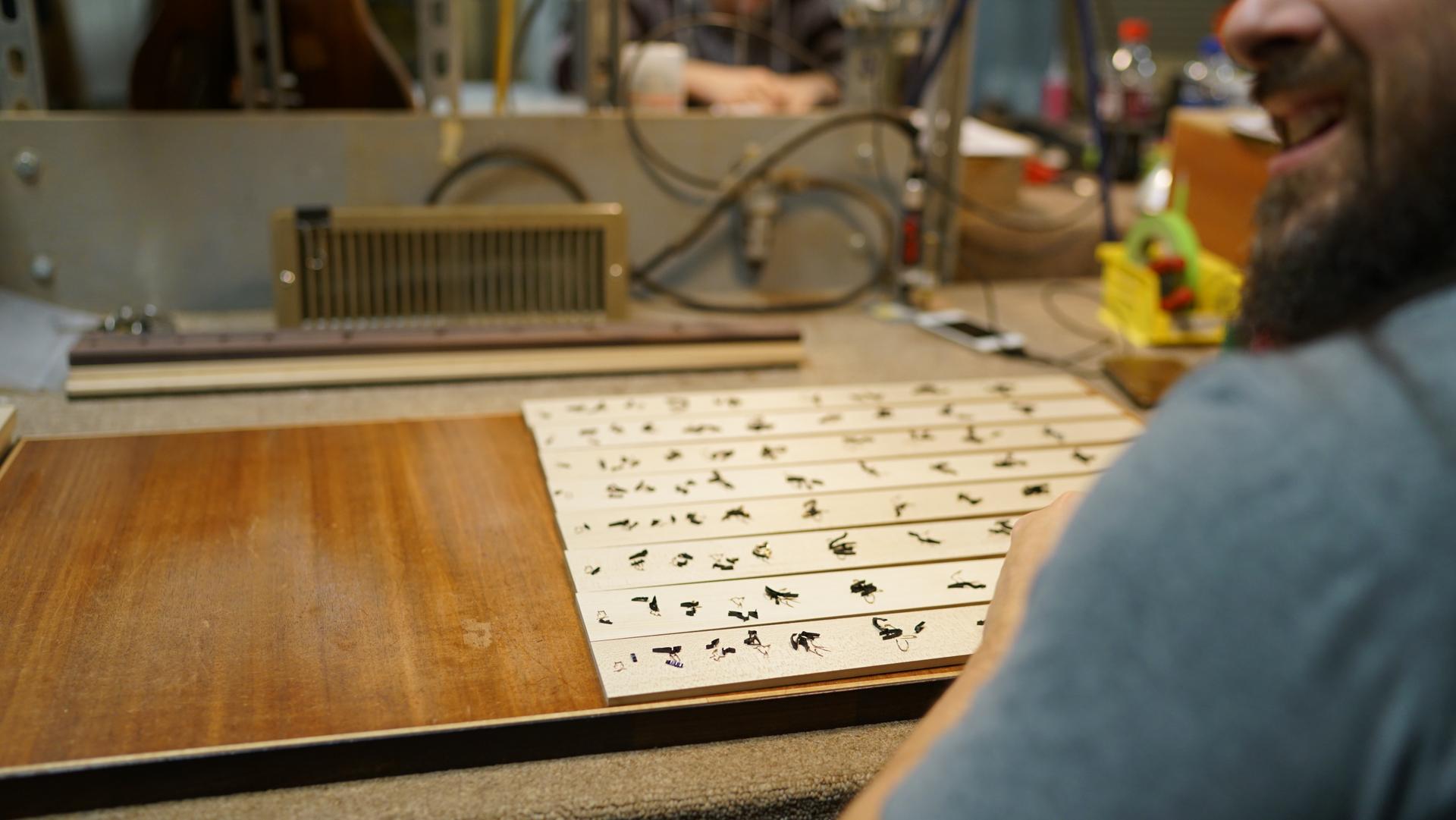
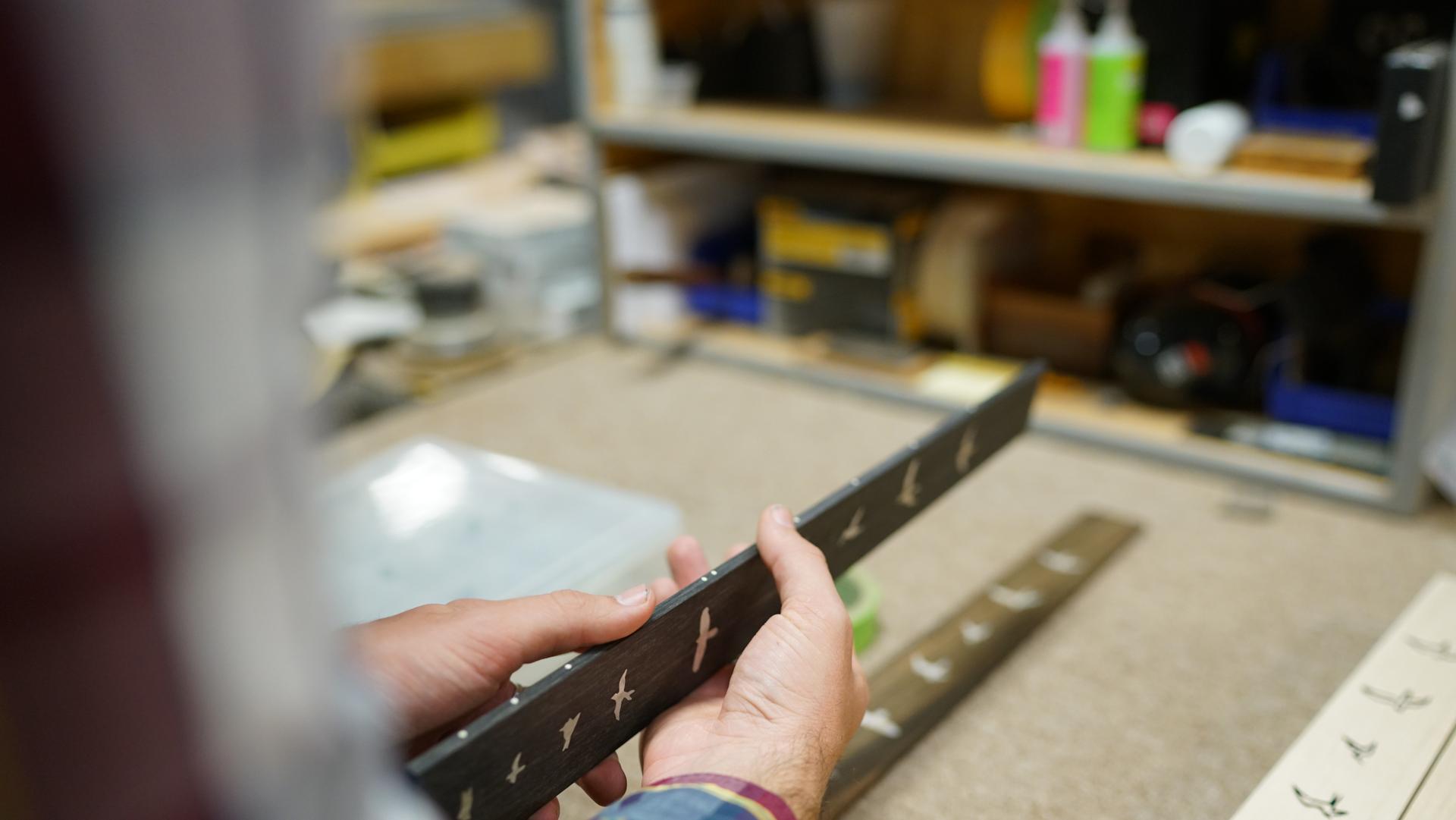
Work on the guitar begins with the neck. As Tim explained to me, this is because the neck takes longer to make than the body. A neck can take more than a month or even two, while a body usually takes 2-3 weeks. Let's take two variants of the neck - those made for the S2 series and CE24 and for all Core Models. The necks of all S2 and CE24 models are made of 3 pieces of maple or mahogany, depending on the model (heel, neck, headstock) + "ears", the part where the tuning pegs are. The necks of all Core Models are made of one piece of wood + "ears". The neck is made on precision CNC machines, but the sanding of all necks is done by hand. Only recently did PRS purchase a sanding machine, and even that is half manual. This surprised me, and it is a fact, so guitars from PRS are still far from being made entirely by soulless machines; 50% of the work is done by human hands. Once glued, the neck base already has a channel for the truss rod. The truss rod is pressed from above with a special plank that is larger than the size of the channel, including the truss rod, because the plank settles over time. This plank is pressed in, left for a long time, and only then is the fretboard glued on top. The fretboard has holes milled for the birds, and a separate person assembles this mosaic on each neck - we saw it personally; a person sits and looks for the right part of the bird and inserts it into the corresponding hole in the fretboard. Very meticulous work. There is a vast variety of materials for the birds and the shapes of the birds themselves. They are all basically represented on the PRS website in the Private Stock Birds section.
This is what, in short, the life cycle of PRS neck production looks like
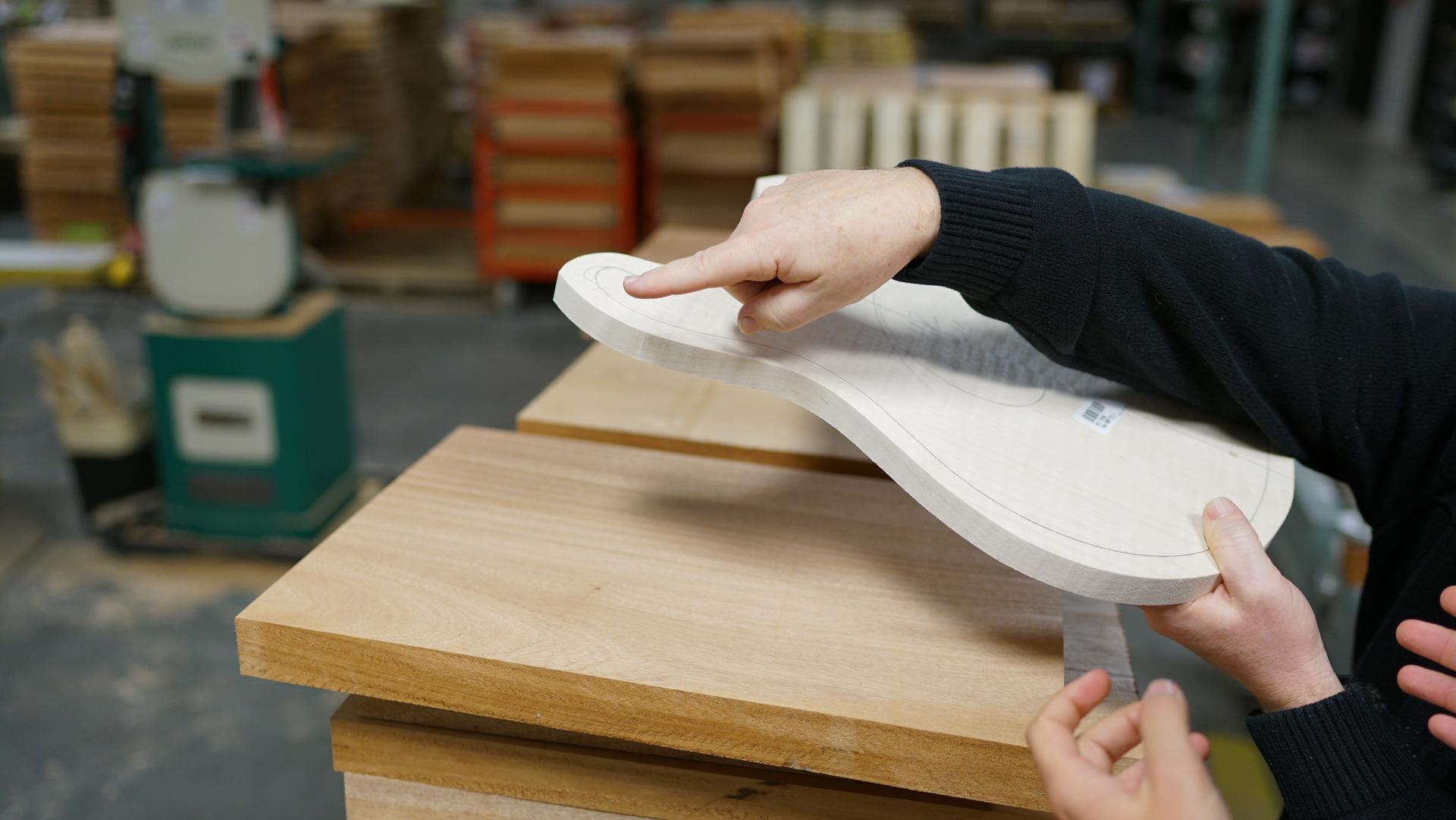
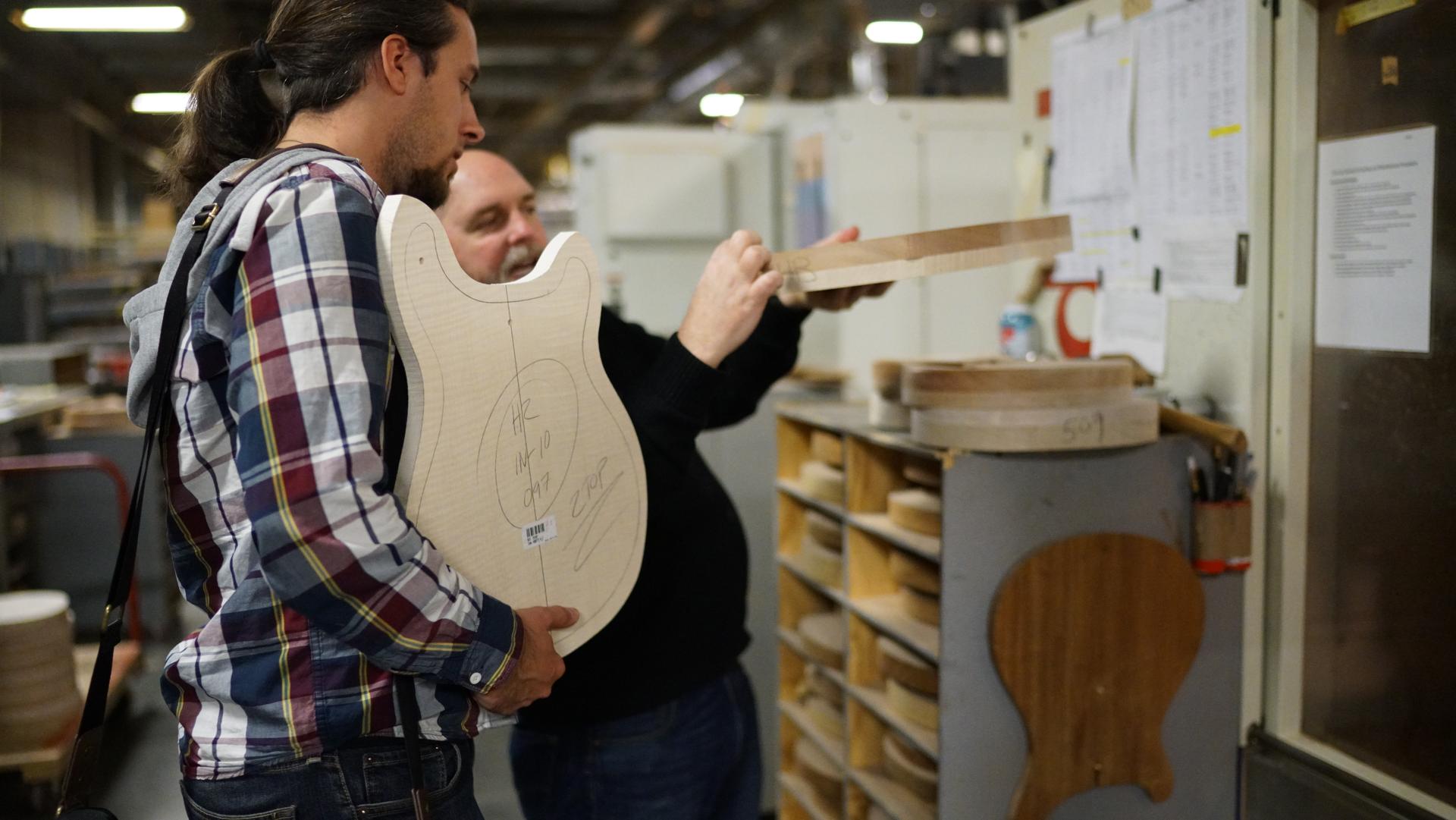
When the neck is ready or almost ready, work begins on the guitar body. First, the guitar profile is cut from the maple blank according to the shape of the required model.
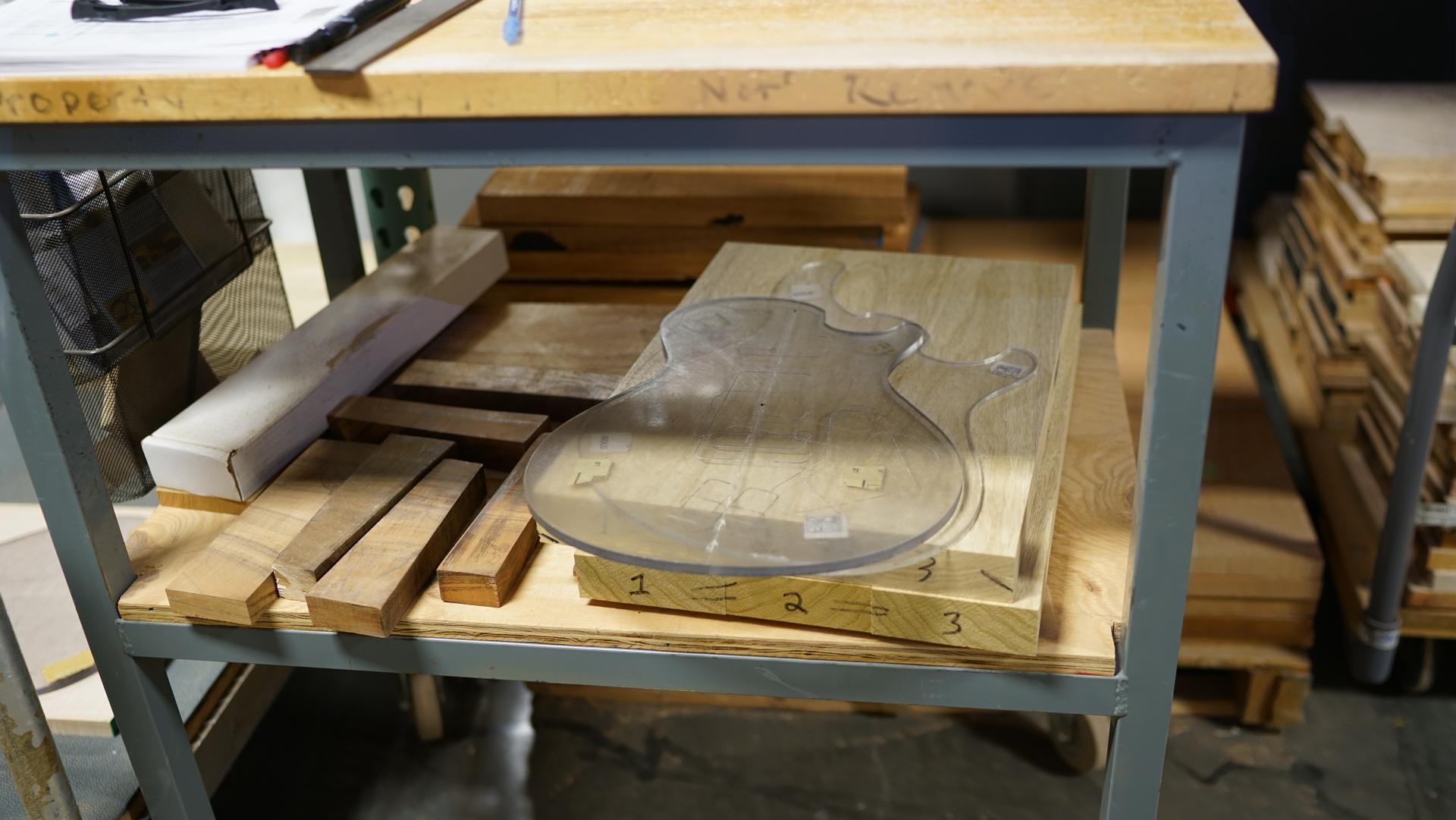
Next, the maple is glued to a square piece of mahogany, and it is all placed under a press.
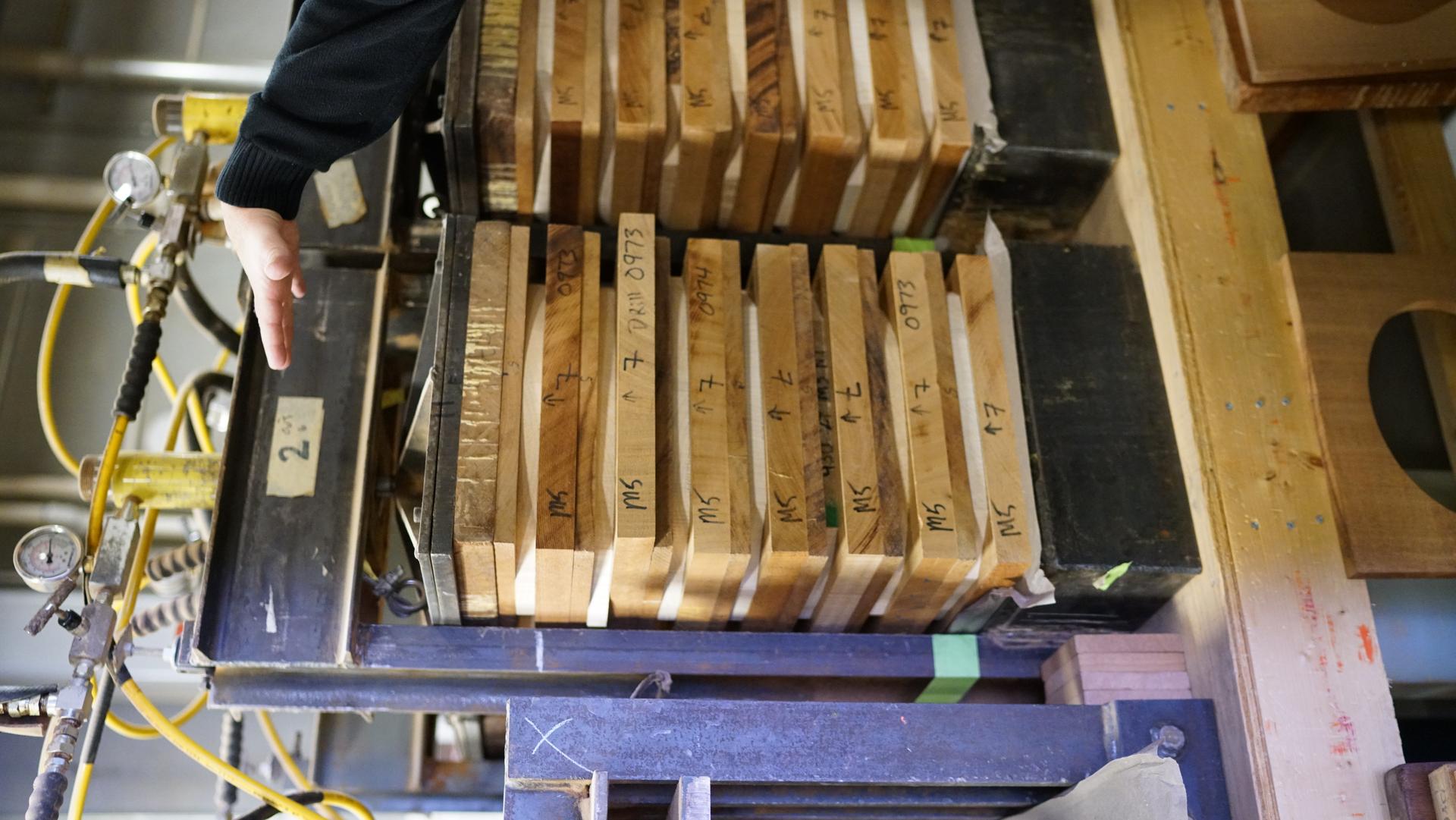
Then, after a few days, this "sandwich" goes to the machine. Further work is done on a CNC machine - the body is placed on the machine's work table, and thanks to the program, the spindle of the milling machine does its work and mills the top, cutouts for all potentiometers, holes for pickups, the bridge, etc. Then the body is turned over, and the back for the electronics under the backplate is milled.
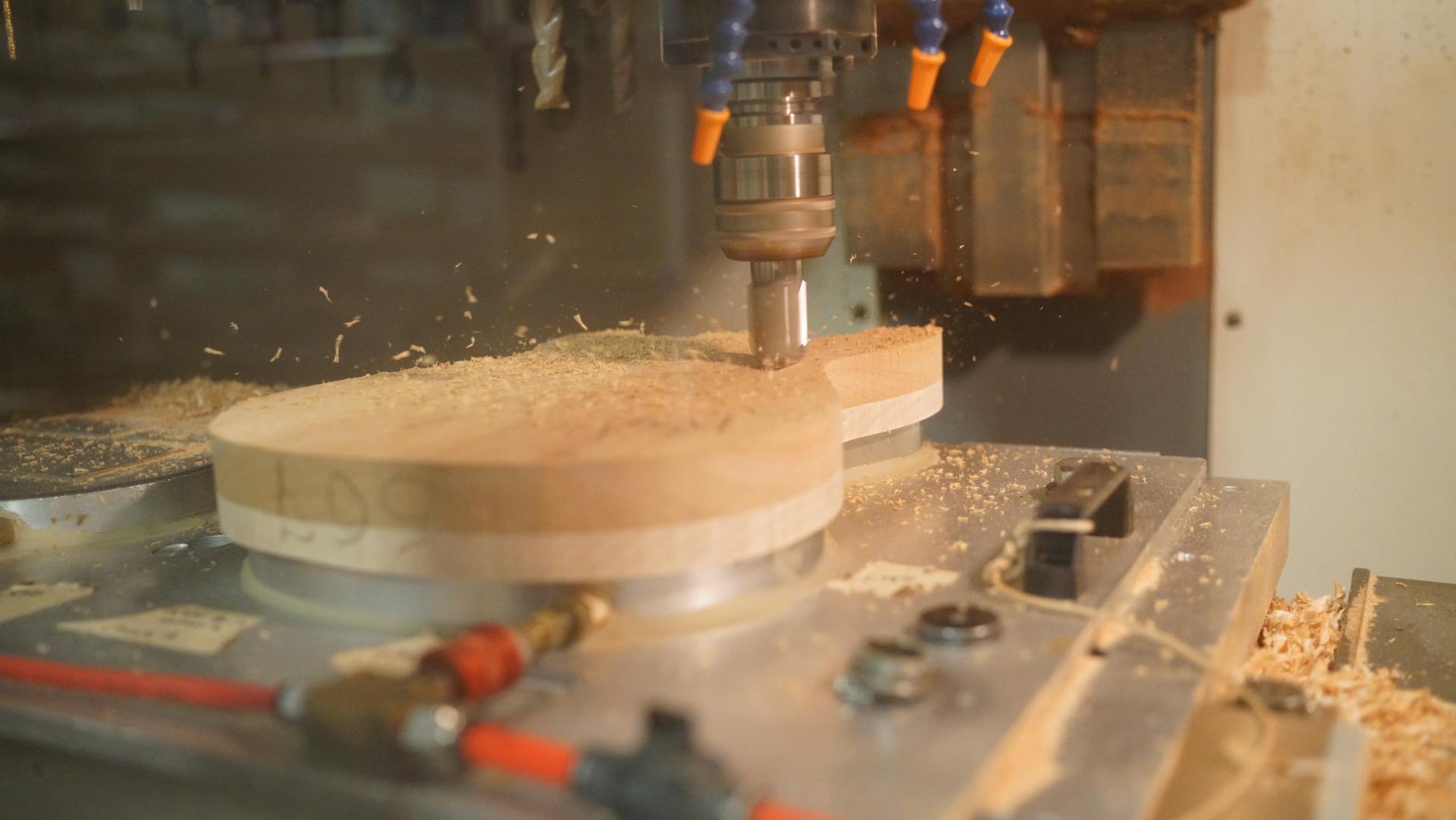
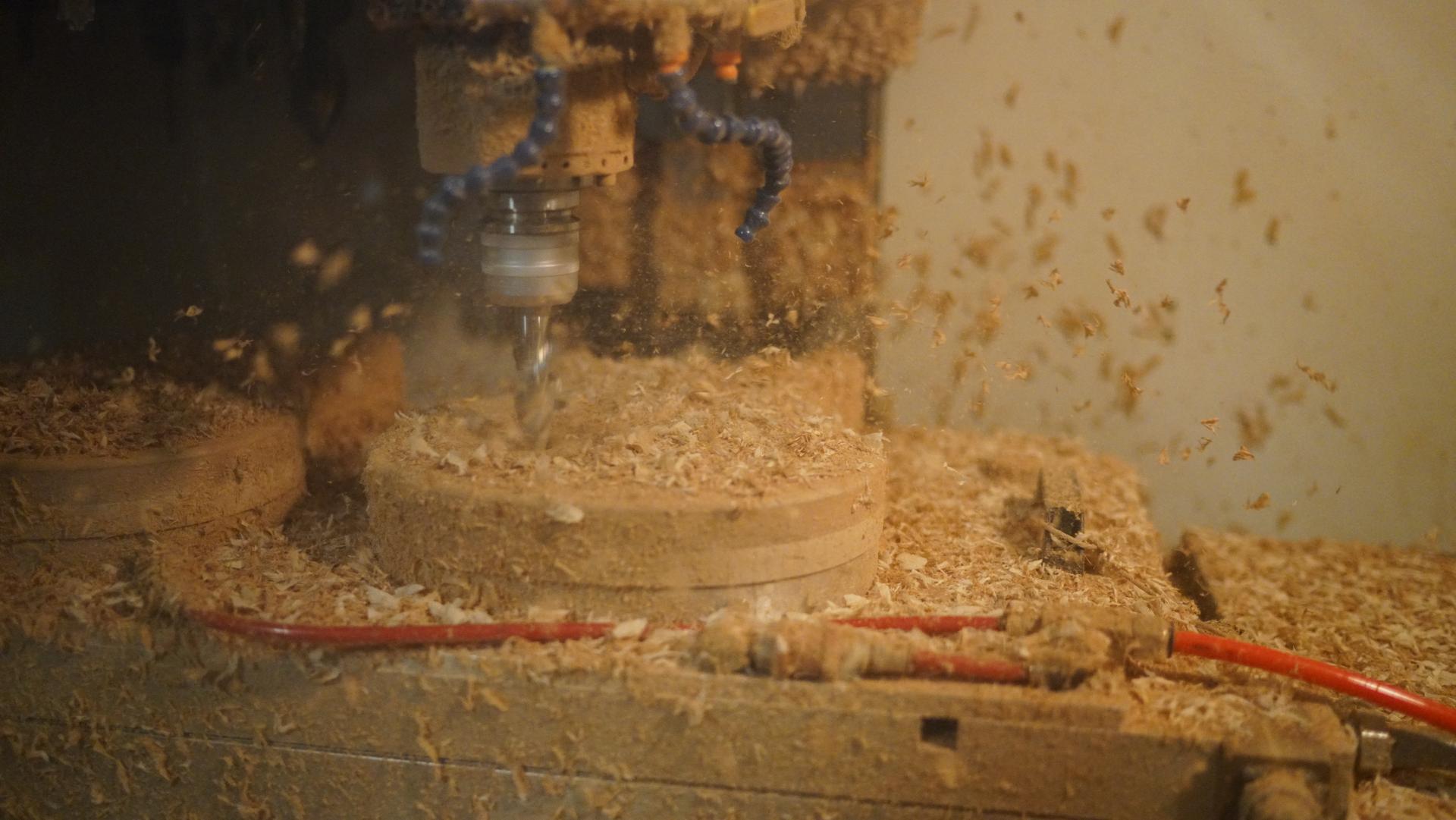
It is interesting that maple tops are very thick, really as thick as the mahogany body, but after milling, we see that only half remains; in the gluing, the two layers are almost identical, and there is a lot of waste.
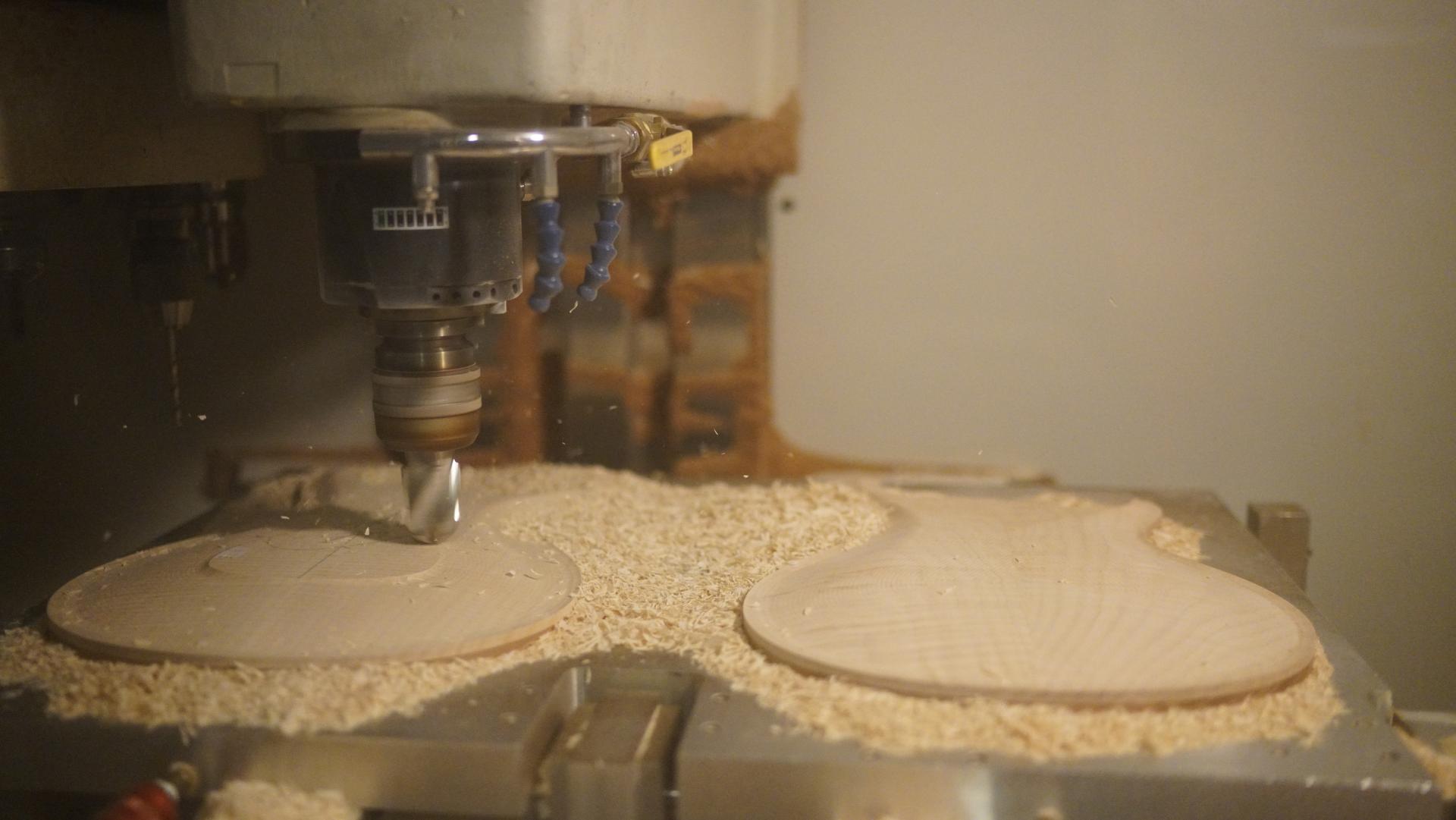
Subsequent sanding of the top is done by hand, especially the final touch-ups to perfection. I was shocked when I learned that PRS only recently bought a sanding machine, and even that is partially manual; that is how everything is done by hand, even on a machine.
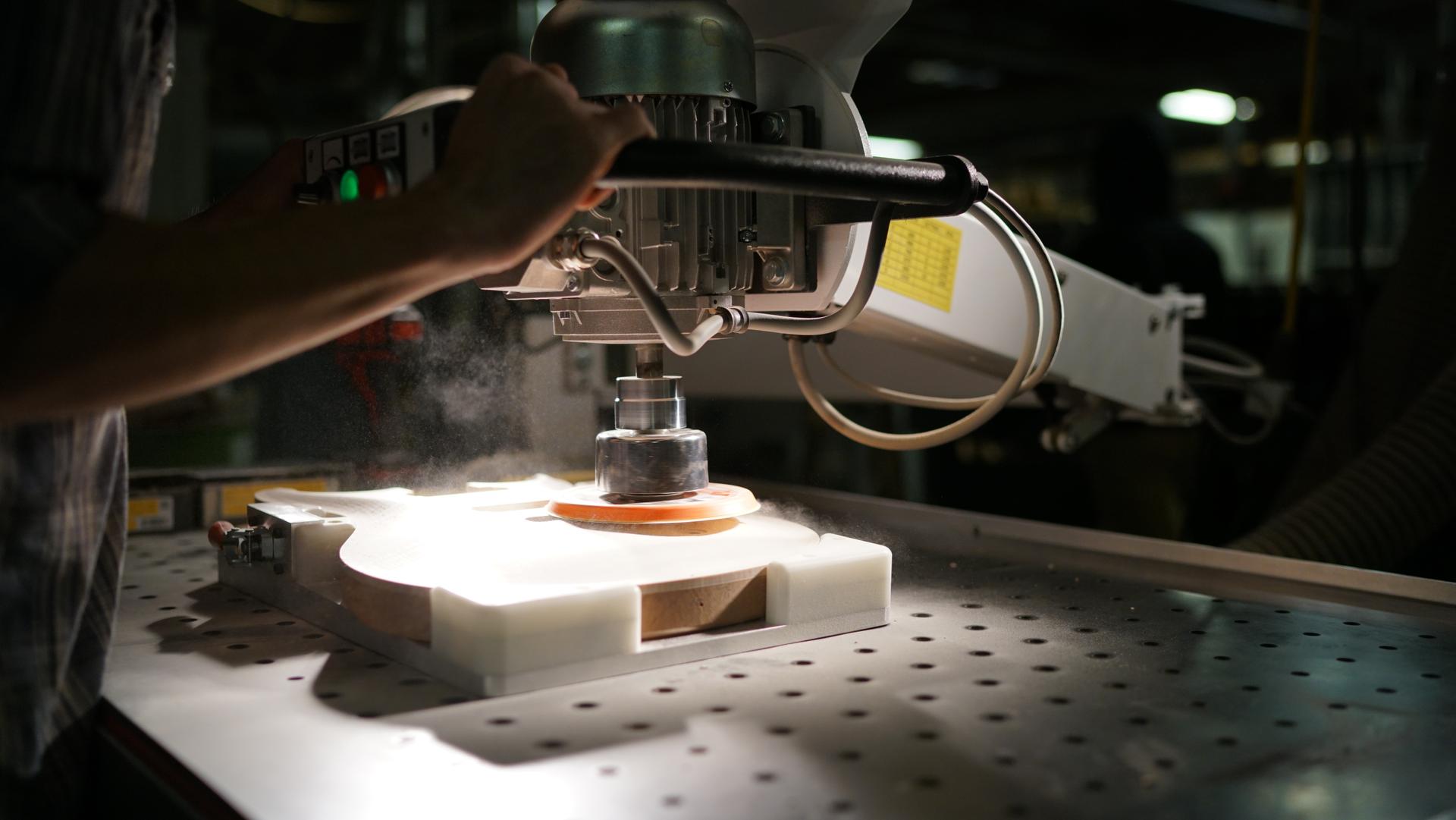 This is how the body comes out even after this sanding machine, and then everything is scraped and polished by hand.
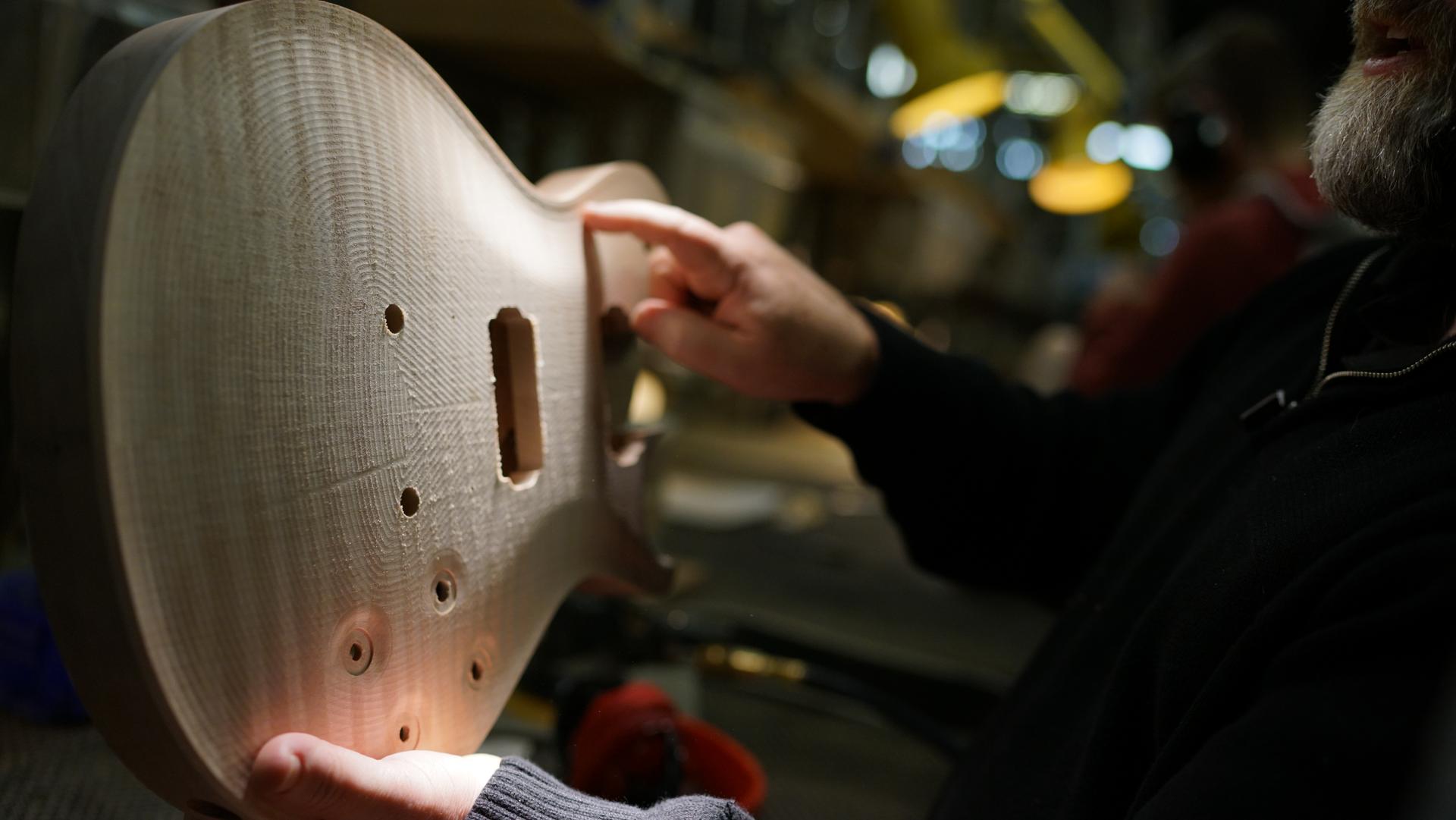
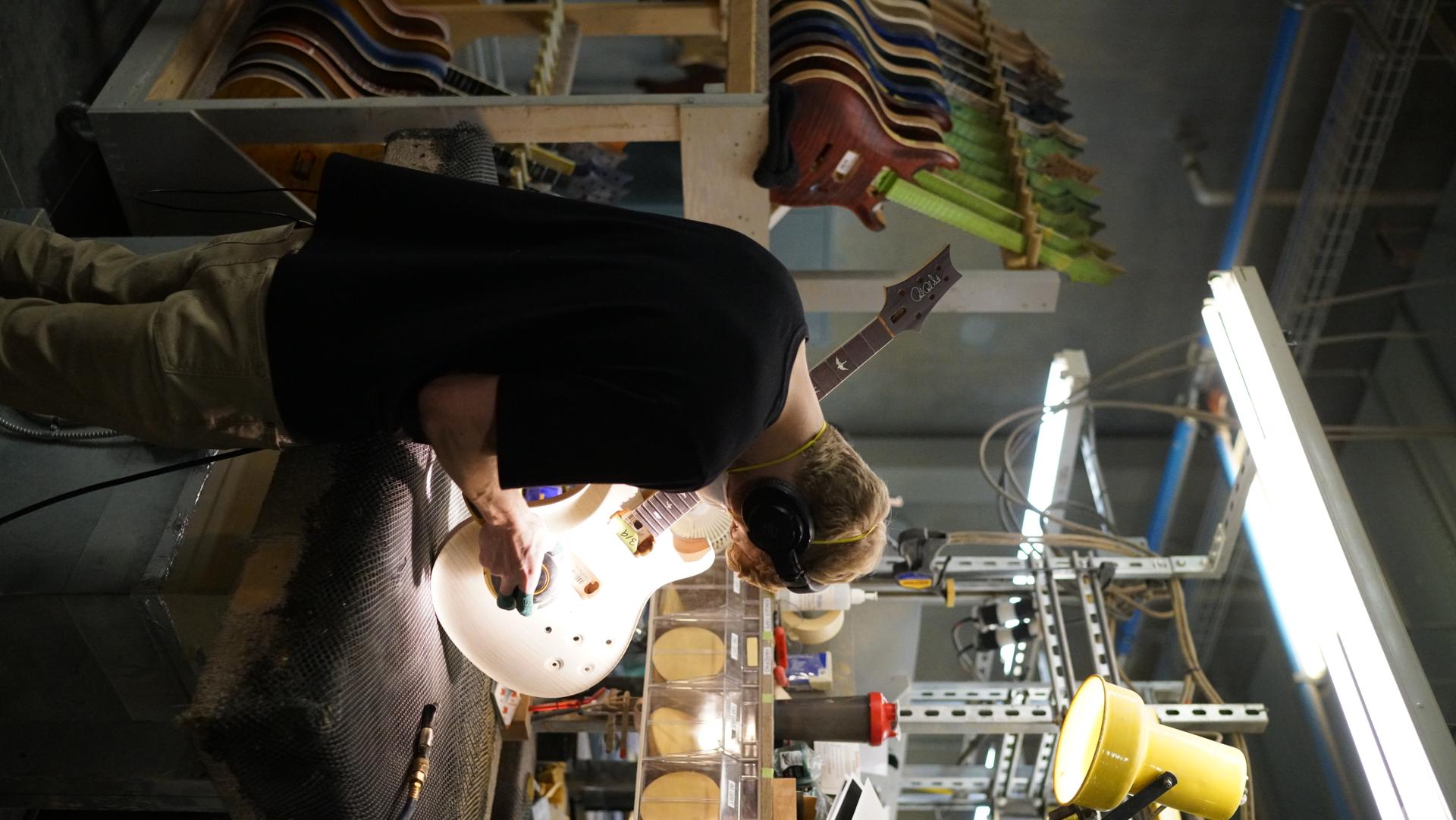 The polishing of the top has an interesting story? Again, from Tim. He says: "I've been working here since the late 80s, and a few years ago I wanted to try taking part in the actual making of a guitar myself. I thought that the simplest and most harmless thing would be sanding the top by hand. I asked Paul Miles to show me how it's done, and I asked for sandpaper and tools for sanding. I spent half a day polishing the guitar perfectly so that there would not be a single unevenness or roughness. In general, I did everything as required and, in my opinion, even perfectly. I brought the body to Paul, he looked at it and a few seconds later sawed it in half and silently threw it in the trash. I just stood there in shock. I asked why, what's wrong??? Paul took half of the already sawn-up body and showed me the mistake. It turned out that near the bridge and near the neck joint, I had overdone it and sanded off a millimeter or even less - I sanded off too much. This means that if there is an error of a millimeter or even a tenth of a millimeter in one part of the guitar, then on the other side of the guitar at the top of the neck, this inaccuracy at the final stage will be much larger, and it will be defective. After that, I didn't tackle any process in production."
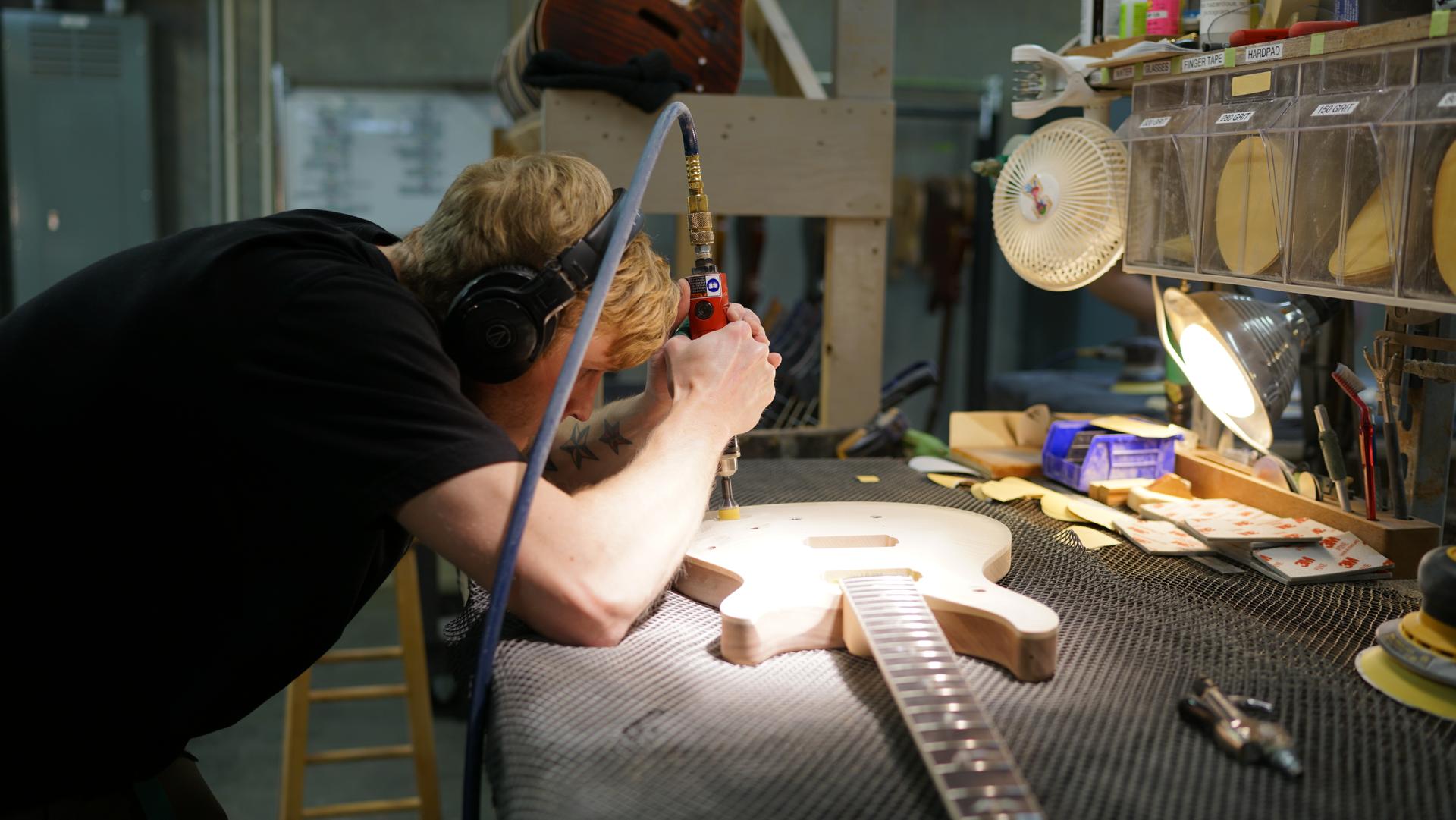
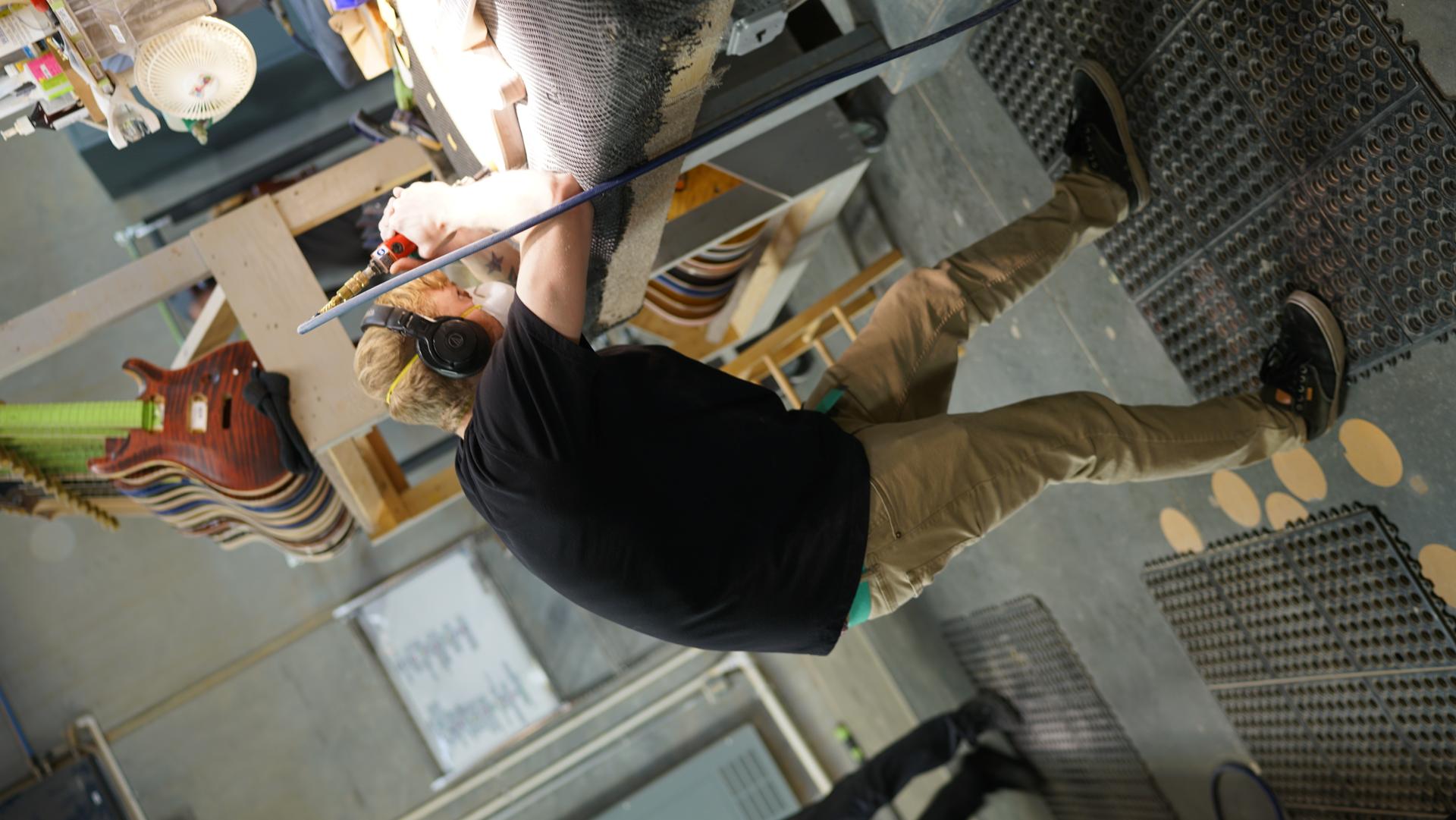
We went on... an interesting process of drilling holes for wires inside - everything is done so quickly. There are special guide corners with holes that are installed in the right place for the electronics wiring - one movement of the hand with the drill - bzzz - and inside the body, oh miracle, straight holes appeared, leading, for example, from the pickup holes to the back panel under the neck plate with the potentiometers. The guy showed this with such enthusiasm that that is how I came up with the name for this long article :) Press one extra millimeter and the drill will drill through the body, and all the previous work goes down the drain... such is life... it is very important not to mess anything up!
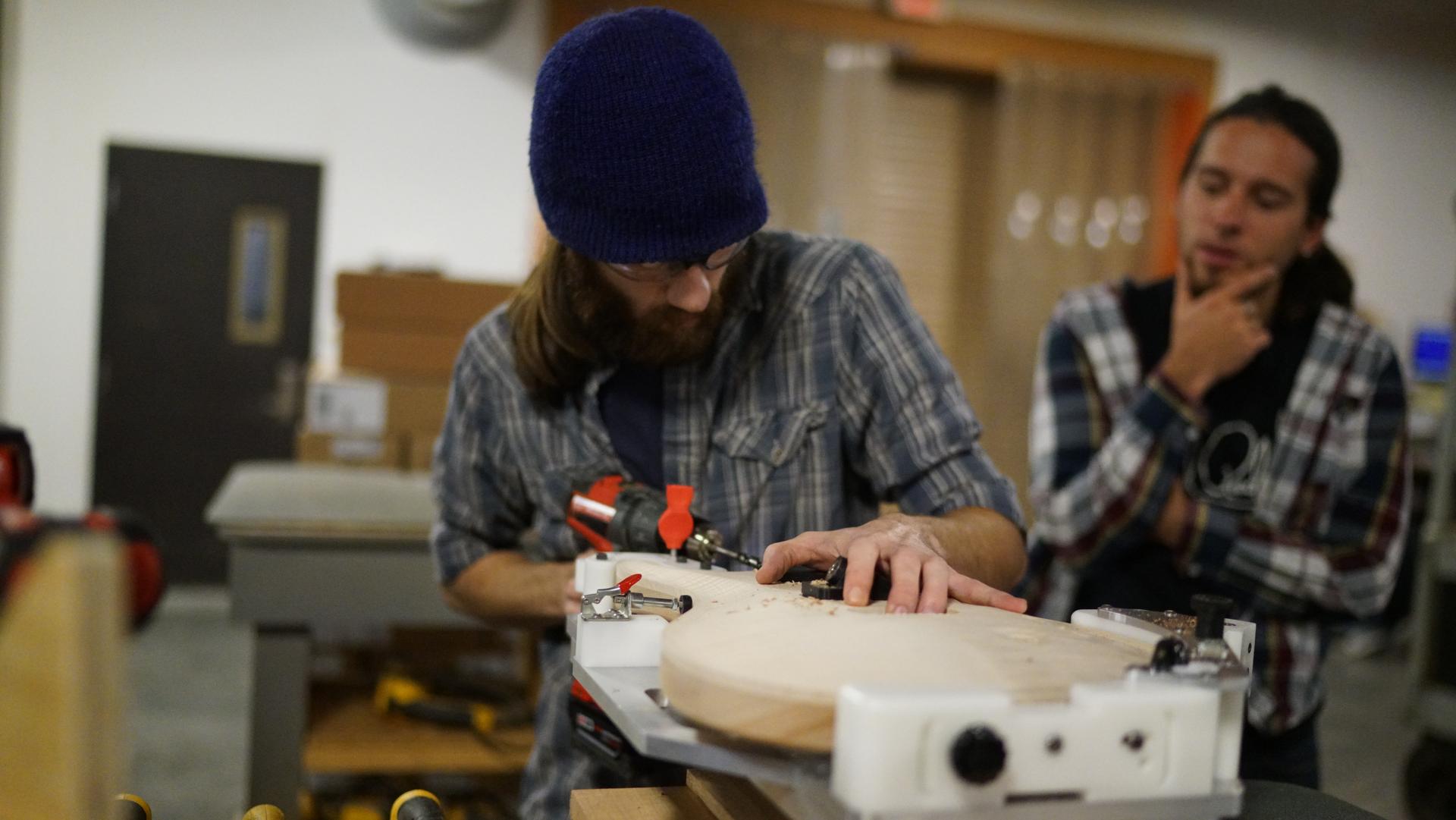
By the way, a funny story! We walk up to the pressed but not yet processed bodies and see that between each of these "sandwiches" lies a piece of wood like this
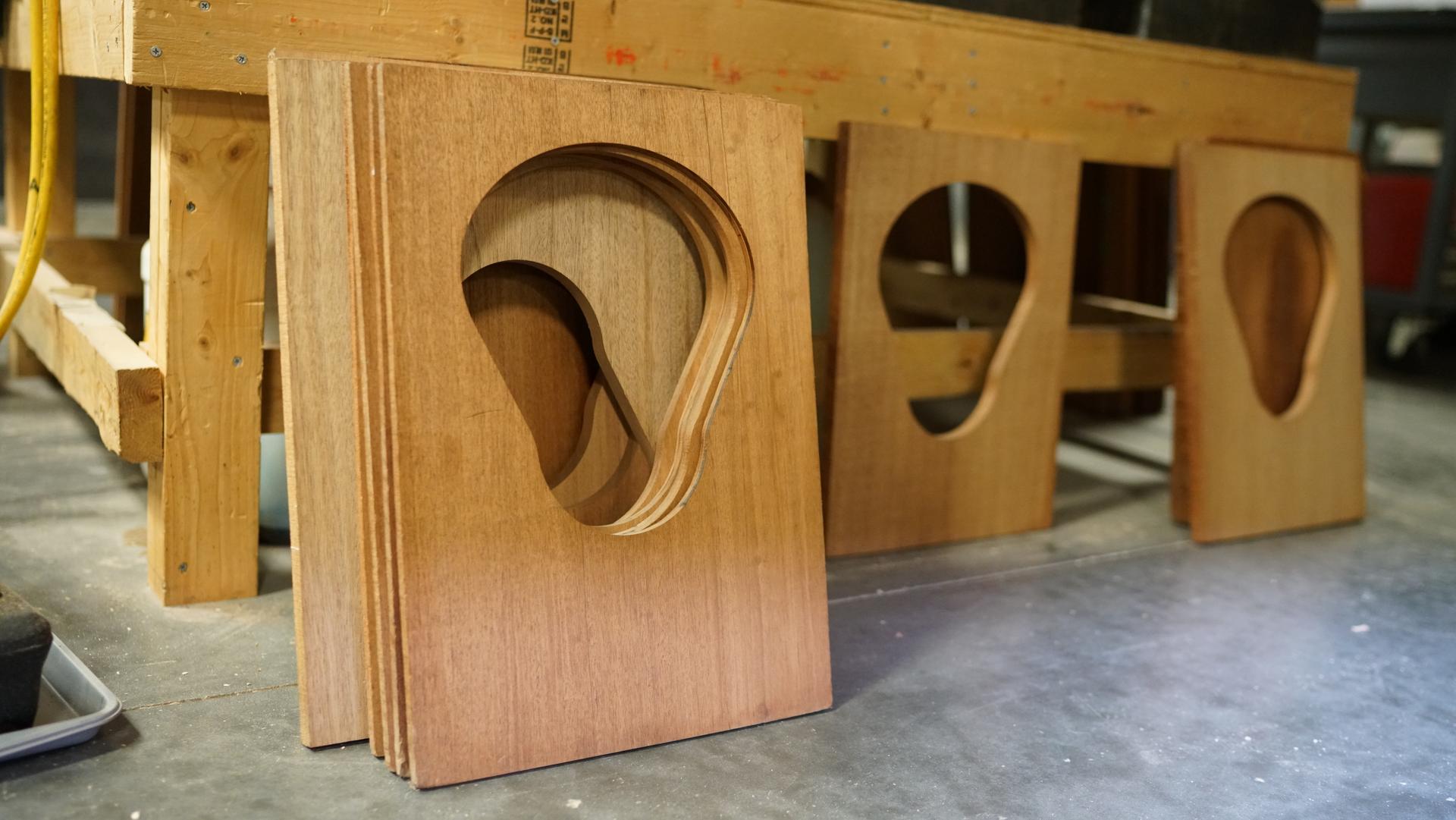
Tim asks "do you know what this is?" and immediately jokes "no, it's not an alien" )))
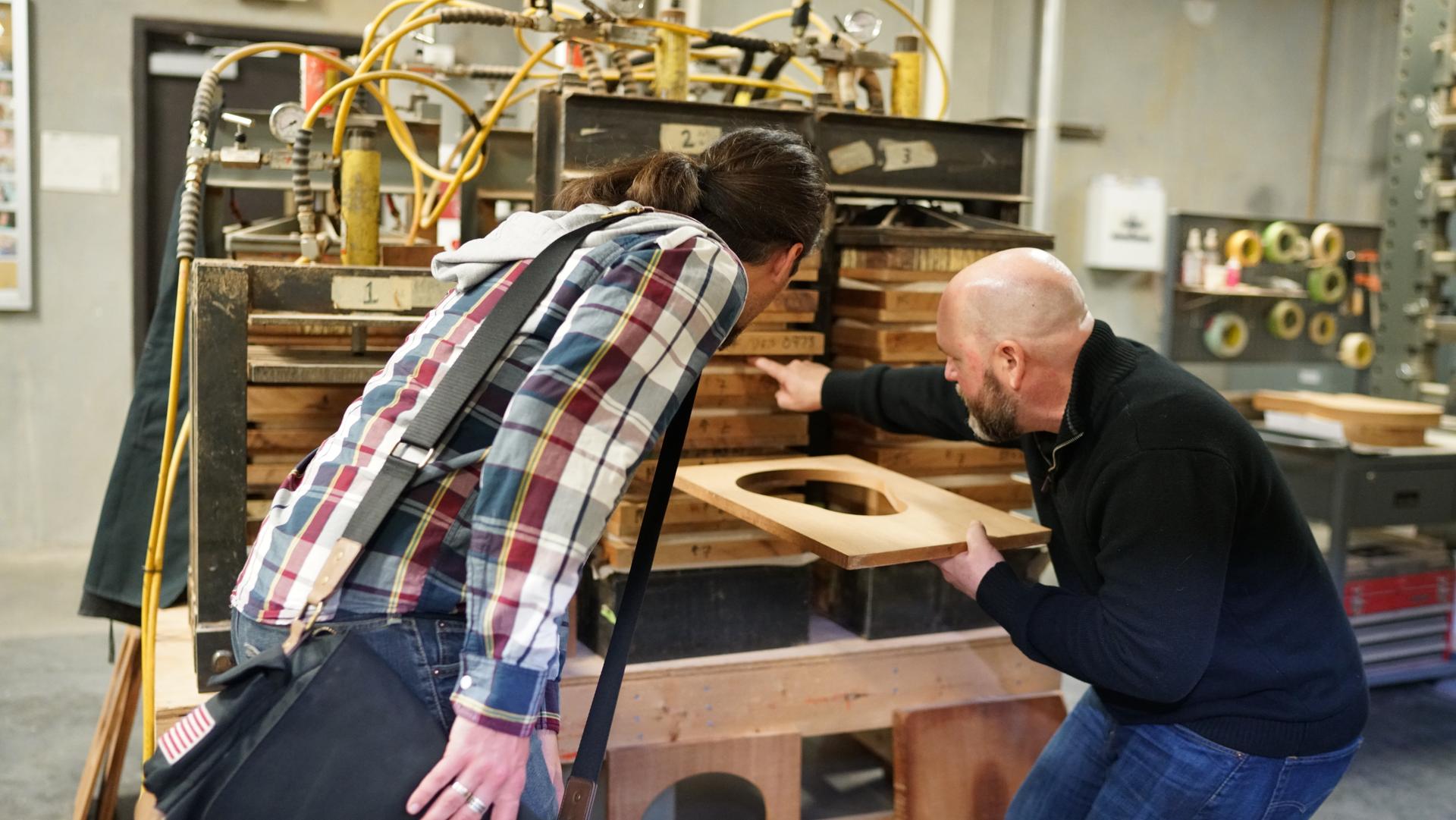
Then he explains that this piece of wood is placed between the glued bodies so that they do not deform after the glue and from the physical properties of the wood, i.e., it looks like mahogany+maple - insert - mahogany+top-insert... the shelves in front of the machine are stuffed with these.
After the neck and body are ready, they are glued together (if it is a model with a glued neck) and sent to the paint shop, where guys work in special protective suits.
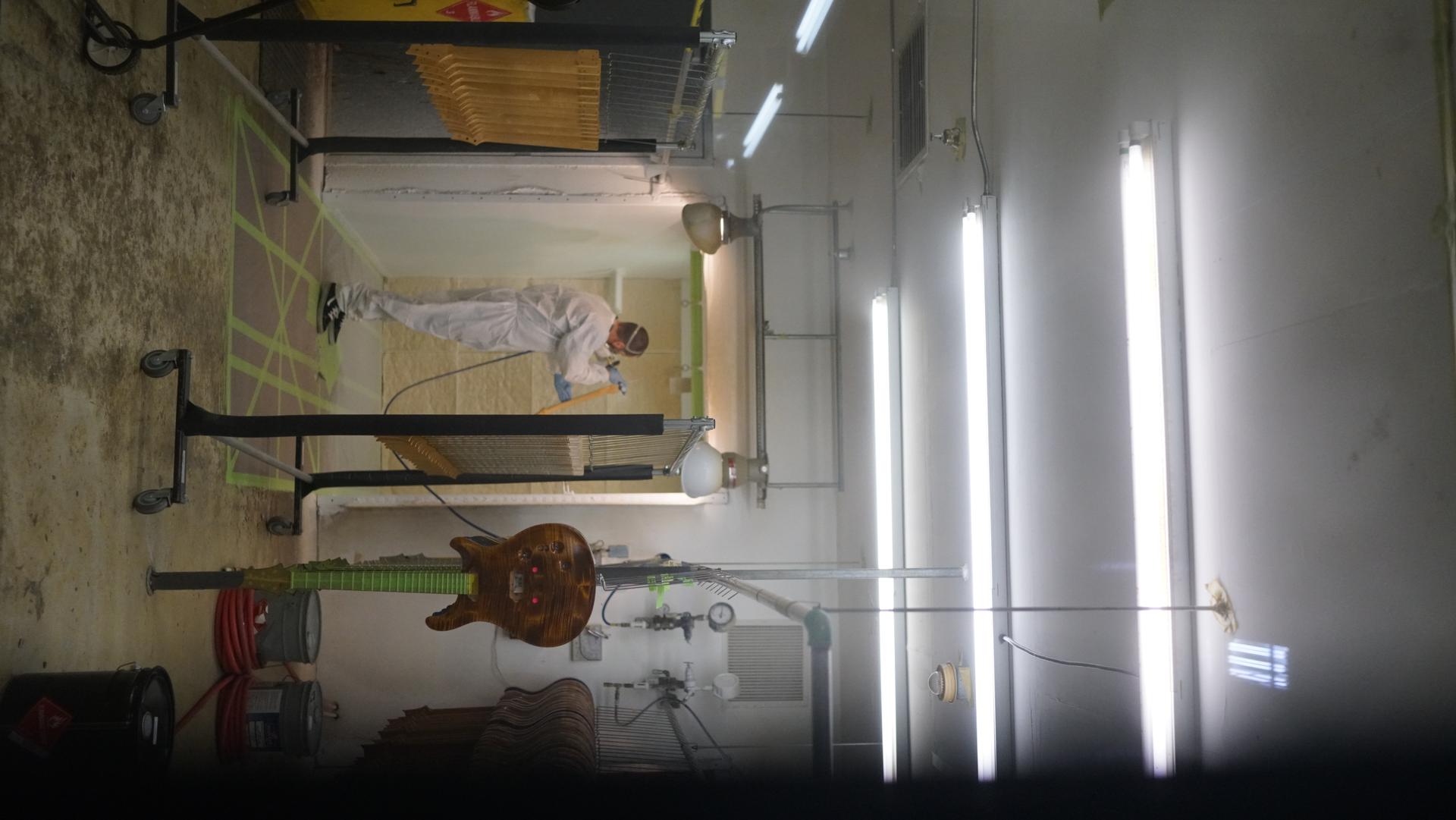
After painting, the guitar is sanded by hand several times, covered with lacquer and sanded again... and so on several times.
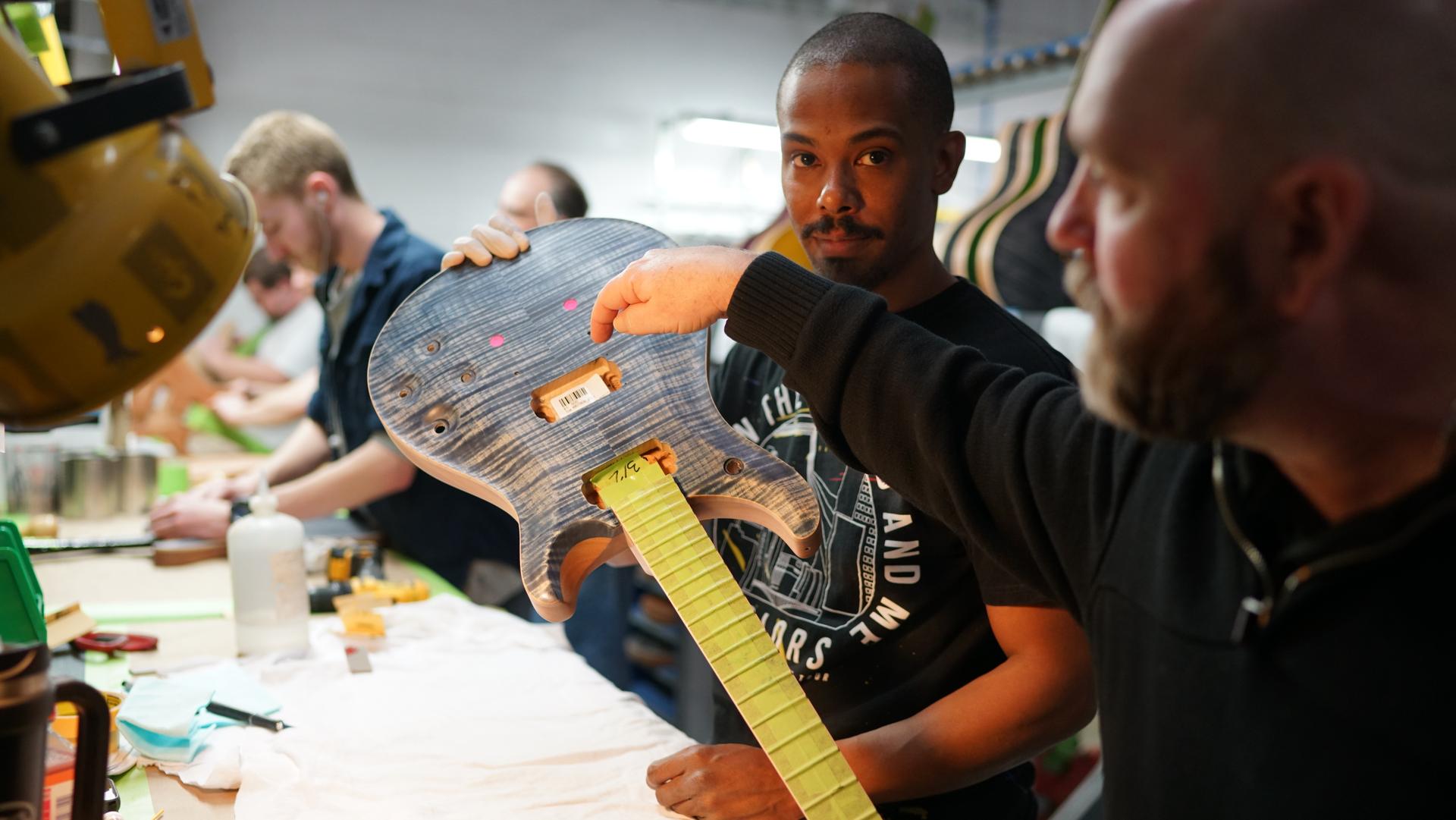
None of the famous manufacturers, even Gibson, do this. There, they paint it once - cover it with lacquer - and that's it. This is a special feature of PRS, which I didn't know about - this sanding of the finish and lacquer. In general, I learned many interesting things.
Here are 10 facts that you likely did not know and are unlikely to find anywhere else on the internet:
1. Currently, PRS does not make cavities or holes (like Gibson) in Core Models (USA) guitars. Not in any of the solid body guitars, only semi-hollow and hollowbody of course. They used to do it in a few SC250 and SC245 editions. At the same time, they remain lightweight, which means very high-quality selected wood on the body.
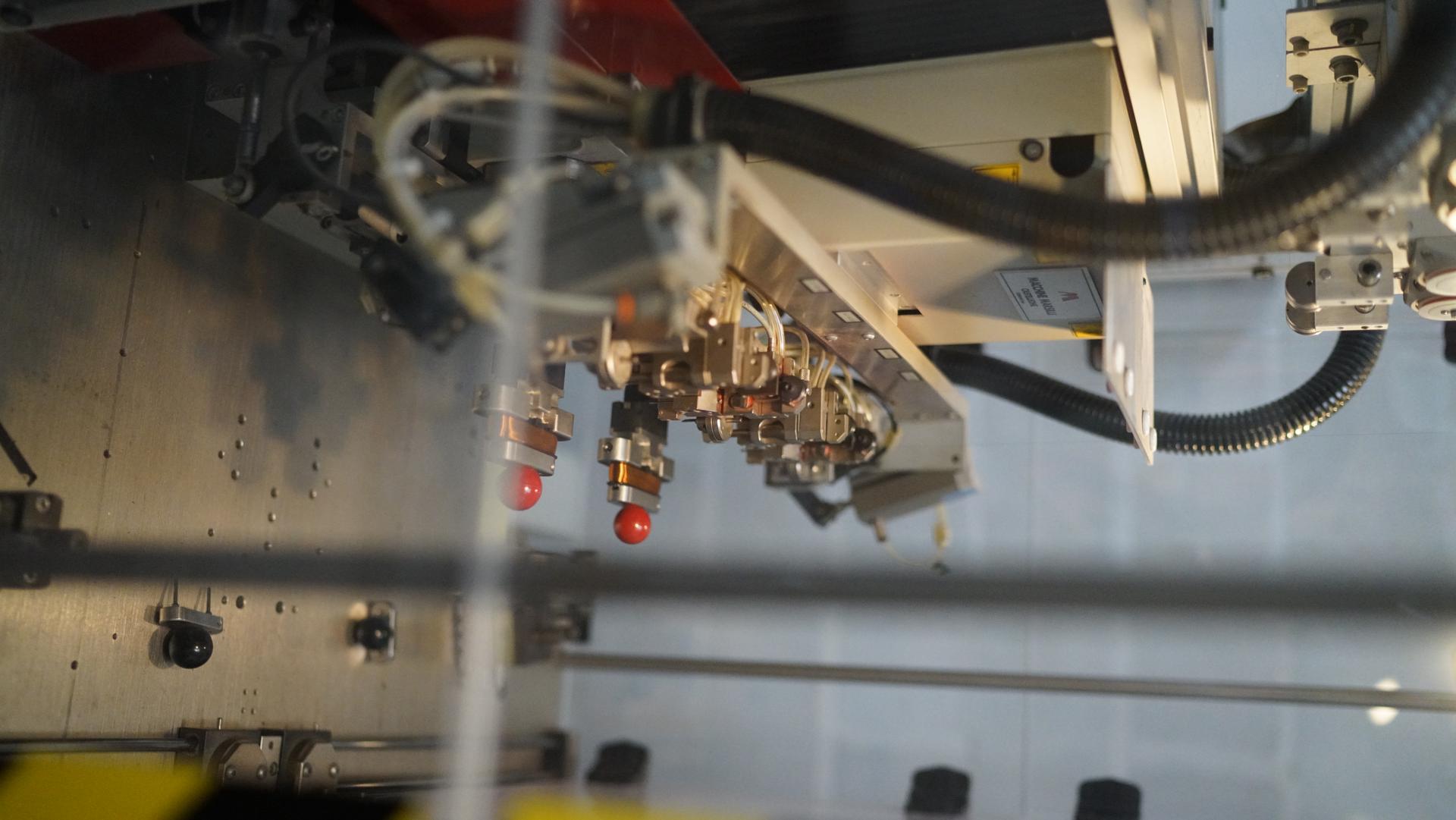
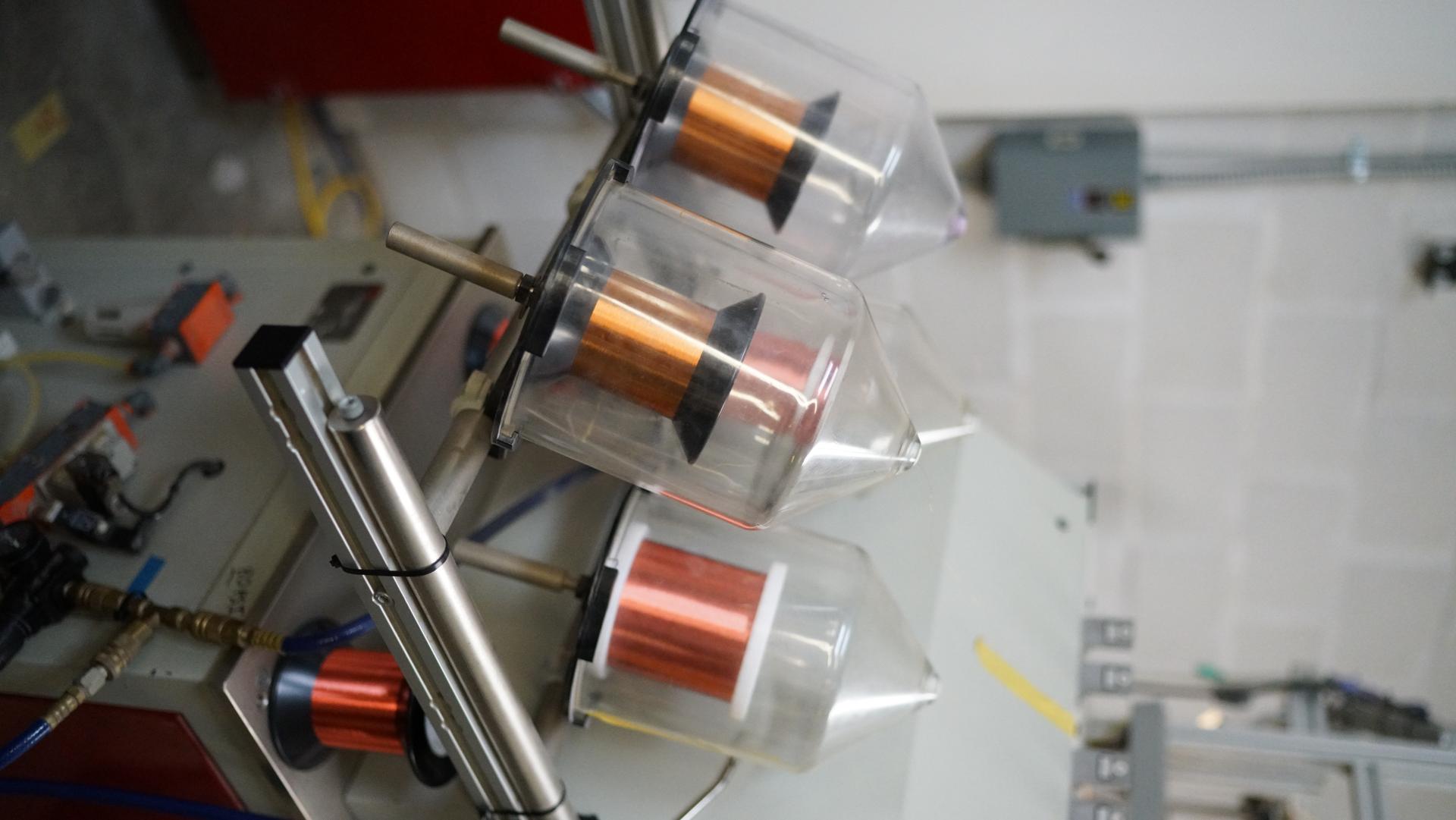
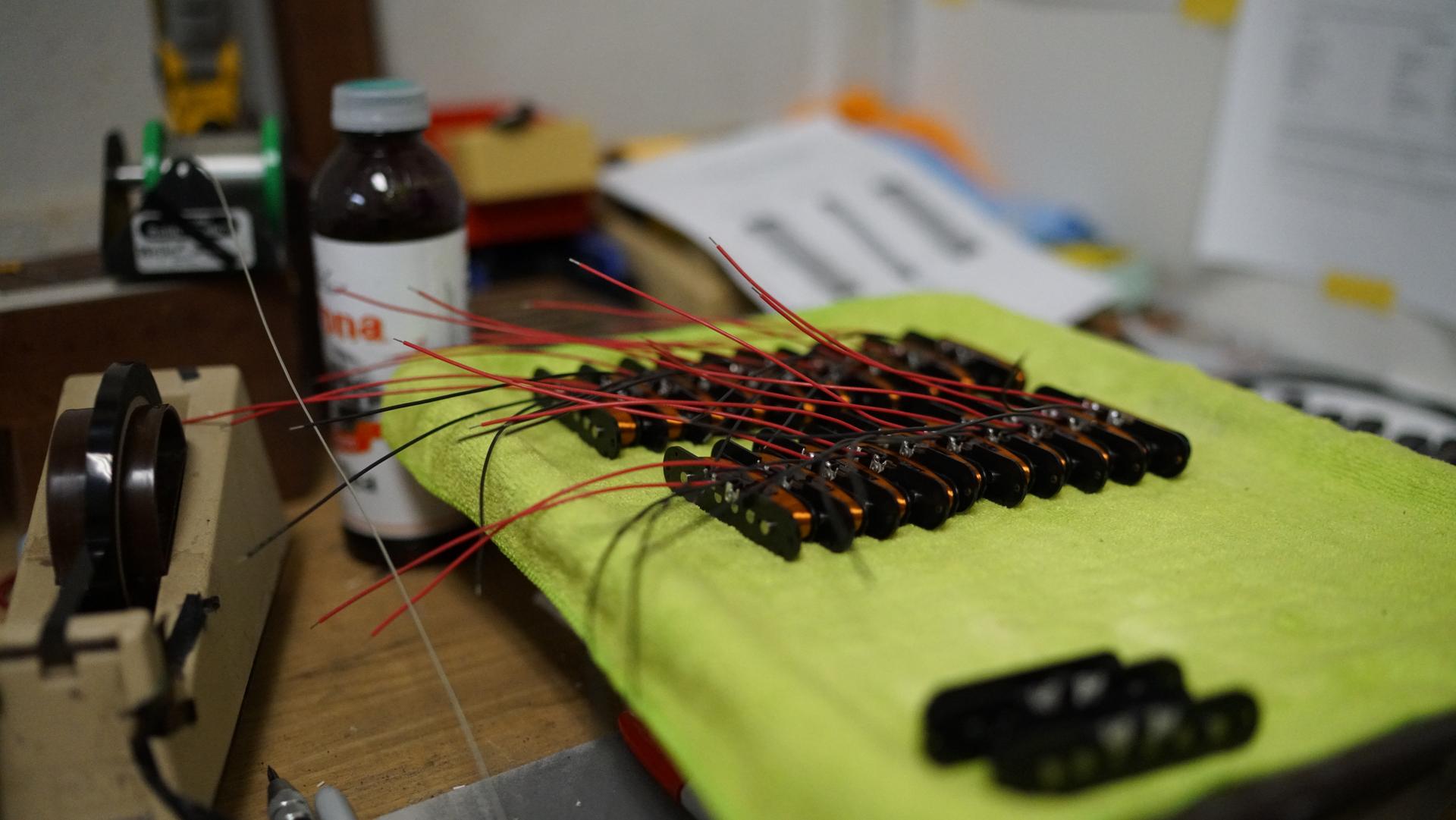
2. Pickups for Core Models are made at this very factory; I saw how the machine winds everything, very cool. Women mainly work with these pickups; thin fingers are needed and, as always, some manual work is present...
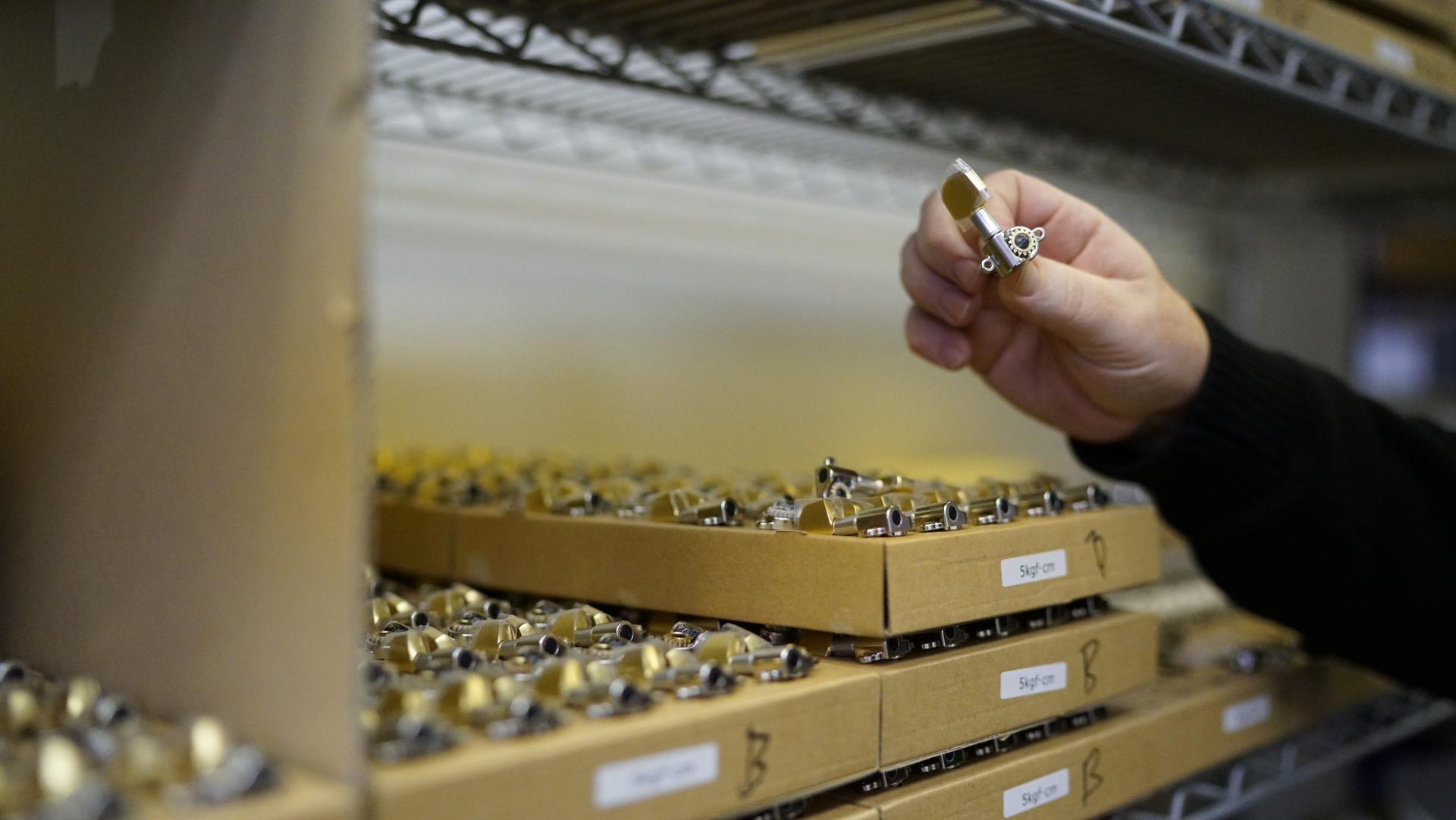
3. All hardware for Core Models is custom, made to order based on Paul Reed Smith's drawings, mainly Gotoh, but if you want to find a Gotoh like the one PRS has, you, of course, will not find it; Gotoh does not have the right to sell PRS hardware under its own name. So it's just outsourcing.
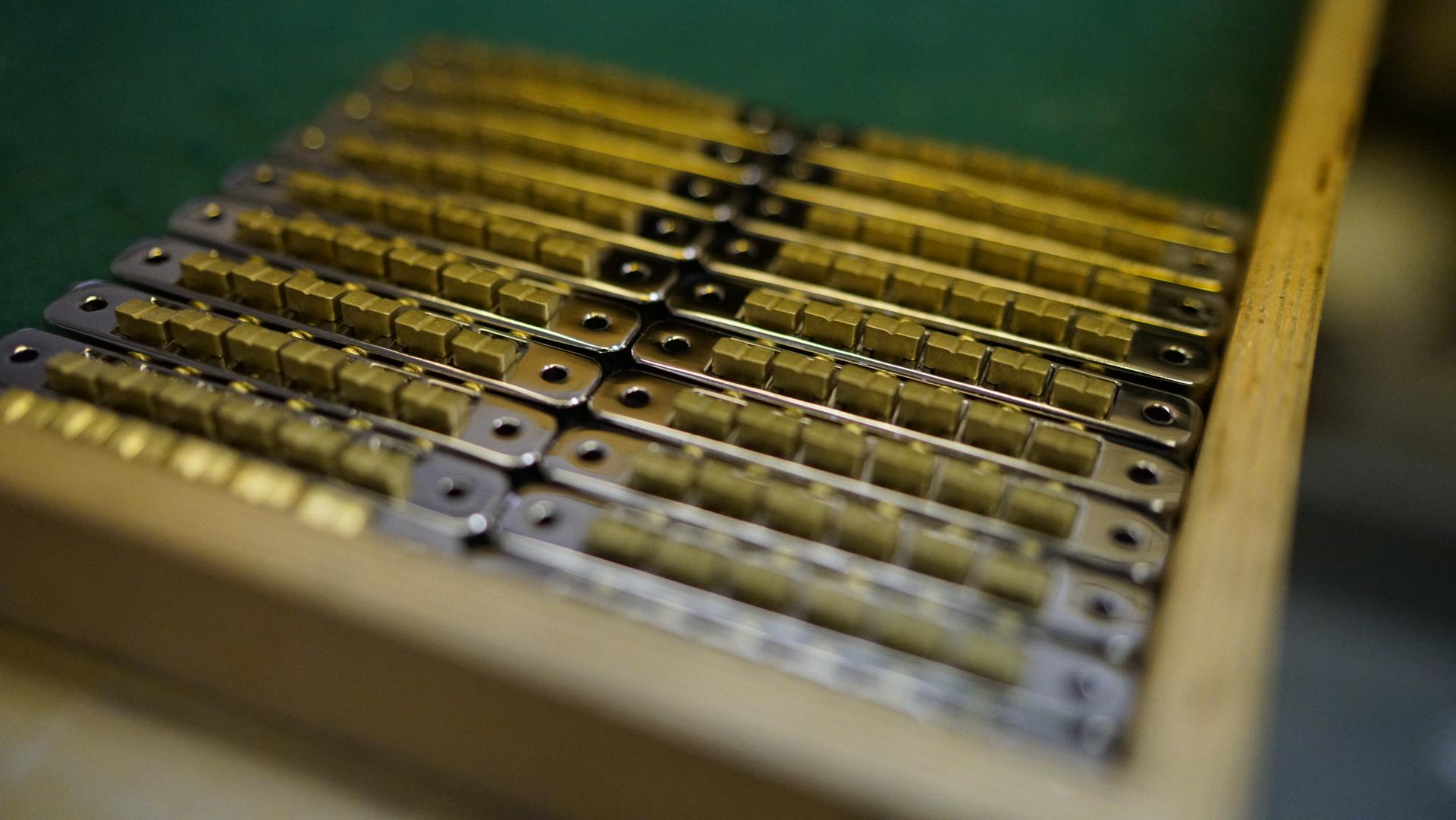 4. Mainly, PRS uses Dunlop frets according to their own drawings, just as in the case of hardware, you will not find these frets on sale, because even by model, the metal alloy for PRS is different, as are its drawings, etc.
5. What I wrote above - there are obvious external differences in maple tops - if you see unusual stripes, even wide ones, or with a curve, extraordinary - it is most likely West Coast Maple; if you see a more grid-like structure of the top - this is East Coast Maple
6. Tim told me an interesting story. When PRS was sued by Gibson over singlecuts and lost, Paul came to Tim (the head of sales, with whom we actually spent a wonderful day) and said "grab a camera, let's go film a video on how our singlecut differs from a Gibson LP". He wasn't a cameraman)) They went into a room where a brand new Gibson LP Custom lay, an untouched Custom Shop piece for 6k bucks. Paul asked him to turn on the camera and start recording; he took and sawed both guitars in half, showing their structure from the inside. This material was used in the appeal and helped win the court case, because the guitars are completely different )) Specifically the chambers, the holes in some models, the gluing, its quality, the layout of the electronics, potentiometers, the type of bridge and its structure, etc. everything was different. But besides everything else, PRS is a team that is passionate and in love with their process and their guitars, their work, unlike Gibson, which just gets by on their name. Yes, they used to make good guitars, but their time has passed, they stopped monitoring quality and started thinking only about profit. That's how it turned out...
7. Names for guitar colors are born right at the factory, for example Eriza Verde - an employee's name (he's Mexican, I saw him)), Angry Larry - the color is named after Larry who worked at the factory, and when he got angry for any reason, he would turn very red, almost beet-colored. Actually, the color is no longer available, but many people know it))) etc.
8. Paul's favorite model is the McCarty doublecut - I asked him about it personally. Moreover, as the guys said regarding my next question about his favorite wood, - "He's a mahogany guy". However, Paul's collection includes an all rosewood neck and even an all ebony neck. He can afford it :)
9. There are over 100 types of birds on PRS, which are divided by appearance: regular, small, large, old school, commemorative (10, 20, 30 anniversary), and by the material they are made of - abalone, bone substitute, all sorts of stones, etc. They are assembled on the fretboard in pieces, like a mosaic. Very delicate, painstaking work on every fretboard.
10. Paul plays in a band, it's called Paul Reed Smith, and on that same day, by pure coincidence, we were invited to front-row seats for Paul's concert in his city. I bought both of Paul's albums as a souvenir, very high-quality music, I recommend listening!
 On that note, that's enough info for you to digest for now, so I will finish for now. In the next article, I will tell you more about the production of Hollowbody guitars, bringing painted guitars to perfection, installing pickups, testing, etc. Stay with us, subscribe, if you want to support our development - buy PRS from us at good prices :)