

“He Told Me He Hated His Own Voice”: Martin Barre on Hendrix, Jack White, McCartney — and the Story Behind His Life in Music
Dec. 28, 2025, 9:15 a.m.
As Martin Barre releases his long-awaited autobiography, the former Jethro Tull guitarist reflects on guitars, heroes, humility, and a lifetime shaped by sound.
Only days after the fact, Martin Barre still hasn’t heard that Jack White publicly cited Jethro Tull as a key influence during the White Stripes’ Rock and Roll Hall of Fame induction speech. When told, Barre reacts not with surprise, but with genuine pleasure.
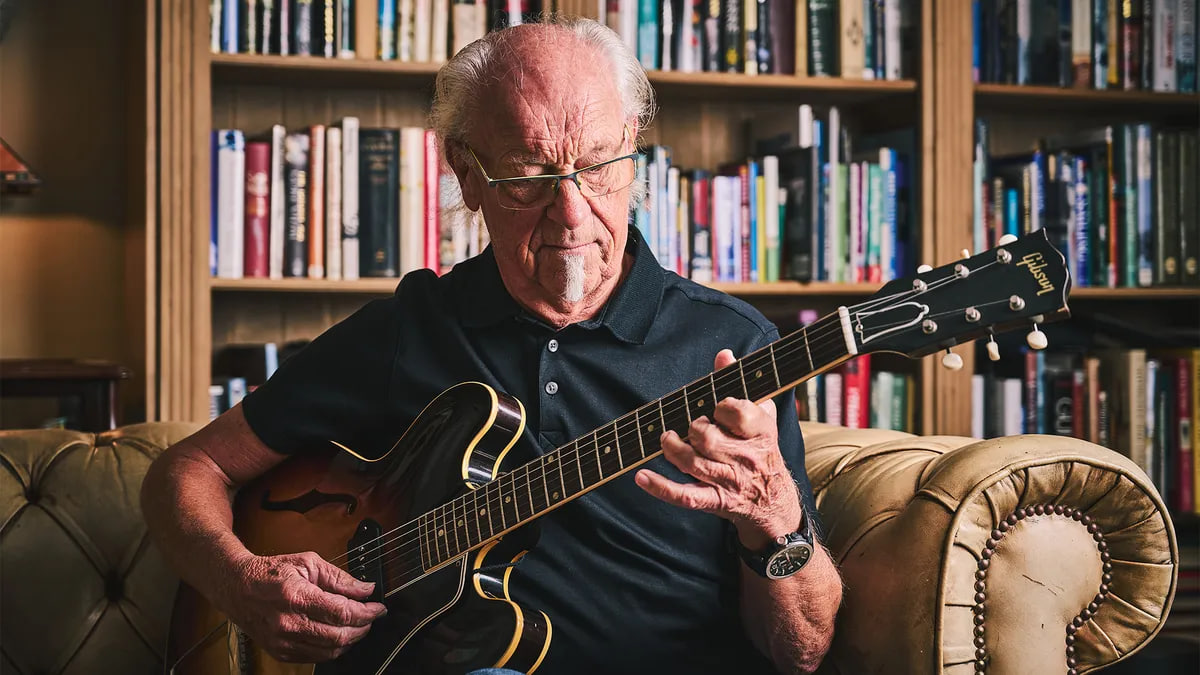
“That’s wonderful news,” he says warmly. “Jack White is an extraordinary musician. I’ve always admired what the White Stripes created — my family feels the same way.”
Coming from a man who spent nearly half a century at the core of Jethro Tull’s sound, such recognition feels less like validation and more like confirmation of a legacy already written. Barre speaks from his home in Lancashire, England, gazing out over the moors, calm and reflective.
With close to 45 years in the band and around 20 albums under his belt — including defining records such as Aqualung, Thick As a Brick, and War Child — Barre sees himself today as a quiet custodian of that history. Since 2013, he has carried the music forward with his own band, released eight solo albums, toured extensively, and collaborated with musicians ranging from former Tull members Mick Abrahams and Clive Bunker to Paul McCartney, the late John Wetton, and Chick Churchill of Ten Years After.
“I’m deeply proud of what Jethro Tull represented,” Barre says. “When musicians like Jack White acknowledge that influence, it reinforces the idea that what we created left a permanent mark. It inspired people, and that’s something you don’t take lightly.”
At 78, Barre has distilled that lifetime into a memoir, A Trick of Memory: The Autobiography of Jethro Tull’s Guitarist, now available in the U.K. and scheduled for release in the U.S. The 182-page book traces his journey from a modest upbringing in Birmingham to the world’s largest stages.
He writes about discovering music through his father — a would-be jazz clarinetist whose ambitions were curtailed by circumstance — and his older sister Jeanne. The book moves through the vibrant 1960s British music scene, Barre’s early years playing saxophone, flute, and guitar in rhythm-and-blues bands, and the encounters with musical icons that shaped him before joining Jethro Tull in 1968.
Barre made his recording debut on Stand Up, Tull’s second album, and from there became a defining voice in the band’s sound. The memoir is concise yet rich, filled with anecdotes, sidebars titled “A Tull Tale,” and appendices detailing favorite songs, performances, venues, and — crucially for guitar enthusiasts — extensive discussions of instruments and equipment. From his first Dallas Tuxedo guitar and Watkins Dominator amp to an entire chapter humorously titled “Guitars, Amps and Instruments of Torture,” gear plays a central role.

Why tell this story now?
“Everyone has a story,” Barre explains. “The tragedy is not leaving it behind and letting it disappear. I never claimed my story was more important than anyone else’s, but I wanted it recorded — for people curious about how the ’50s, ’60s, and ’70s shaped the musician I became.”
The book focuses heavily on his early years. Later chapters of Jethro Tull’s history, Barre notes, are already well documented elsewhere.
“Those early experiences were formative. Every meeting, every moment felt enormous. As you get older, the most meaningful things become more personal, more private.”
Despite the stadiums and milestones — Shea Stadium, multiple nights at Madison Square Garden, playing to hundreds of thousands at the Isle of Wight, standing onstage at the Royal Albert Hall — Barre resists the label of rock star.
“I’m proud of all of it,” he says. “But I don’t live in it. When I shut the door at night, I’m just a normal guy.”
That grounded outlook carries through the book. This is not a scandal-driven exposé.
“I wanted it to be honest and positive,” Barre explains. “Gossip has no depth. Experiences change meaning over time. Something that feels awful one year can look very different later.”
Some stories were deliberately left out, trimmed during editing or saved for another time.
“Maybe one day there’ll be a volume two,” he laughs. “Somewhere warm, on a small island.”
Family plays a central role in the narrative. Barre speaks movingly about parents who shielded him and his sister from hardship and quietly supported his leap into music, even when it meant abandoning conventional education.
His first encounter with guitar, watching Mike Sheridan and the Nightriders at a youth club, changed everything.
“The guitar was my sword,” he recalls. “It was freedom. I didn’t know where it would lead, but I knew it was my way out.”
Barre insists talent wasn’t innate. Progress came slowly, in an era without tutorials or instant information.
“You had to figure everything out yourself. That made the instrument truly yours.”
Among the most striking passages are his memories of Jimi Hendrix — hearing “Purple Haze” for the first time from a demo acetate in Rome, then sharing a bill with Hendrix in 1969.
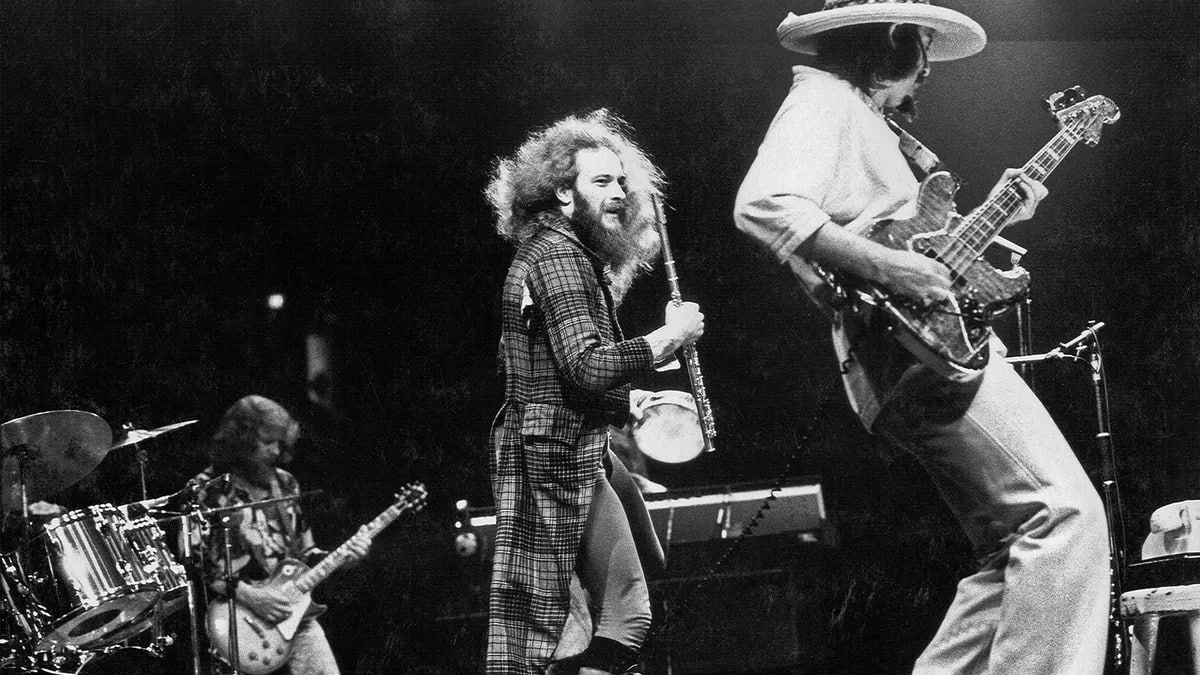
“He was humble, kind, and told me he hated his own voice,” Barre recalls. “It was unbelievable. That level of greatness paired with such honesty taught me an early lesson in humility.”
Not all heroes lived up to expectations, he admits — but every encounter taught him something.
Barre avoids consciously chasing influences, preferring inspiration that feels just out of reach. Classical flute concerts, bluegrass virtuosos, and exceptional musicians push him to improve rather than imitate.
One notable exception was Leslie West of Mountain.
“It wasn’t about copying his playing,” Barre says. “It was his attitude, the joy, the communication onstage. That stayed with me.”
Another remarkable chapter involves a secretive 1987 collaboration with Paul McCartney.
“It was terrifying and magical at the same time,” Barre recalls. “Working with someone at that level changes you.”

As for Jethro Tull’s internal dynamics, Barre presents a balanced view — collaboration, shared ideas, and creative freedom shaped the band’s music.
Looking ahead, Barre remains busy: touring well into the future, planning new recordings, and continuing to refine his craft.
“I don’t ask for validation,” he says. “A sold-out show tells me everything I need to know.”

