

Why Metallica Walked Away from Tube Amps — and How Antarctica Changed Everything
Dec. 29, 2025, 9:15 a.m.
“We had no choice but to find a solution for playing a show in Antarctica without speakers.”
That unusual challenge became the turning point that led the world’s biggest metal band to abandon traditional guitar amps altogether. After a revelation at the South Pole,
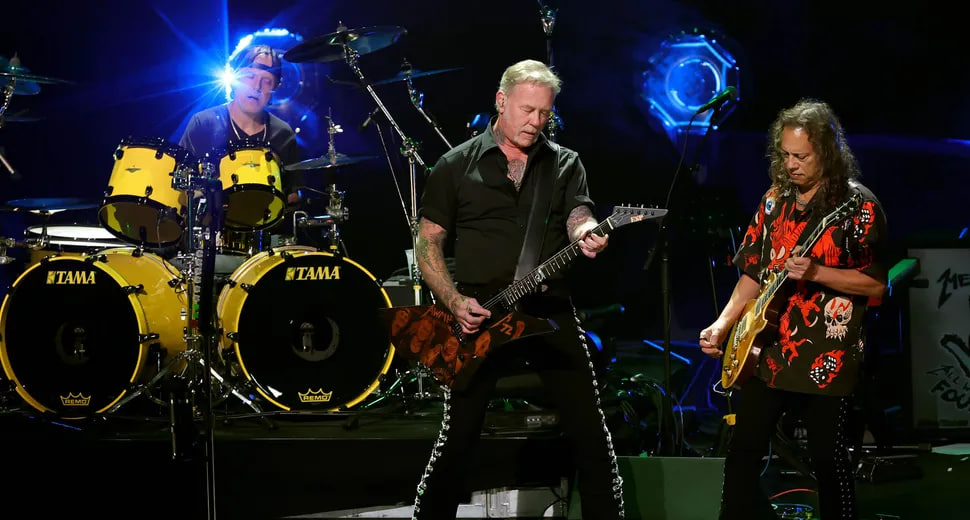
Metallica officially said goodbye to so-called “real” amplifiers.James Hetfield’s guitar tech, Chad Zaemisch, explains why the band went all-in on Fractal Audio — and never looked back.
Aside from long hair and leather jackets, few images are as deeply rooted in heavy metal culture as a towering wall of Marshall stacks. Kiss, Judas Priest, Metallica — nearly every iconic metal band has stood in front of them at some point, using those amps as both sound and symbol.
Loud, blisteringly hot, and physically massive, a Marshall stack became the tangible embodiment of metal itself. It wasn’t just gear — it was attitude.
But as heavy metal moves into its sixth decade, amp modelers are increasingly revealing traditional half-stacks and cabinets as bulky artifacts of another era. Swinging an amp won’t win anyone’s heart the way a guitar might, yet 25 years ago, a professional showing up to a gig without a traditional amp raised serious eyebrows.
Back then, online forums taught young guitarists that if your combo amp’s gain knob went to “Insane” instead of “11,” you clearly weren’t serious. But just as computers migrated from spare rooms into our pockets, companies like Fractal Audio Systems pushed amp modeling out of bedrooms and onto the biggest stages in the world.
Metallica is a perfect example. A band that once sang about the roar of Marshalls tearing through eardrums on Kill ’Em All adopted the Fractal Audio Axe-Fx in 2013. Today, their tube amps remain at headquarters, dramatically reducing the number of variables Chad Zaemisch has to manage on tour. In this interview, he explains the decision, the early obstacles, and why there’s no reason to look back.
What initially pushed Metallica toward amp modelers?
We were basically forced into it. The Antarctica show came with strict rules — no speakers, no volume. For environmental reasons, noise pollution wasn’t allowed. Fortunately, we had support right away.
Matt Picone from Fractal came in and helped recreate our core sounds. There was definitely a learning curve for both the crew and the band, but once we got past that, everyone started seeing just how convenient the setup was.
Was there hesitation about making the switch?
Absolutely. The first question is always: can this really work? Luckily, the Fractal team was incredibly fast when it came to fixes and updates. As a tech, you never want to tell the artist you work for that their new setup won’t sound as good as the old one.
Did you have to convince the band to fully commit?
Metallica is great in that respect — they’re always looking forward. James wants to understand every upside and downside, and he’s comfortable playing through anything. The fact that he said, “Maybe we should be the ones to embrace this and push it to its limits,” really impressed me. Our crew was excited. The old analog routing systems were borderline insane.
Then the stage designers realized something else: without a wall of speaker cabinets, we suddenly had endless creative possibilities. Modern audiences expect visual content. Watching a band stand in front of amps isn’t enough anymore. Now we can use massive video screens and build much more dynamic shows.
How did this change things from a technical perspective?
I’ve always enjoyed being able to connect gear to a computer, adjust it visually, and understand what’s happening. Building tones this way forces you to ask deeper questions.
Why is the tone stack placed there in the signal chain? Want to hear what different power tubes sound like? No need to grab hot glass — just click a menu and listen.
It’s similar to when tour managers first started using cell phones and laptops. Everything became more efficient. We don’t need to stop the bus so someone can find a payphone — now we just send emails.
So what should a beginner buy on their first trip to a music store?
A small amp they can use in their room — something that lets them hear their guitar. Maybe they turn up the gain and experiment. They don’t need to obsess over details. The focus should be learning songs and enjoying the process.

