

The Tone Evolution: Slash on Swapping His Iconic Marshall Stacks for Magnatone and the Modern Blues Renaissance
July 30, 2026, 9 a.m.
Back in the 1990s, immediately following his departure from the legendary lineup of Guns N' Roses, the iconic guitar hero was frequently spotted slinging his trademark Gibson Les Paul around local Los Angeles bars and underground clubs, ripping through traditional blues standards. That passion project was named The Blues Ball, and according to the world-renowned rock icon, it was never meant to be a serious musical endeavor.
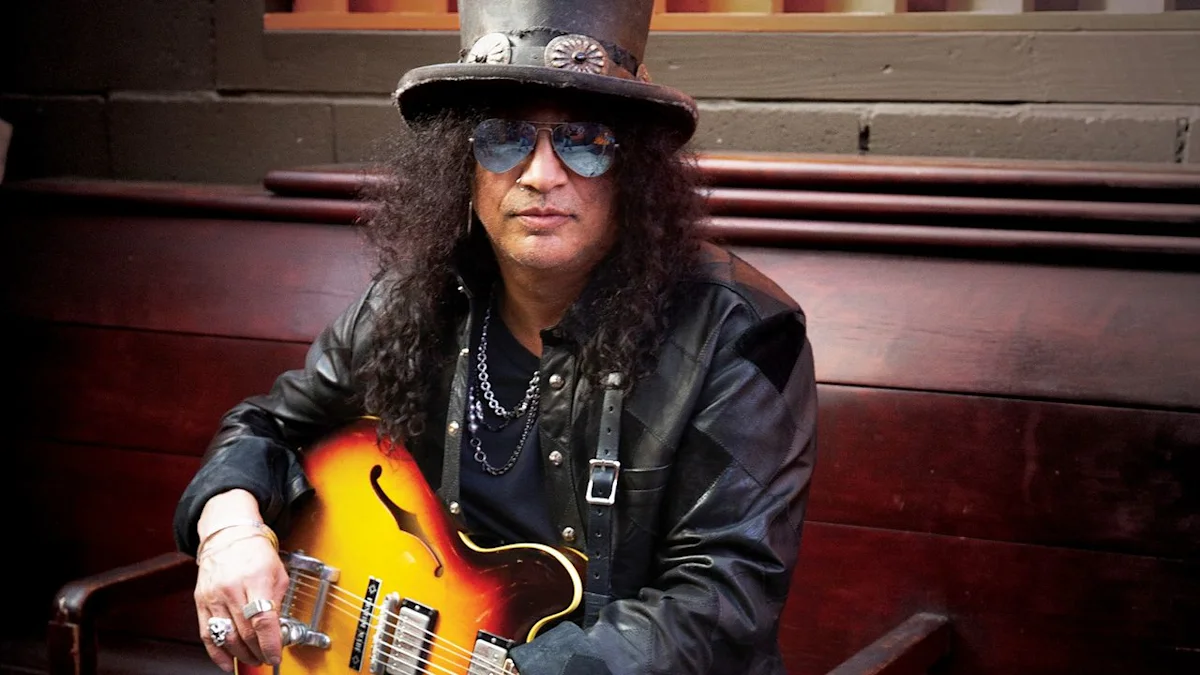
"It was basically just a drunken excuse to go out and jam," Slash recalls during a comprehensive sit-down with Guitarist magazine. Yet, nearly three decades later, his deep-seated affection for the blues — and the high-performance guitar gear that breathes life into it — has evolved into a serious artistic mission. The direct result of this journey was the release of his studio effort, Orgy Of The Damned — a blues cover album packed with an elite lineup of all-star guest vocalists, rare vintage guitars, and boutique Magnatone combo amplifiers that have officially replaced his beloved, industry-defining Marshall stacks on stage.
"The Magnatone just sounds so much fuller in the low-end, and cleaner," the legendary player explains. "When you track a full chord, you can distinctly hear the separation of all the individual notes. It has been a monumental tonal shift for me."
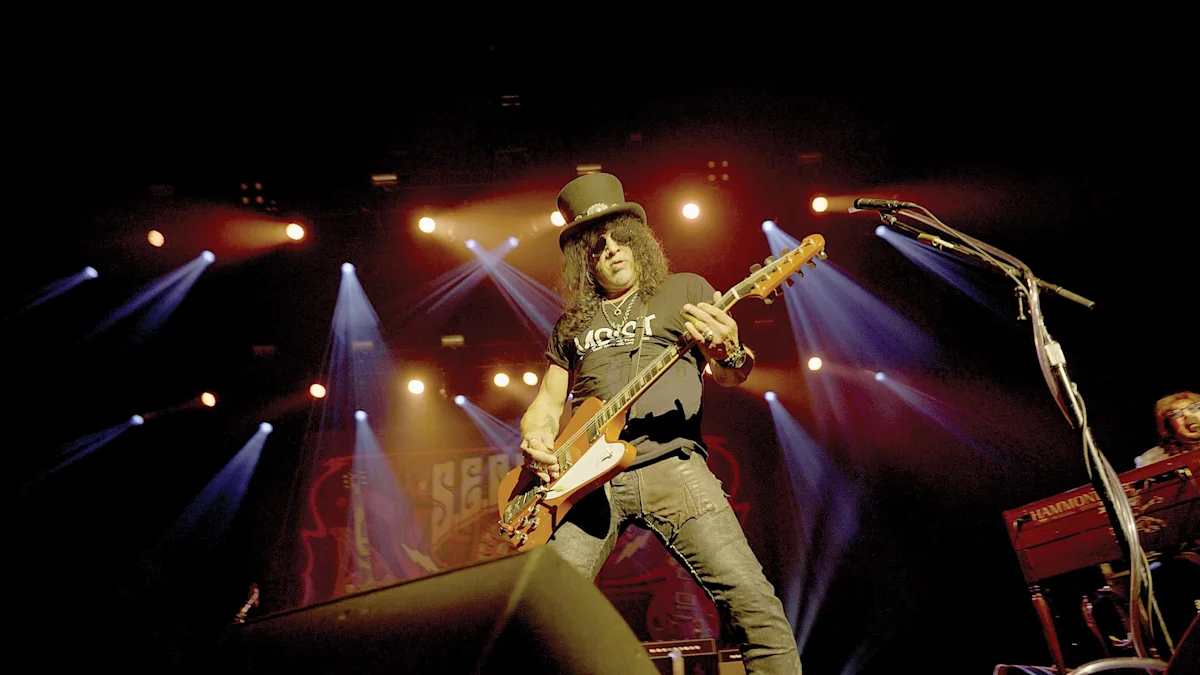
To support the release of Orgy Of The Damned, the guitar legend hit the road for an extensive live tour, which was captured on the electrifying live album, Live At The S.E.R.P.E.N.T. Festival. The record perfectly preserves the dark, organic blues magic he had been conjuring on stage night after night, delivering an inspired collection of historical blues standards and reimagined rock staples. With the festival's title operating as a powerful acronym for Solidarity, Engagement, Restore, Peace, Equality N' Tolerance, the entire summer tour simultaneously raised significant funds for various crucial charitable organizations.
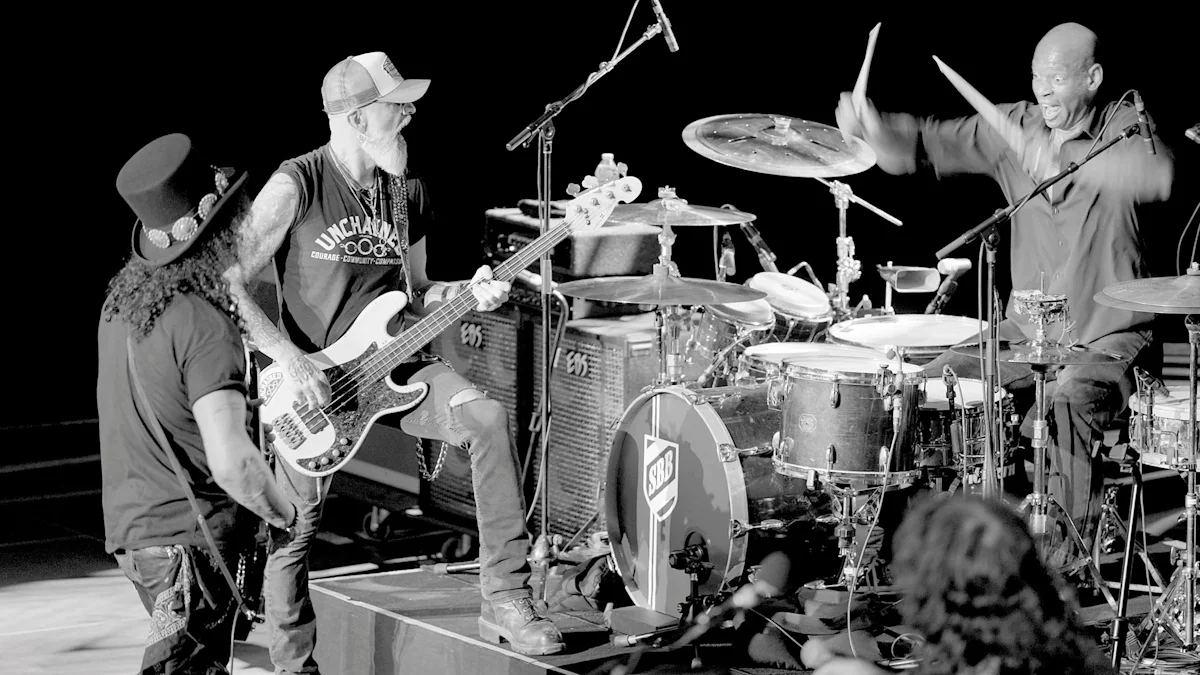
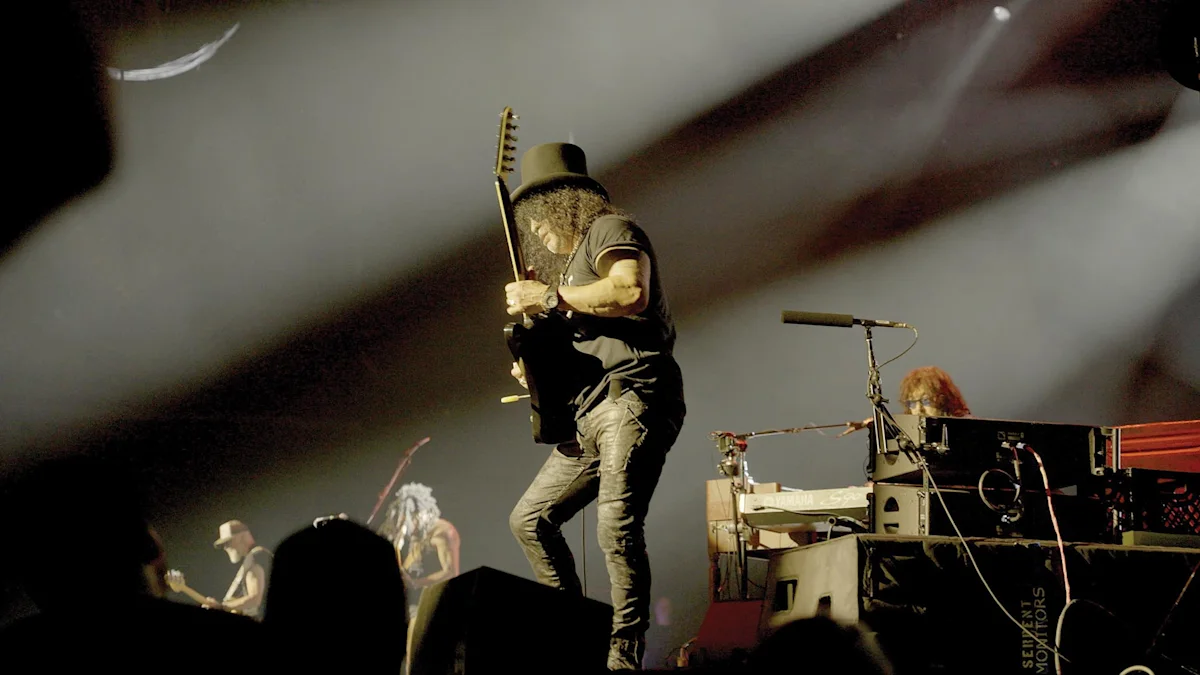
The core touring band featured a powerhouse lineup of veteran players, including Teddy 'Zig Zag' Andreadis on keyboards and harmonica, Tash Neal handling rhythm guitar duties, Johnny Griparic locking down the bass lines, and Michael Jerome anchoring the groove on drums. While this artistic endeavor is clearly driven by a more serious musical focus than his casual 1990s bar-hopping days, the guitar hero remains firmly dedicated to the pure joy of performing.
"I'm not trying to be a 'blues guy'," Slash notes with a laugh. "A lot of heavy rock players do that, where they spend their careers playing rock and then suddenly discover they are dedicated bluesmen. I'm simply offering my own raw interpretation of historical material that had a massive, definitive impact and influence on me when I first picked up the instrument."
Blues phrasing has always been a vital, recognizable element of your signature soloing style, but your live record, Live At The S.E.R.P.E.N.T. Festival, operates on an entirely different artistic plane.
You hit the nail right on the head. When I first started practicing the guitar, my absolute earliest influences were the blues-oriented rock 'n' roll players emerging from the late 1960s and early 1970s. However, right around that formative period, my grandmother completely turned me on to the catalog of B.B. King, mainly because she was sick and tired of hearing me listen to the exact same British blues-rock players over and over again. She looked at me and said, "No, this is the real deal." She really opened that historical door for me, revealing the direct correlation between legendary players like Eric Clapton and the root sources where they extracted their entire musical vocabulary. So, traditional blues has always been the primary root of my playing technique.
Later on, during the musical shifts of the 1980s, I integrated that rootsy influence into my collaborations with different types of musicians. When the classic lineup of Guns N' Roses first came together, it was truly an amalgamation of vastly different musical styles that gave the band its definitive edge. But for me personally, the core foundation of my contribution was always the old-school blues stuff.
Do you view the physical and emotional act of performing traditional blues as something vastly different from playing heavy rock music?
I approach the blues in the exact same manner I approach raw rock 'n' roll: I play entirely for feel and emotional honesty. I am certainly not what you would classify as a strict blues purist or anything of that nature; I simply do what I do on the fretboard. But it offers an immense amount of fun and serves as a phenomenal emotional release for me. Looking back at the 1990s, we assembled that band called The Blues Ball, which was essentially a glorified, high-energy cover act. We performed around the local Los Angeles circuit, and then it evolved into a touring bar band. I had recently parted ways with Guns N' Roses at the time and was sitting in between my primary solo projects, so it served as a great, highly entertaining filler for my schedule.
Fast-forward through a bunch of years, I am back touring with Guns N' Roses, and we had a brief break between individual tour legs. I thought to myself, "You know, I would genuinely love to go into a professional studio and record some of those classic songs with the guys." So I called them up, we assembled a collection of those vintage tracks we used to jam live, added a couple of other favorite numbers, and tracked Orgy Of The Damned.
While tracking this recent live record, and throughout your summer blues tour in general, you relied on a massive array of specialized guitar gear that we never see you use with Guns N' Roses. Does blues music bring that out in your creativity?
Definitely. While tracking Orgy Of The Damned, I happened to plug into a boutique Magnatone combo amplifier that I just had lying around the studio, and that single moment opened a massive new door for my entire guitar tone. In fact, I completely switched my primary amplifier allegiance away from my long-term partners at Marshall solely because of the incredible performance of that M-80 combo rig. Furthermore, I broke out a large collection of my prized vintage guitars for these sessions because I had a very specific, historic sonic character in mind for the tracking.
Roughly a year prior to the session, I had purchased a phenomenal semi-hollow Gibson ES-335 from the team at Norman's Rare Guitars in the San Fernando Valley. So I pulled that instrument out of the vault, alongside a classic Fender Stratocaster, a Fender Telecaster, and a couple of my old, reliable Gibson Les Paul models. I also integrated an original Gibson Explorer and a Gibson Firebird into the studio tracking. That was the primary arsenal used to record the studio album.
To take the show on the road for the live tour, I obviously didn't risk traveling with all of those priceless vintage instruments. Instead, I utilized perfect modern facsimiles — high-end Fender and Gibson Custom Shop reissues of those exact guitars. However, I did bring a premium ES-335 out with me, which quickly became the absolute go-to guitar for the entire tour and the live record, right alongside a pair of roaring Firebird models. Those Firebird guitars, loaded with distinct mini-humbuckers — which operate almost like high-output single coils — sound absolutely incredible. Interestingly, I only carried two classic Les Paul models on the road: a standard Standard model and a premium '59 reissue. The Explorer I toured with was a flawless '58 replica, which was an amazing-sounding instrument. I actually tracked the song "Born Under A Bad Sign" with that specific guitar before bringing it out on stage for the festival dates.
Oh, and I also relied on a specialized Travis Bean aluminum-neck guitar for my slide parts, and a vintage Jackson pedal steel guitar that I played specifically on the track "It Takes A Lot To Laugh, It Takes A Train To Cry." That completely covered my sonic requirements. Combining those instruments with the heavy-duty Magnatone M-80 2x12 combo amplifiers delivered the definitive sound of the entire project.
Considering you had been globally recognized as a premier user of Marshall amplification for decades, what exactly caught your ear when you first plugged into the Magnatone circuit?
It was an incredibly big deal for me professionally. When we first entered the studio to begin pre-production and iron out the arrangements, I knew right away that I did not want to rely on my traditional, highly driven Marshall rock tone. I brought a diverse selection of amps into the room, including a couple of vintage Fender Twin combos, a few Fender Deluxe models, a Vox half-stack, and a vintage Vox combo. I did have my trusted old 50-watt Marshall head with me as well, alongside that Magnatone M-80.
What ended up happening was purely spontaneous. I would look at a song arrangement and mentally visualize the exact amp and guitar combination I wanted to try. I systematically audited all the amplifiers in the room, but the moment I plugged into the Magnatone combo — which had actually been gifted to me years prior but had sat completely unplayed in my collection — I was so blown away that I ended up tracking every single song on the album with it.
And now, that specific tone has transitioned directly onto your live blues stages, and even into your massive stadium tours with Guns N' Roses.
I had been using Marshall amplification for such a massive portion of my career that I had simply stopped listening to anything else on the market. I never gave rival amp companies a fair shot because they lacked that signature Marshall midrange punch that defined my rock tone. But there was something undeniably magical about how the Magnatone circuit responded to my hands that worked perfectly. I tracked the studio album with it, and when the tour kicked off, I brought those combos out on the road and they delivered flawlessly.
Unbeknownst to the general public, I actually quietly replaced my entire backline of Marshall amplifiers on the subsequent global Guns N' Roses stadium tour with my new Magnatone units, and that has officially become my definitive signature sound. Shortly after that tour, I collaborated directly with the design team at Magnatone to engineer a high-powered, 100-watt master head model called the SL-100, which is the exact amplifier I am running on stage right now.
You mentioned being widely recognized for a very specific, signature rock tone, yet here you are on stage paying direct homage to historic guitar giants like Peter Green, Albert King, and other defining blues innovators, while being an incredibly influential player yourself. That must require a very delicate creative balance to strike.
Right! Well, there is no denying that we are currently living through an absolute renaissance period for blues guitar. There are so many truly phenomenal, dedicated purist blues guitarists out there right now — exceptionally well-studied, highly educated, phenomenal musicians hitting the touring circuit and keeping the blues alive. I firmly believe we are experiencing a golden era for blues music right now, far more vibrant than anything we have seen in the last 20 years. As far as I am concerned, that defines a true musical renaissance.
But at the end of the day, I simply go out there and do what I do best. I try not to take myself or the performances too seriously. That is one of the main reasons why a few borderline common blues covers have been featured so prominently in this setlist. Those specific songs represent massive, essential stepping stones for my own personal development as a player, and I wanted to honor them. My main focus is to keep the original vocal and guitar melodies completely intact and show utmost reverence to the original compositions.
We took those classic foundations and simply injected our own playing personality into them without overthinking the historical weight. The musicians in my touring band do this for a living; they routinely perform alongside blues legends like Walter Trout, so they are the real deal — pure blues players. I get the incredible privilege of layering my own signature style on top of that rock-solid blues foundation, which makes the entire live experience an absolute blast.
Listening to the tracking on the live record, it is crystal clear that you had the time of your life on the road. Can fans expect more blues projects in your future?
Right now, I am constantly juggling a packed schedule between touring the world with Guns N' Roses and handling various studio tracking sessions. I have a brand-new studio album recorded alongside my сольный проект The Conspirators that is already completely finished and locked in for a release at the very top of 2027. Once that cycle settles, I am absolutely going to carve out a dedicated creative window to write and record another blues album.
There are some incredibly cool vintage tracks that I would love to go after and re-energize in the studio, so I am actively looking for the perfect scheduling window to make that happen. Furthermore, we absolutely need to bring this live blues tour over to Europe because the demand from the international fan base is massive.

