

The Blueprint of Bass Innovation: How Victor Wooten Tracked "A Show of Hands" and Amazed Anthony Jackson
July 31, 2026, 9 a.m.
The extraordinary musical exploits of the virtuosic master as a key member of the Grammy-winning outfit Béla Fleck and the Flecktones have long cemented his status as a legendary figure among bass purists and elite musicians worldwide. By the late 1990s, he had already secured multiple Nashville Music Awards for Bassist of the Year and achieved a historic milestone by winning the coveted Player of the Year award from Bass Player magazine three times — establishing himself as the only technician to capture the honor more than once.
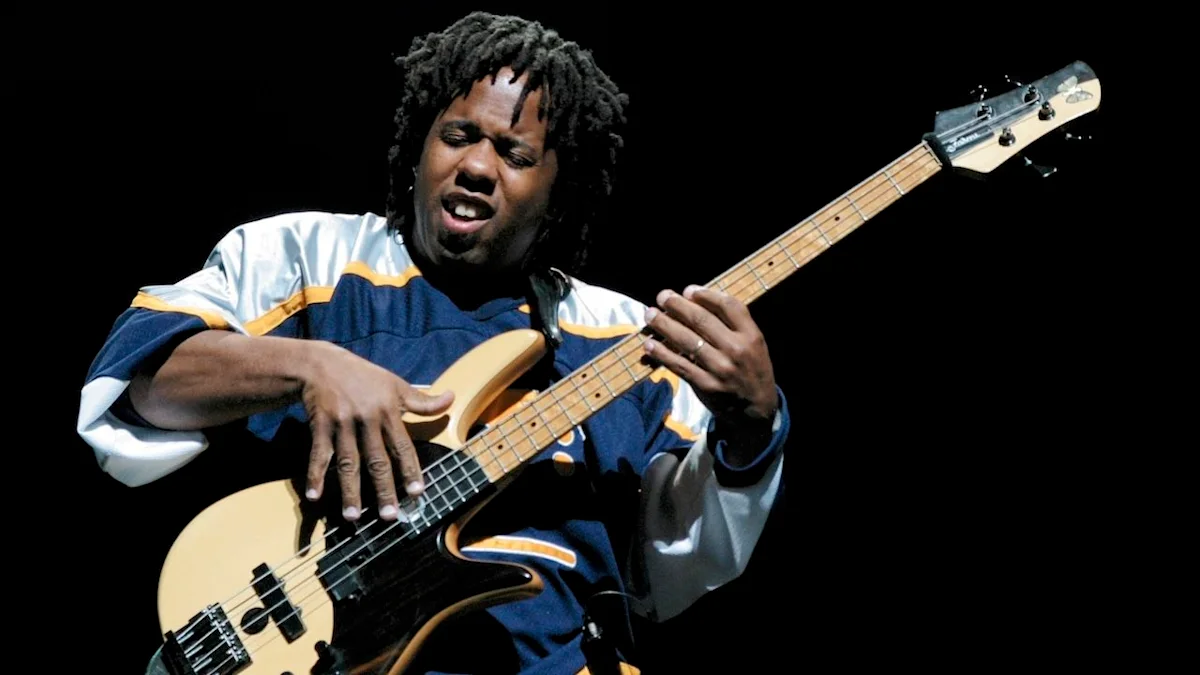
Yet, according to the virtuoso himself, the absolute pinnacle of his early creative achievements was the realization of his groundbreaking debut studio album, A Show of Hands. Captured during intense tracking sessions between 1993 and 1994, the project immediately achieved legendary cult status via underground bootlegs and word-of-mouth long before it ever officially hit record store shelves. The core creative mandate was completely unprecedented: perform every single note, groove, and percussive element live on a single bass guitar, with absolutely zero studio overdubs.
"I wanted to make a profound statement — more to myself than to the listeners — not to showcase my technical boundaries, but simply to prove that such a feat could be achieved," Victor Wooten reflects. "My biggest concern was figuring out how to make a solo bass record listenable and engaging for the entire duration of the disc. It was a massive personal challenge, and I was incredibly satisfied with the final outcome."
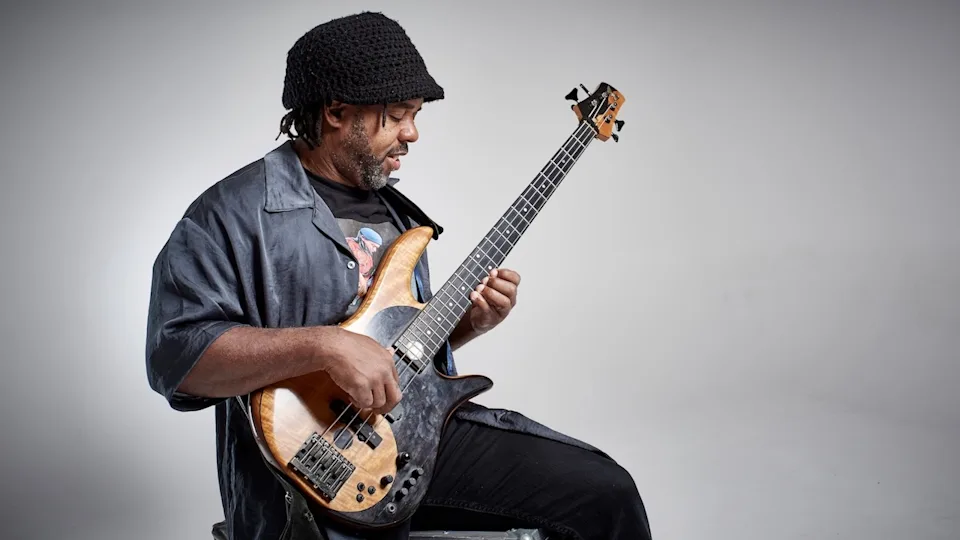
"Back in those days, I only had raw cassette tapes to distribute my music. I happened to be hanging out at the Fodera Guitars custom shop in Brooklyn on the exact day the builders were prepping a new fretless bass to ship out to Marcus Miller. I immediately grabbed a cassette copy of my unreleased album, slipped it right into the interior pocket of the instrument case, and sent it off."
"I pulled the exact same move to get my tapes into the hands of Stanley Clarke, and somehow managed to pass copies along to jazz titan Chick Corea and the legendary session master Anthony Jackson as well. The most incredible part of the whole experience is that every single one of those heavy hitters took the time to contact me directly. Somewhere in my personal archives, I still preserve the exact voicemail that Marcus left on my machine."
"However, it was the raw reaction from Anthony Jackson that left the most permanent mark on my career. For decades, he had been notoriously vocal in the musical community about his intense dislike for two-handed tapping and modern slap techniques. Then out of nowhere, he calls my phone and delivers one of the most substantial compliments I have ever received."
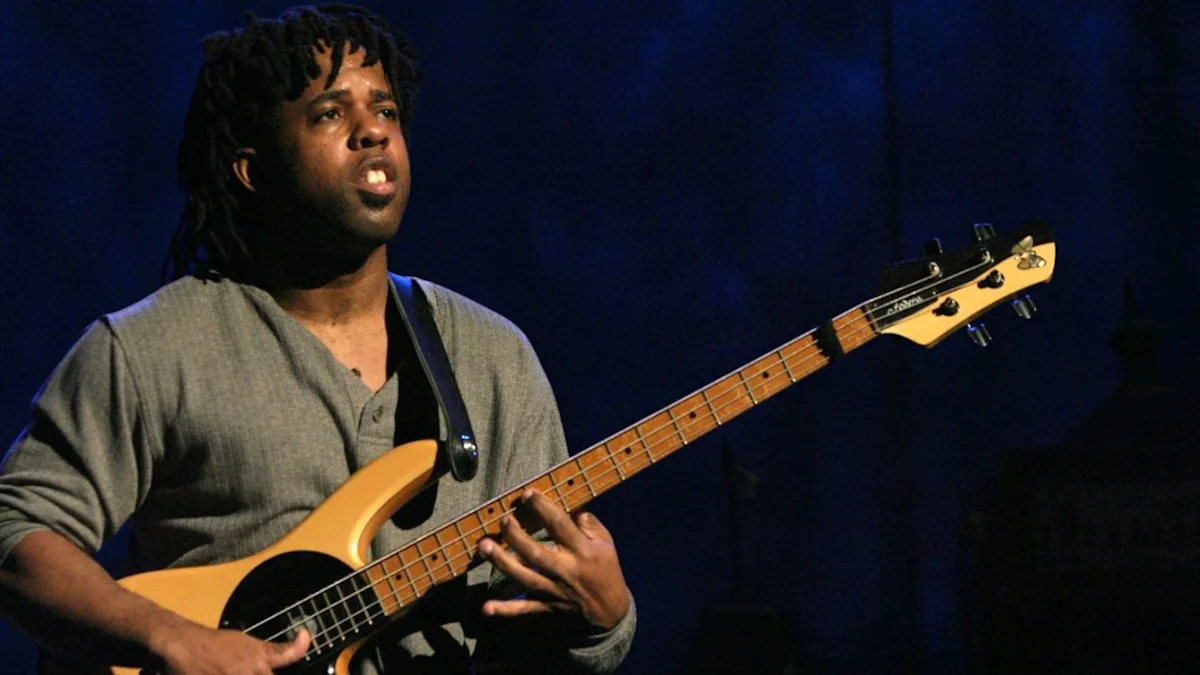
"He looked at me and said that I was the absolute first bass player in history who made him seriously consider learning how to tap on the fingerboard himself, simply because there was a specific pattern on my record that he could not logically figure out. Coming from a musical authority like Anthony Jackson, that was as deeply meaningful as it could possibly get."
The pioneer describes his highly influential "open hammer pluck" technique as a fluid, high-speed rhythmic cycle: striking an open string with the right-hand thumb via a downward slap stroke, instantly executing a powerful hammer-on note with the left hand on the fretboard, and immediately following up with a sharp upward pluck using the right-hand index finger. This specialized mechanics typically generates an incredibly dense, rolling triplet feel.
"My overarching approach to the instrument has always been to transform whatever technical challenge I was shedding into a beautiful piece of art. If I was in the middle of developing an completely new technique, I would force myself to write a comprehensive song that mandated its use. That way, I wasn't just wasting time practicing dry physical exercises — I was creating actual music."
"The iconic track 'Classical Thump' stands as a textbook example of that philosophy, because it started its life as nothing more than a rudimentary thumb-strike exercise designed to build speed. It was simply a tool to map out different paths for thumb variations. If you audit the track from that specific technical perspective, you can actually hear the underlying mechanics evolve and become more complex as the arrangement progresses."
Another definitive masterclass in how much sonic real estate can be claimed using just four strings can be heard on "Justice," the artist's thought-provoking musical homage to the realities of urban street life.
"I had been messing around with that specific low-end pocket for a significant amount of time; it possessed an incredibly atmospheric, distinct sound quality that eventually inspired the lyrical content and the supporting musical sections. Don't ask me why I made the unorthodox choice to track my main bass solo directly over the top of the vocal chorus — it just felt right!"
Regarding the track's wide-ranging, multi-layered vocal arrangements, the master craftsman revealed a classic old-school studio production secret: "That is entirely my own natural voice overdubbed multiple times. But instead of attempting to physically sing in various counter-tenor or deep bass registers, I intentionally manipulated the speed of the analog tape machine, slowing it down or speeding it up so that the organic texture and formants of my voice would shift. That is a studio technique famously utilized by Prince."
In strict compliance with the project's solo purist doctrine, the leader executed the entire tracking process without safety nets. "Whenever I am performing — whether I am standing completely alone on a stage or jamming in a room — I always distinctly hear the rest of a full rhythm section playing inside my head. Therefore, I constantly try to physically emulate the drive of a complete band, injecting all the subtle rhythmic motion and ghost notes that naturally occur between the primary melody lines."
On the hardware side of the tracking sessions, the artist relied primarily on his signature Fodera 4-string electric bass tuned to standard concert pitch. The sessions utilized completely fresh sets of high-performance strings, with the signal routed directly into the recording console through premium studio preamps manufactured by Demeter and ADA. "We also placed a highly sensitive live condenser microphone directly in front of the bass body and fretboard to accurately capture the physical attack of the strings against the frets."
Few compositions in the modern bass lexicon illustrate the player's core artistic worldview more clearly than the fan-favorite track "U Can't Hold No Groove." "To this very day, that remains one of the premier compositions that players constantly ask me to break down step-by-step at clinics."
"The entire master disc had already been completely tracked and mixed for months when I made the sudden decision to inject vocal hooks into that specific arrangement. I reached out to the legendary session bassist Will Lee, and he graciously agreed to track the vocal lines with me. Initially, I had absolutely no intention of singing a single note myself, but he successfully talked me into it. We ended up tracking our absolute best vocal imitation of the funk pioneer Larry Graham."
Another standout milestone that has become the definitive benchmark for contemporary bass technicians and a massive crowd favorite at global masterclasses is the album's title track, "A Show of Hands."
"A close artist friend of mine named Steve Lowrey once drew a detailed portrait of me that he officially titled A Show of Hands. I instantly fell in love with the phrasing and decided it would make the ultimate title for the debut record. Once this specific track was fully captured in the studio, the title fit the music flawlessly."
"I utilized my specialized stereo-wired custom bass for this particular arrangement — a premium four-string Fodera instrument equipped with individual Piezo pickup saddles for each independent string, paired with custom magnetic single-coils wound by the legendary artisan Bill Bartolini. The specialized Piezo matrix allowed the signal from each individual string to be tracked onto its own isolated channel on the tape. During the final mixdown, I manually panned each string's output to a different location across the stereo field."
"Over the decades, I have had to perform this exact composition repeatedly on concert stages just to physically prove to skeptical audiences that the entire arrangement can genuinely be executed simultaneously by a single player in real time."

