

How Tom Anderson Changed the Guitar Industry: From Garage Builder to Boutique Legend
May 5, 2026, 9:15 a.m.
The story of Tom Anderson is more than a personal journey — it’s a defining chapter in the evolution of modern electric guitars. From his early experimental days at Schecter Guitar Research to founding Anderson Guitarworks, he has set new standards for precision, consistency, and playability. Now, as he looks toward the future, he is preparing the next generation of leadership with Markus Spohn.
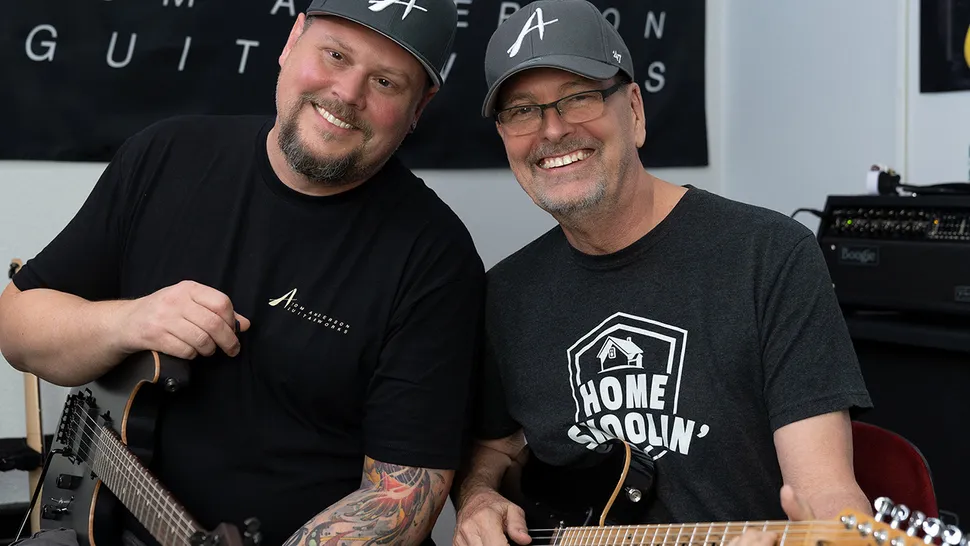
Since launching Anderson Guitarworks in 1984, Anderson has pursued a clear vision: crafting electric guitars that deliver exceptional feel, tone, and reliability. His journey began in the late 1970s at Schecter Guitar Research, where he played a key role in the emerging replacement parts movement while gaining hands-on experience in guitar manufacturing.
When Schecter shifted toward imported components and a more production-driven model, Anderson chose a different path. What began in a small garage workshop eventually grew into one of the most respected boutique guitar brands in the world.
Early Passion and Entry into the Industry
Anderson recalls picking up the guitar at a very young age and knowing it was his calling. After high school, he didn’t pursue college — instead, he focused entirely on music.
He spent his days working in music stores doing repairs and his nights performing. While he wasn’t building guitars yet, he was installing pickups, working on frets, and learning the intricacies of how instruments are constructed.
During this time, he met Dave Schecter, who worked at a repair shop in Los Angeles. Their relationship developed into a friendship, and when Schecter founded Schecter Guitar Research, Anderson became one of the first employees — marking the true beginning of his education in guitar manufacturing.
Lessons from the Schecter Years
Working at Schecter was a formative experience. At the time, the company wasn’t a traditional guitar manufacturer — it was more of an experimental environment where the team learned by doing.
They produced everything needed to assemble guitars: metal components, wooden parts, plastic elements, pickups, and finishes. Without prior large-scale manufacturing experience, they approached challenges creatively, often deviating from established industry practices.
There were successes and failures along the way. Anderson notes that the company relied heavily on manual labor and invested little in machinery. This experience later shaped his philosophy: when he started his own company, he prioritized investing in tools that enhanced precision and consistency.
The Birth of Anderson Guitarworks
In the early 1980s, Schecter brought in investors and began importing parts from Japan — a direction that didn’t align with Anderson’s vision.
According to Anderson, Dave Schecter encouraged him to start his own business, emphasizing the importance of independence from investor influence.
In 1984, Anderson left and began working out of his garage. Initially, he focused on producing parts — bodies, necks, and pickups — for repair shops and other builders. By 1986, he began building complete guitars, which proved to be far more fulfilling.

Innovation Through Technology
A defining feature of Anderson Guitarworks became its embrace of technology. In 1988, the company invested in its first CNC machining center.
Anderson recounts how he asked a CNC manufacturer to replicate a guitar neck. When they demonstrated remarkable precision, he committed to purchasing the machine — despite its cost being four times his monthly house payment.
The CNC machine allowed multiple processes to be performed simultaneously, significantly improving production consistency. At the time, even major brands like Fender and Gibson were not utilizing such advanced machining centers.
Advancing Finishing Techniques
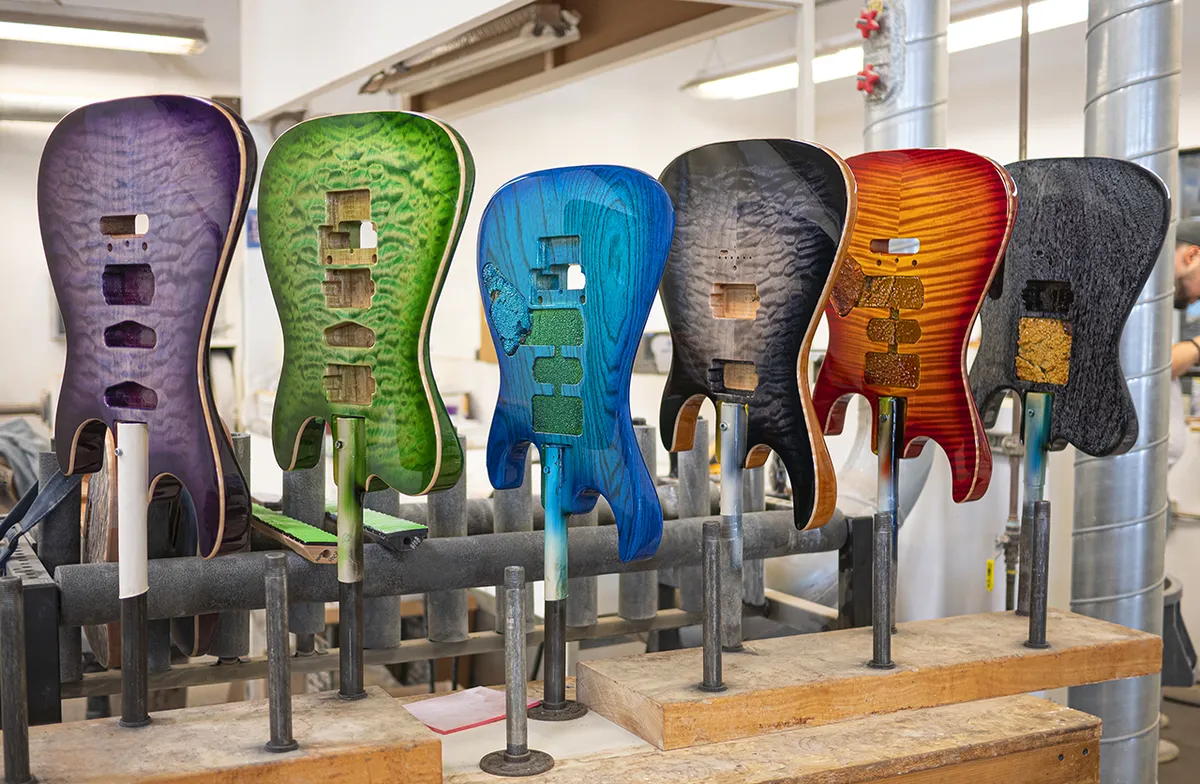
Another major innovation was the adoption of UV finishes in the early 1990s, developed in collaboration with Bob Taylor of Taylor Guitars.
UV curing allowed finishes to harden almost instantly, reducing production time and improving consistency. By 1992, Anderson was showcasing fully UV-finished guitars at NAMM.
Recognition and Industry Impact
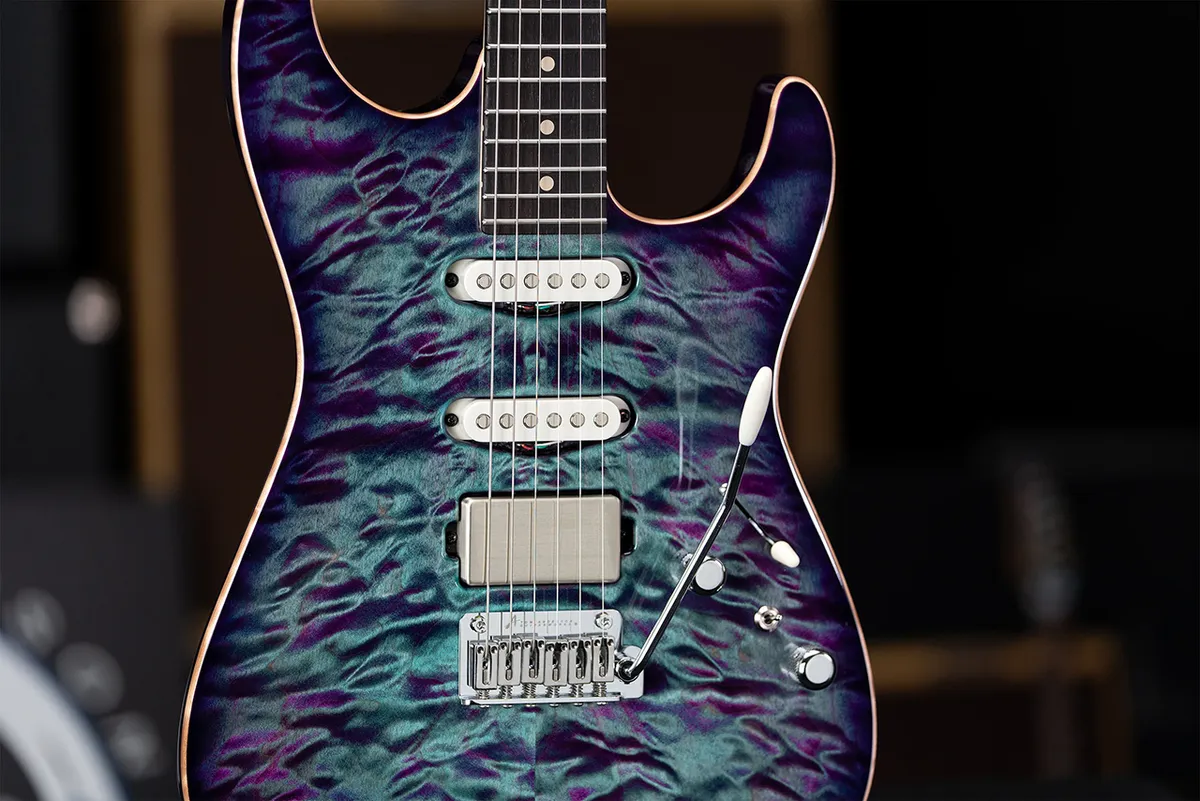
In the pre-internet era, exposure came through magazines, artists, and trade shows. Anderson’s first NAMM appearance in 1986 introduced his guitars to a wider audience.
A pivotal moment came when Guitar Player magazine conducted a Tele-style shootout in the early 1990s. Anderson guitars placed first, second, and fourth — a significant achievement that boosted the brand’s reputation.
Artist Influence and Visibility
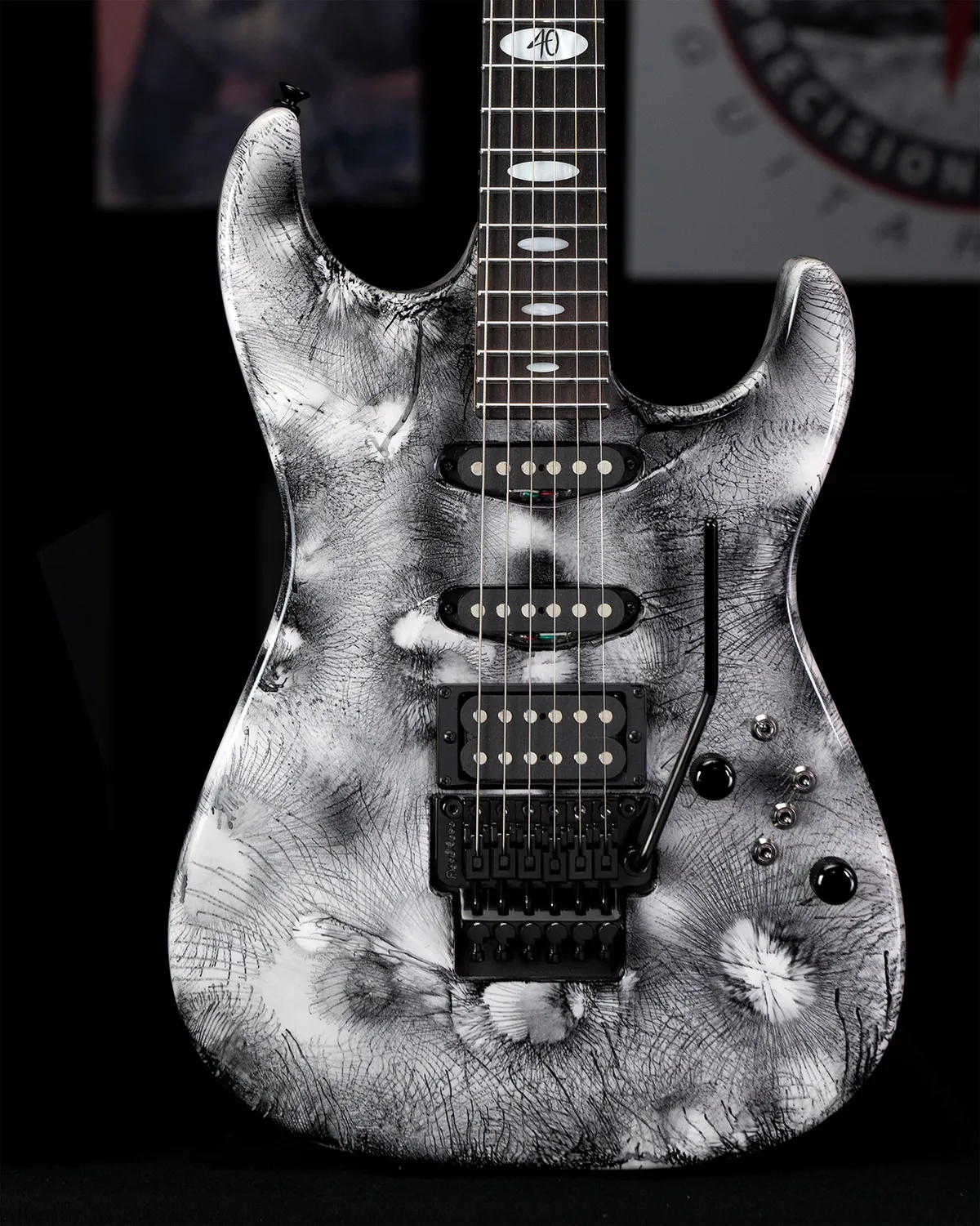
Anderson credits Kirk Hammett as an early influential figure. Seeing a guitarist of his caliber using Anderson guitars helped establish credibility.
Steve Vai also played Anderson instruments before signing with Ibanez. However, Anderson believes the brand’s success ultimately came from players recognizing the consistency and quality of the guitars.
Markus Spohn: From Customer to Successor
Markus Spohn entered the story as a customer. While working in the tech industry in San Francisco, he was encouraged by a dealer to try an Anderson guitar — and quickly became a devoted user.
During a 2008 factory visit, he noticed outdated order management systems. Drawing on his experience at Salesforce, he began developing modern solutions, gradually becoming more involved in the company.
Following the passing of Anderson’s business partner in 2017, discussions about the company’s future led to Spohn joining full-time. About five years ago, he relocated to Southern California to take on a leadership role.
What Sets Anderson Guitars Apart
According to Spohn, the defining factor is meticulous attention to detail at every stage — from wood selection to final setup. Every instrument is personally tested before leaving the factory.
Anderson adds that every builder leaves a personal imprint on their instruments. For him, playability is everything. If a guitar doesn’t feel right, nothing else matters.
He reflects that while vintage guitars were inspiring, he always wished they could be improved — and he continues striving to build the instrument he dreamed of in his youth.
Looking Ahead
Looking to the future, Markus Spohn emphasizes that the company’s core mission will remain unchanged: precision, innovation, and playability.
While bringing fresh ideas shaped by a different generation and background, his goal is not to replace the past — but to build upon it while honoring the legacy of Tom Anderson.

