

From Cats to Poetry: How Positive Grid REACTOR Turned Random Ideas into Incredible Guitar Tones
June 29, 2026, 9 a.m.
Can a photo of a cat, a bowl of fruit, or a famous poem inspire your next guitar sound?
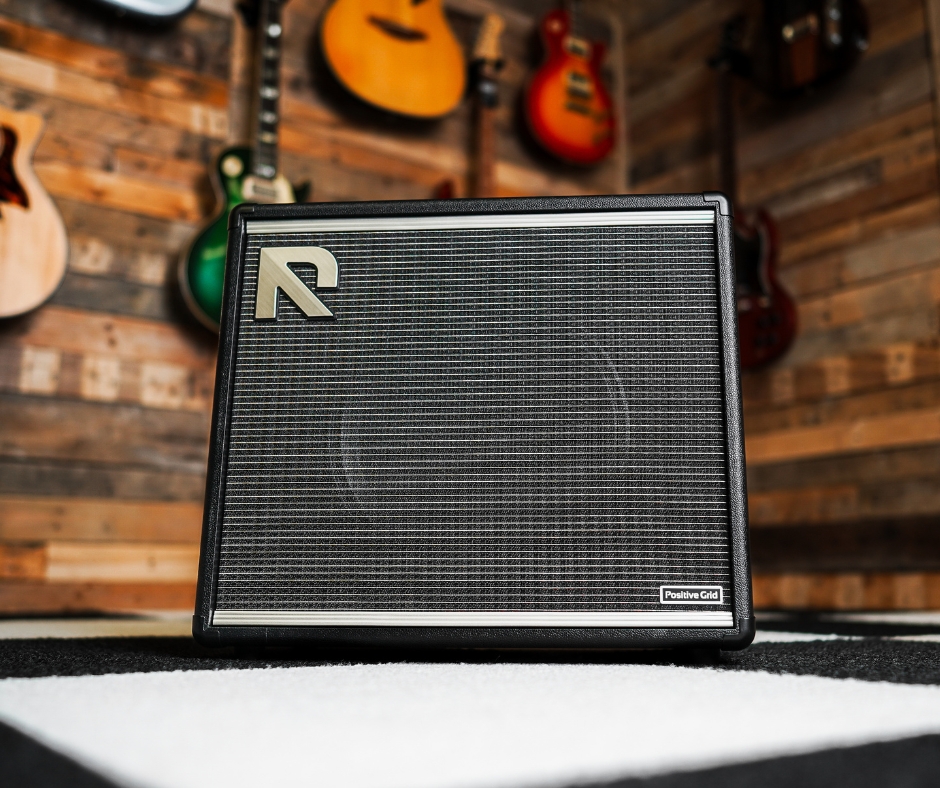
The new Positive Grid REACTOR amplifier is far from a traditional modeling combo. Equipped with the company’s innovative Amp Intelligence technology, it can generate guitar tones from text prompts, images, and even audio recordings.
This feature article was created in partnership with Positive Grid.
Most guitarists have experienced the challenge of searching for a tone that truly feels personal. Even with the enormous selection of guitars, amplifiers, and effects available in 2026, the sheer number of options can sometimes become overwhelming. As a result, many players fall back on familiar gear combinations and proven setups.
There is nothing wrong with that approach, but eventually every musician reaches a point where they want to break out of their comfort zone. Repeating the same formula forever rarely leads to a truly original sound or playing style.
Over the past several years, Positive Grid has focused on helping players overcome that hurdle. The company first introduced AI-assisted tone creation through the Spark 2 practice amp, allowing users to find sounds using only a few words. Later, a more advanced version appeared inside Bias X software, making digital guitar rigs much easier for newcomers to understand.
Now the company has taken the concept even further.
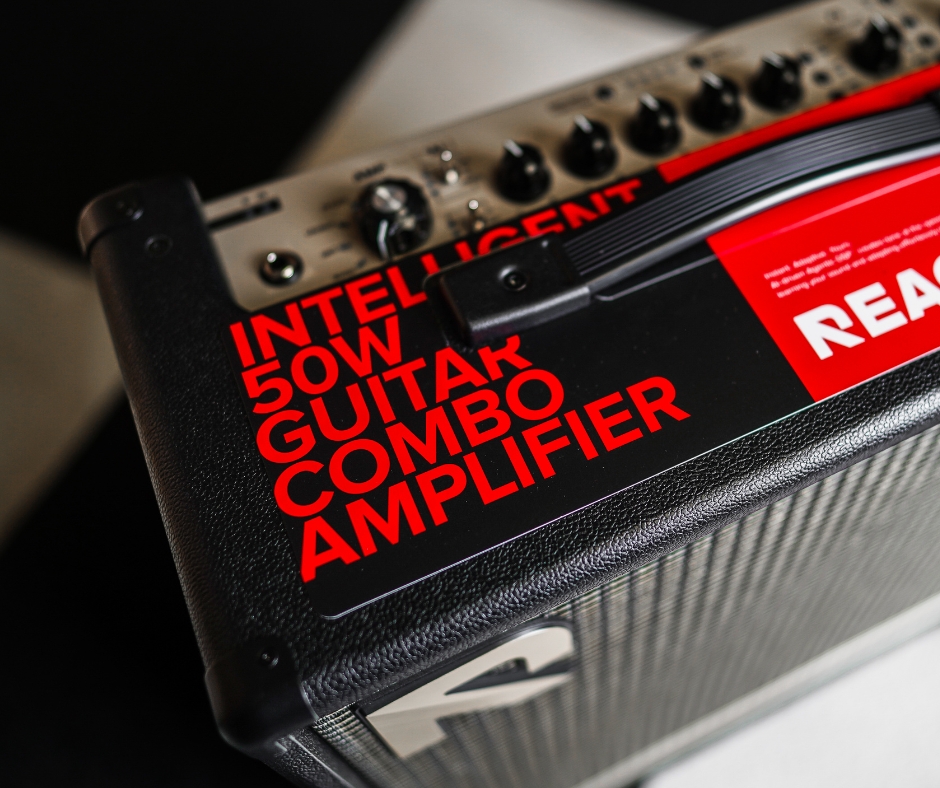
Introducing REACTOR and Amp Intelligence
The REACTOR is Positive Grid’s latest performa nce-ready amplifier, designed for players who want professional-quality tones without spending a fortune.
While it includes the wide range of features and sounds expected from a modern Positive Grid product, the standout feature is undoubtedly Amp Intelligence.
At its core, Amp Intelligence is a smart tone-generation engine built specifically for guitarists. Through the REACTOR mobile application, users can communicate with the system using written descriptions, photographs, or audio samples.
Once the information is submitted, Amp Intelligence quickly analyzes it and generates multiple presets that can be tested instantly through the amplifier.
Its practical value becomes apparent almost immediately.
During testing, an old demo recording from a band was uploaded into the system. Nobody knew exactly what equipment had been used on the original recording, yet within minutes Amp Intelligence delivered three convincing tone recreations that closely matched what it heard.
The technology also works with instruments themselves. Show it a photo of a specific guitar style and it will suggest classic amp-and-effect combinations traditionally associated with that instrument. The results are remarkably effective.
Beyond practical applications, REACTOR also serves as a fascinating creative tool, capable of building tones from nearly anything that can be typed, photographed, or recorded.
Naturally, with such a powerful system available, the temptation arises to try something completely ridiculous.
That is exactly what happened.
Cat’s Entertainment
If the goal is to get strange, it makes sense to begin with something entirely unrelated to music.
At precisely the right moment, an unknown but extremely confident cat wandered through a partially open kitchen door and made itself at home.
A quick photo was taken as the feline guest explored the room as though it owned the place.
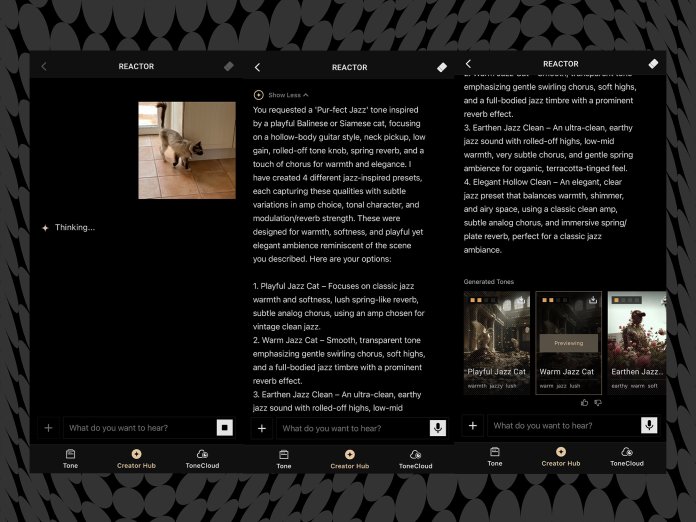
The question was simple: what would Amp Intelligence do with a picture of a cat?
The answer was surprisingly entertaining.
The system responded with a concept along the lines of:
“You wanted a purr-fect jazz tone inspired by a playful Balinese or Siamese cat.”
It then generated a collection of warm, smooth jazz-inspired presets with names such as “Playful Jazz Cat.”
The sounds were genuinely enjoyable, particularly when paired with extended jazz chords and a Jazzmaster’s rhythm circuit.
Even more interesting was what happened when the same image was submitted a second time. Instead of repeating itself, Amp Intelligence delivered an entirely different set of tones, this time centered around expressive wah-based sounds.
The experiment highlighted one of the platform’s greatest strengths: the ability to provide fresh and varied interpretations of the same source material. Naturally, all generated tones can be further refined using the app’s built-in editor.
Orange You Glad I Called?
With animals covered, the next challenge involved food.
Initially, ideas such as burgers and stuffed gyros were considered. Unfortunately, neither happened to be available during the workday.
The fruit bowl, however, was conveniently nearby.
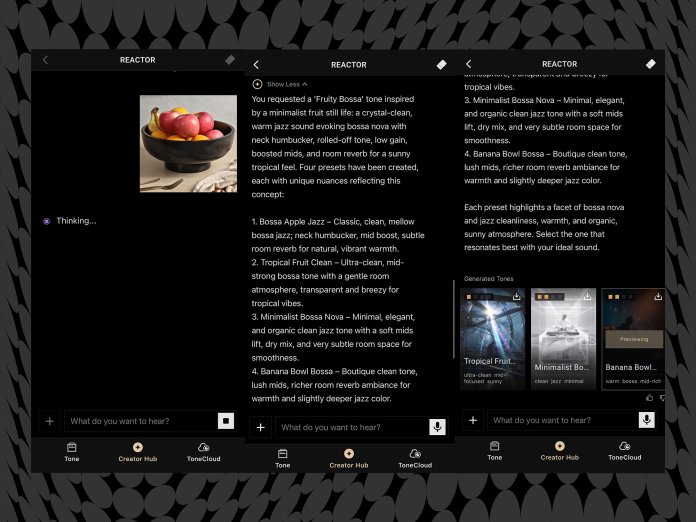
Part of the hope was that the oranges would dominate the image and inspire something obvious, but Amp Intelligence had other ideas.
Instead of focusing on individual fruits, it associated the picture with tropical scenery, sunshine, and relaxed island vibes.
The result was a collection of “fruity bossa” presets.
Among them, Apple Jazz stood out thanks to its smooth character and enhanced midrange response, making it particularly enjoyable for chord-based playing.
Another favorite was Tropical Fruit Clean, which delivered a bright and energetic tone with plenty of personality.
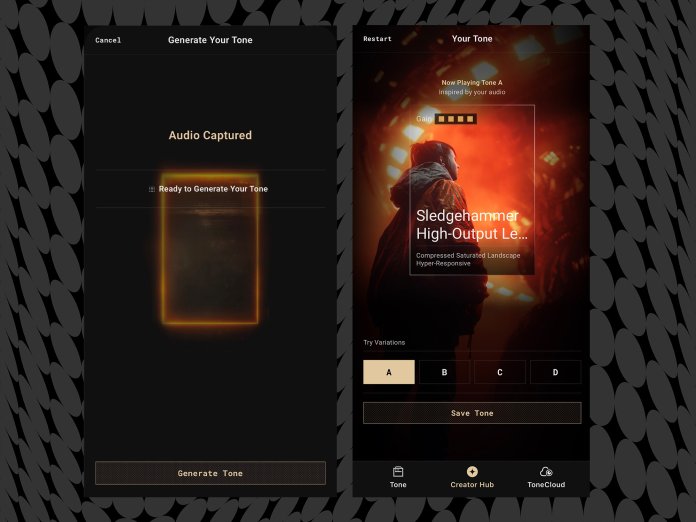
Chapter and Verse
After two unusual experiments, it was time to push the boundaries even further.
For the final test, the system was given a spoken reading of William Blake’s famous 1794 poem The Tyger.
It is worth noting that Positive Grid designed this feature primarily for analyzing music and generating corresponding tones. It is unlikely that the developers anticipated someone feeding it a dramatic recitation of a Romantic-era poem exploring beauty and ferocity.
Nevertheless, Amp Intelligence accepted the challenge without hesitation.
While the resulting presets were not particularly literary in nature, the sounds themselves were impressive.
Most notably, the system generated four aggressive high-gain lead tones. Perhaps it interpreted Blake’s powerful imagery of the tiger “burning bright” as inspiration for something heavy and intense.
Whatever the reasoning, the tones were enjoyable and musically useful despite the unconventional source material.
Real-World Advantages
This unusual experiment demonstrated that Amp Intelligence can successfully transform even the strangest inputs into practical guitar sounds.
For musicians experiencing writer’s block or searching for inspiration, the technology offers a refreshing way to explore new creative directions.
There is a certain similarity to Brian Eno’s legendary Oblique Strategies concept, where random prompts and unexpected ideas help spark fresh artistic thinking.
It is also important to remember that the REACTOR is positioned within reach of developing players who are becoming serious about performing and improving their craft.
Amp Intelligence provides an excellent educational tool, helping users understand how amplifiers and effects interact by generating editable presets instead of forcing them to build every sound from scratch.
Even more impressively, the system can design entirely original virtual amplifiers using component-level modeling and knowledge derived from hundreds of classic amplifier circuits.
In many ways, the possibilities are virtually limitless.
Perhaps the idea of having a conversation with your amplifier once sounded unusual. After spending time with Amp Intelligence and the Positive Grid REACTOR, however, it becomes clear that guitar technology is entering an entirely new era.

