

🎸 PRS Fiore HH and SE DGT Standard
Feb. 1, 2026, 9:15 a.m.
More Fender in the Fiore, More Gibson in the DGT — Two Inspiring Guitars from Inspiring Players
During its 40th Anniversary year, PRS surprised many by largely holding back on releasing new signature instruments. However, as the celebration draws to a close, two new models finally arrive — and they do far more than fill a gap. The Fiore HH and the SE DGT Standard clearly demonstrate just how broad, player-focused, and musically diverse the modern PRS lineup has become.
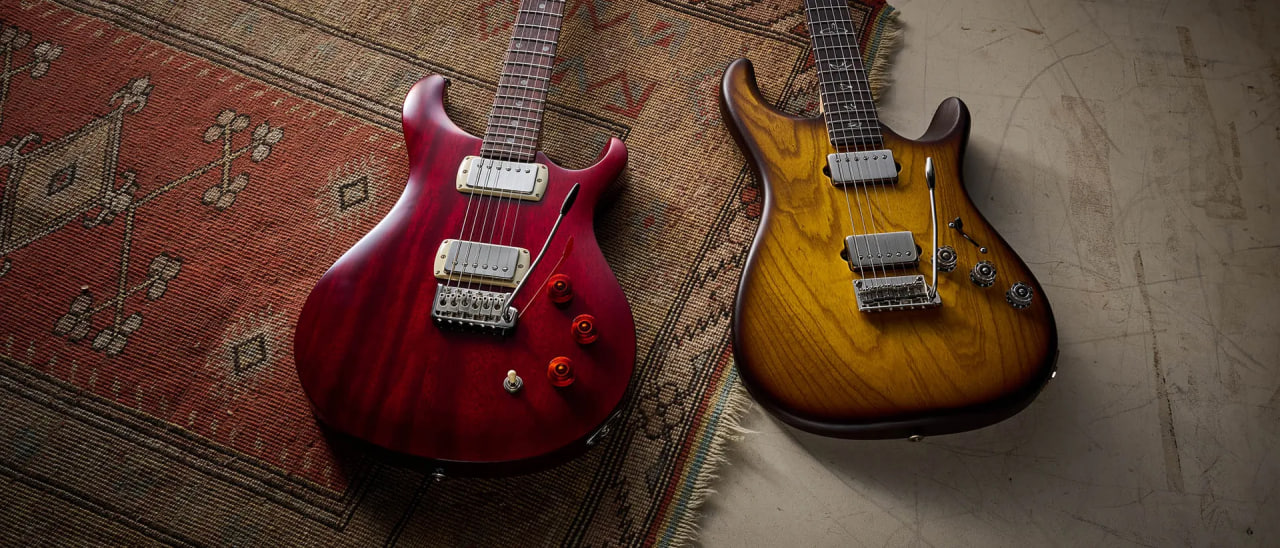
The Fiore may look less traditionally “PRS” at first glance, yet when it comes to build quality, attention to detail, and the overall playing experience, it is unmistakably premium. The sound and feel fully live up to professional expectations. The SE DGT Standard, meanwhile, removes the maple top found on its higher-end sibling, but many players may actually prefer its more organic, earthy tonal character. Importantly, nothing about the construction feels budget-driven — in fact, the platform is so solid that it invites future upgrades. These are truly inspiring guitars, created by inspiring musicians.
Artist Collaboration and the PRS Signature Legacy
Keeping artists satisfied has always been central to Paul Reed Smith’s philosophy. Over the decades, this has included legendary names such as Ted Nugent, Howard Leese, and Carlos Santana (before his own production company launched), as well as modern virtuosos like DragonForce’s Herman Li.
During the anniversary year, however, Herman Li’s Chleo — a radical departure from classic PRS design, featuring a Floyd Rose vibrato, Fishman Fluence active pickups, and a distinctly non-PRS body shape — stood out as the only entirely new artist signature model.
That said, long-time collaborators were not forgotten. As the anniversary year concludes, David Grissom receives a new “Standard” version of his SE DGT, while Mark Lettieri is introduced to an HH configuration of the Fiore, a model that originally debuted in 2021.
PRS Fiore HH — A No-Nonsense Working Guitar
Despite his impressive résumé, Mark Lettieri has always favored tools that avoid unnecessary flash. Pulling the Fiore HH from its gig bag, it feels like a guitar that could easily have “working instrument” stamped on the headstock — practical, honest, and purpose-built.
When we previously reviewed the original Fiore HSS, we were impressed, but noted that it leaned toward the heavier side for this style, especially given its swamp ash body. The HH version addresses that directly: at approximately 3.2 kg (7.04 lb), it feels noticeably leaner, reinforcing a genuine grab-and-go personality.
Much like John Mayer’s PRS Silver Sky reinterpreted the Stratocaster, the Fiore draws its DNA from the hot-rodded super-S concept. It mirrors the longer Fender-style scale length, features 22 frets, and combines sleek horns with PRS’s signature treble-side cutaway and familiar body contours.
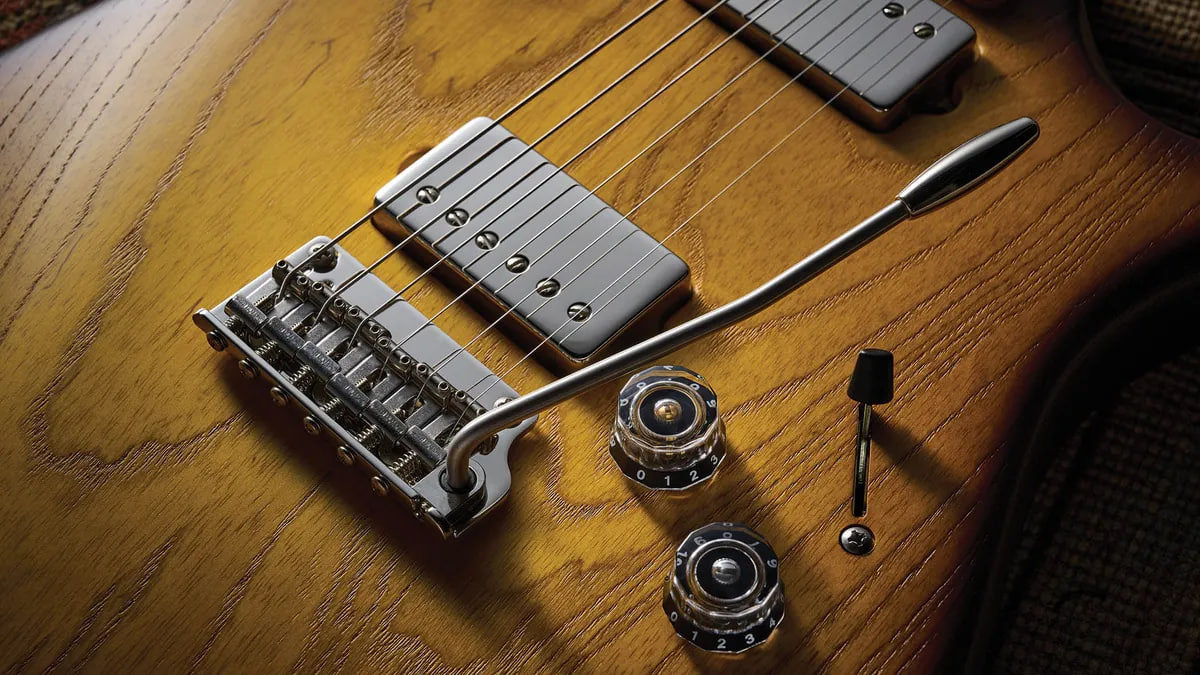
The satin nitro Sunflower finish is applied thinly, allowing the ash body’s open grain to remain visible. The central yellow hue appears slightly muted compared to gloss finishes, contributing to an understated, almost broken-in aesthetic. Close inspection reveals a two-piece, center-joined body.
As with other bolt-on PRS models, a headstock splice is present, though here it is nearly invisible. The slab-sawn maple remains bright and clean, without amber tinting. Another notable change from the HSS version is the fingerboard: dark Indian rosewood replaces maple, adorned with open bird inlays that feel elegant and less visually dominant than solid or shell variants.
Each pickup has its own dedicated tone control, paired with a master volume. Pulling the tone knobs switches each humbucker from series wiring to parallel. The previous five-way selector has been replaced with a more straightforward three-way switch.
Hardware mirrors the original Fiore design: vintage-style locking tuners and a two-post vibrato system similar to that found on the SE Silver Sky. The posts thread into body-mounted collars rather than traditional screws, and the pressed steel saddles match the steel top plate and deeply drilled tremolo block. The push-in vibrato arm features a metal tip and adjustable swing tension. Unlike Mayer’s setup, this bridge allows upward pitch movement — a semitone on the high E string and a minor third on the G.
PRS SE DGT Standard — A McCarty Evolution
The DGT (David Grissom Tremolo) has long enjoyed a devoted following within the PRS community. Fundamentally, it represents an evolution of the McCarty design — a model David Grissom himself helped shape. His original signature guitar appeared in 2007, but the long-awaited SE version only arrived at the end of 2022. The new 2025 SE DGT Standard replaces the maple-topped body with all-mahogany construction, hence the “Standard” designation.
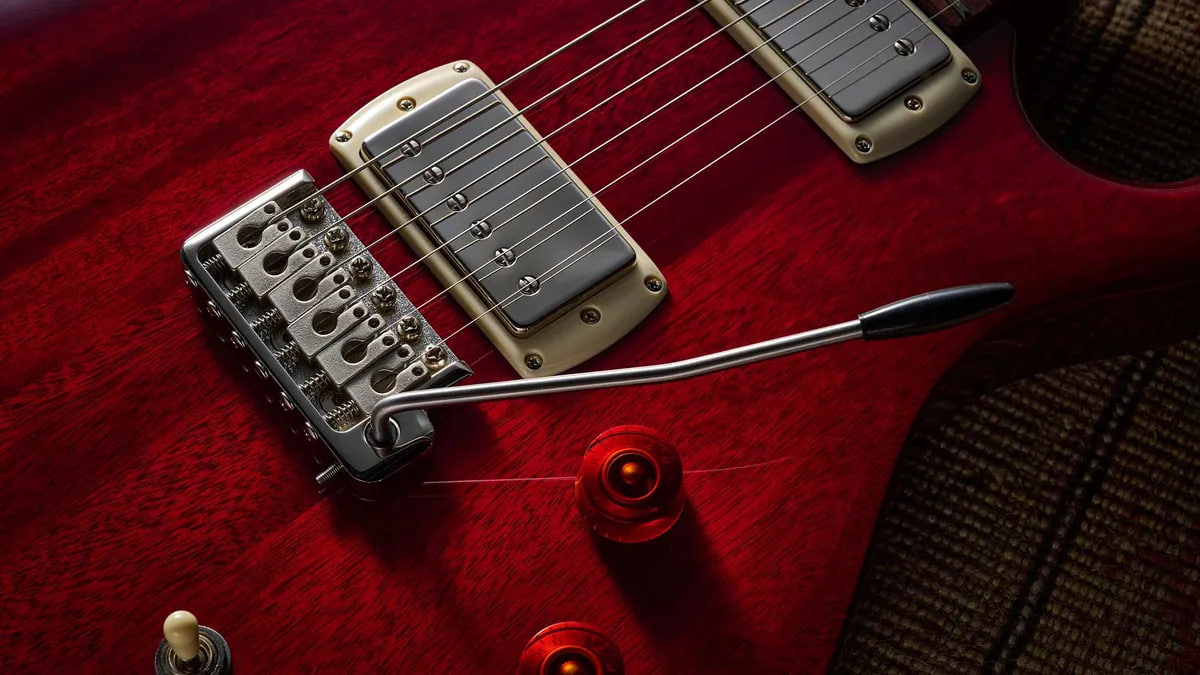
Both SE versions are available in McCarty Tobacco Sunburst. The maple-top model also comes in Gold Top, while the Standard is offered in a translucent Vintage Cherry finish, allowing the wood grain to show through. The body consists of three pieces, clearly visible up close, and features the SE “shallow violin” carve — gently dished edges surrounding a largely flat top. The neck is a glued-in, three-piece longitudinal mahogany laminate.
There are no changes to the non-locking tuners or the cast steel vibrato used across many SE, S2, and CE models. Over time, PRS has increasingly adopted proprietary hardware on its USA instruments — from vibratos and locking tuners to lampshade knobs and strap buttons.
While lower-priced SE models traditionally relied on more generic components, that is changing. Here, we see stylish proprietary humbucker rings, previously introduced on the SE Paul’s Guitar and more recently on redesigned SE Hollowbody models and the SE CE 24 Standard Stoptail Satin. Standard speed knobs are used — the same as on the Core model — suggesting David Grissom’s personal preference.
Control layout remains classic DGT: separate volume controls for each pickup (with the bridge volume closest to the bridge) and a master tone knob featuring a pull switch that splits both DGT “S” humbuckers simultaneously.
Feel, Playability, and Tonal Character
Although both guitars feature dual humbuckers and vibratos, nearly everything else differs: scale length, neck joint, neck profile, and fretwire.
The Fiore neck feels slimmer overall, measuring 42.34 mm at the nut, 21.5 mm deep at the first fret, and 23.7 mm at the 12th. The DGT is slightly wider at the nut (42.6 mm) with similar depth at the first fret (21.2 mm), but it fills out significantly to 24.7 mm by the 12th fret — a difference that is immediately noticeable in hand.
Both necks are beautifully shaped, with a subtle V feel in lower positions that gradually rounds out higher up. The DGT features a gloss neck back, while the Fiore uses a satin finish. Despite being spec’d for .010 strings, our DGT arrived with .011s, as on the Core model, adding to its substantial feel despite the shorter 25-inch scale. Fretwire also differs considerably: the Fiore uses standard PRS dimensions, while the DGT sports significantly taller and wider jumbo frets.
To generalize the builds, there is undeniably more Fender influence in the Fiore, and more Gibson character in the SE DGT. Unplugged, the Fiore offers a snappier, more percussive response, while the DGT emphasizes a stronger fundamental. Once amplified, those traits remain clearly audible.
Output levels in humbucker mode are similar, but the DGT delivers a rich, creamy midrange with convincing Les Paul-style authority at the bridge — powerful without becoming honky. The neck pickup balances beautifully, offering thicker, chewier tones, while the combined position adds sparkle. Three highly musical voices.
Switching to the Fiore, the tone pulls back slightly in the low mids, delivering a cleaner, more articulate sound that will appeal to players who favor clarity and brightness. Don’t mistake that for weakness — it still rocks hard, and the neck pickup excels at smooth, Santana-inspired sustain with just a touch of tone roll-off.
Secondary tones further enhance these personalities. The DGT’s coil splits sound convincingly single-coil-like, hollowed, percussive, and rich in high-end detail. The Fiore’s parallel humbucker modes also sit firmly in single-coil territory, but with a smoother, slightly steelier character — reminiscent of a refined Telecaster.
Both guitars thrive with pedalboards. Their low-noise clarity almost feels studio-polished. If we were to summarize: the DGT comes across as a rootsy, bar-room rock brawler, while the Fiore leans toward a refined “LA studio” workhorse — effortlessly classy.
The vibrato systems differ subtly as well. The Fiore allows upward pitch movement, while the DGT bridge sits parallel to the top, offering less up-bend. The Fiore’s arm sits lower, the DGT’s slightly higher. The DGT uses four springs, the Fiore three — yet another small distinction contributing to their unique feel.
Final Thoughts
There was a time when a PRS guitar came in essentially one flavor, with optional figured maple and bird inlays. Today, the brand’s catalog has expanded dramatically, offering an enormous range of styles, price points, and personalities.
These two signature models perfectly illustrate that evolution: two no-nonsense guitars, zero unnecessary bling, and distinctly different identities. While high-end Core models now sit firmly in Custom Shop price territory, the Fiore is priced more like a USA-made Fender, and the SE DGT Standard offers remarkable value for its level of craftsmanship and tone.
Verdict: The Fiore may look less traditionally PRS, but its build quality, sound, and feel are exceptional. The SE DGT Standard not only undercuts the maple-topped version in price, but for many players may be the more appealing instrument sonically. Outstanding designs, excellent platforms, and guitars that genuinely inspire — exactly what modern players are looking for.

