

🔥 Leo Fender’s favorite amp, recreated? Fender ’62 Super Amp review
Feb. 23, 2026, 9:15 a.m.
The original, ’62-era Super was said to be Leo Fender's favorite amp. Let’s see if this exacting recreation captures the original magic
Fender ’62 Super Amp review — a legendary circuit reborn
While Leo Fender was busy redefining the electric guitar, he also became one of the most influential amplifier designers of all time. His work laid the foundation for countless iconic amp designs that continue to shape guitar tone today.
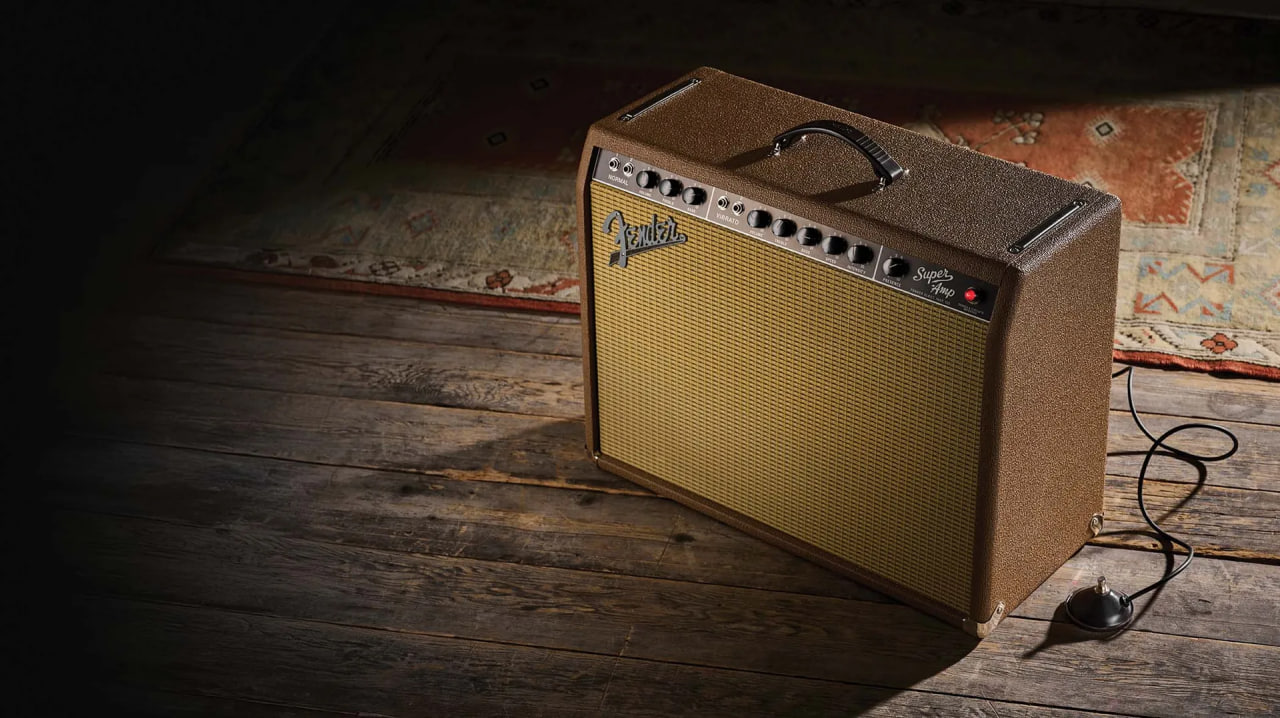
The Fender brand officially began in 1946 with a range of open-back combo amps later affectionately known as the Woodies. Not being a guitarist himself, Leo relied heavily on a trusted circle of professional players — including Fred Tavares and Carl Perkins — to provide feedback on feel, usability, and tone. Ever the innovator, he listened closely, which led to player-focused features such as the forward-facing controls seen on brown-panel models.
In the early days of amplifier design, achieving sufficient clean headroom was a major challenge. Thanks to Leo’s relentless drive, the sparkling Fender clean sound became one of the brand’s defining traits. Over the years, cosmetic changes marked deeper circuit evolutions beneath the surface.
Sonically, early Woodies and tweed amps occupied one end of the spectrum with their low-headroom grit, while black-panel — later silver-panel — amps delivered pristine clarity at the other. Sitting squarely between these extremes was a short-lived but magical family of brown-panel amps.
The brown-panel era: warmth, wood, and musical breakup
Produced roughly between 1960 and 1963, brown-panel amps were known for their warm, woody tonality. They offered more clean headroom than tweeds, yet transitioned into a smooth, harmonically rich overdrive — a trait later designs intentionally moved away from.
You’ve almost certainly heard this sound on recordings by The Beach Boys, Dick Dale, The Stray Cats, and ZZ Top.
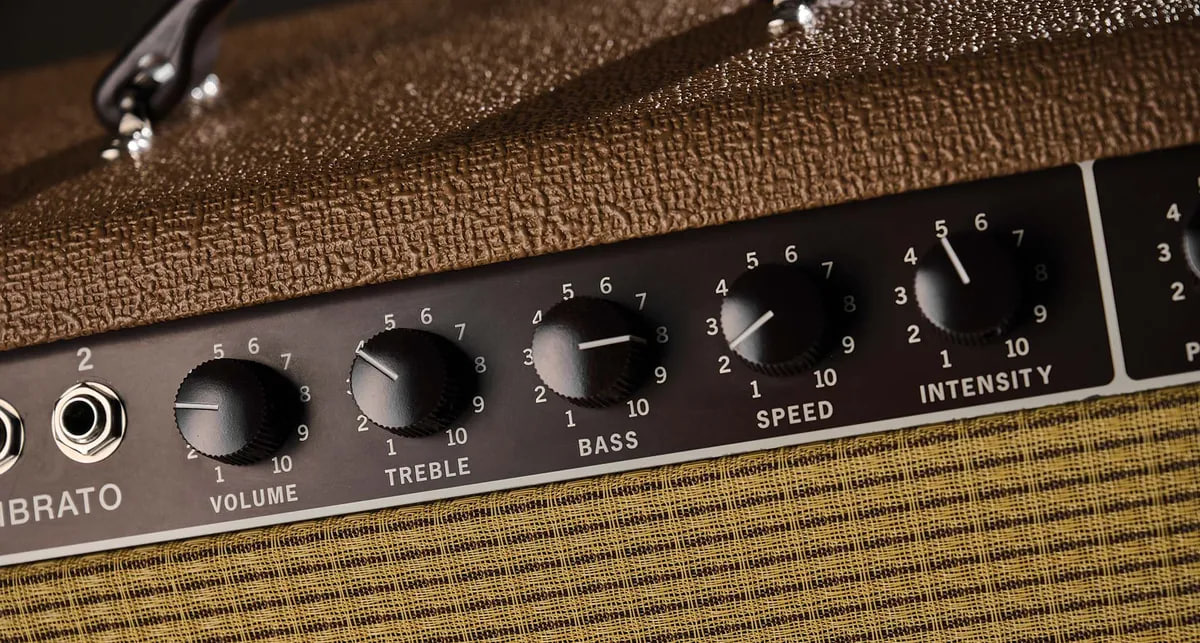
The legendary ’62 Super
Often rumored to be Leo Fender’s personal favorite, the Super featured dual 6L6 power tubes delivering 40 watts through two 10-inch speakers, complemented by the unmistakable Harmonic Tremolo effect.
At the end of 2025, Fender introduced an exacting recreation of the 1962 Super as part of its American Vintage lineup, with each unit hand-assembled in California.
For players seeking broad sound dispersion without excessive weight, the Super hits a compelling sweet spot.
Specifications:
-
Origin: USA
-
Type: All-tube, dual-channel combo
-
Tubes: 2×6L6, 6×12AX7, 1×5AR4
-
Power: 40W
-
Cabinet: Pine
-
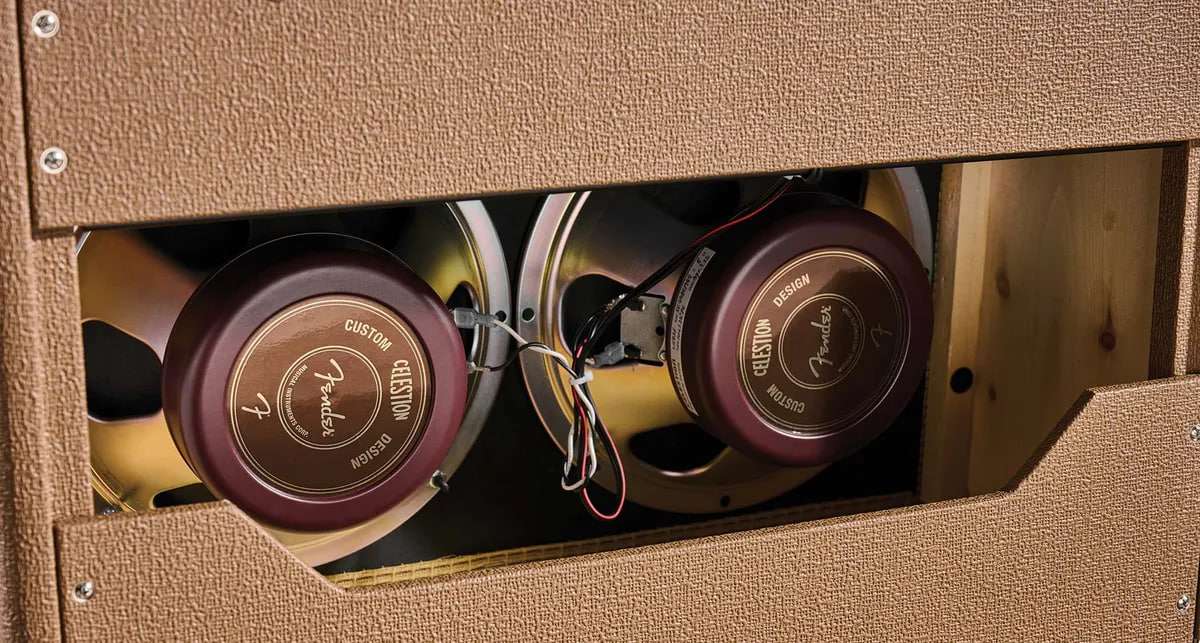
Speakers: 2×10" custom Celestion
-
Weight: 21.7 kg / 48 lbs
-
Features: Harmonic Tremolo, footswitch, cover
From Stratocaster sparkle to Telecaster bite
A Stratocaster feels like the obvious starting point. Plugged into the high-sensitivity input of the Vibrato channel, every classic pickup position rings out with clarity and twang. The custom 10-inch Celestions and pine cabinet deliver a surprisingly wide frequency response.
As the volume rises, the amp responds with gentle sag — courtesy of the tube rectifier — offering a dynamic, touch-sensitive feel that must have been revolutionary in the early ’60s.
Switching to a Telecaster, the amp reveals a sweeter personality. Around volume 7, it produces a gloriously gritty rock ’n’ roll tone: tight, muscular, yet elastic under the fingers.
With a vintage-style Gibson Les Paul, the amp reaches rich overdrive earlier. Beyond halfway, transients soften and compression increases, eventually blooming into full vintage saturation.
Harmonic Tremolo: pure vintage motion
A famous quirk of history: Leo Fender accidentally swapped the terms tremolo and vibrato — and Fender never corrected it. The Vibrato channel here actually delivers Harmonic Tremolo, achieved by modulating the power-tube bias. The result is a deep, dimensional pulse that blends volume modulation with subtle phase movement.
Final thoughts
This amp excels in studio environments and vibe-rich live settings alike. It offers thick vintage warmth while retaining the articulate high-end clarity Fender is known for. From shimmering cleans to syrupy overdrive, the Fender ’62 Super bridges the tonal gap between tweed crunch and black-panel snap.

