

How a Discarded Jimi Hendrix Record Changed Guitar History: The Journey of Stevie Ray Vaughan from Teenage Dreamer to Blues-Rock
June 12, 2026, 9 a.m.
The story of Stevie Ray Vaughan’s rise as a guitarist did not begin with an expensive record collection or guidance from a seasoned mentor. His first encounter with the music of Jimi Hendrix came through pure chance — thanks to an album rescued from a trash bin.
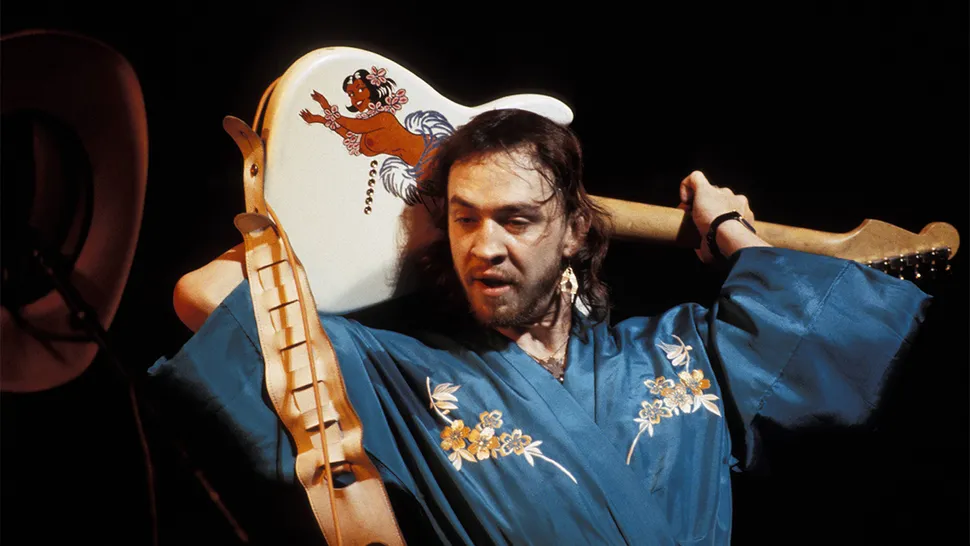
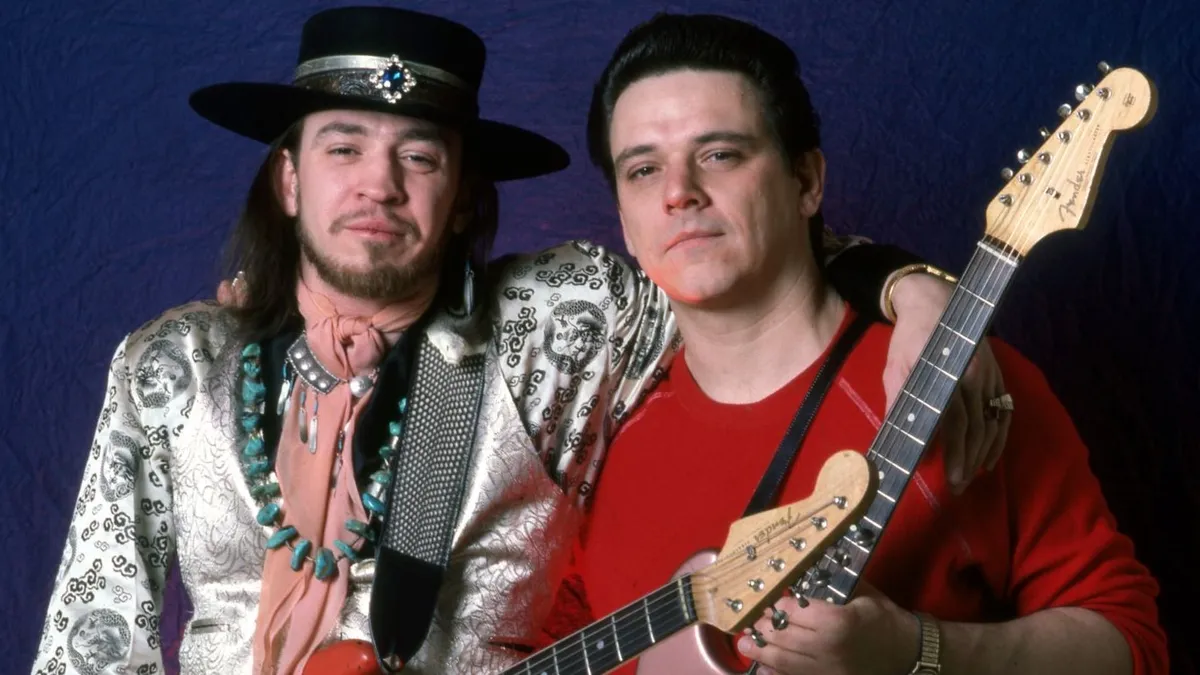
Speaking with Guitar Player magazine in 1989, Stevie Ray Vaughan recalled how his brother, Jimmie Vaughan, returned home one night after a gig in Dallas carrying a discarded Jimi Hendrix record he had found behind a local blues club.
“The first time I ever heard the name Jimi Hendrix was when my brother brought one of his records home. It must have been around 1967. Jimmie had found it in a trash bin. He recognized the name because he had read a short article about Jimi Hendrix in a magazine and understood that this was a musician people were starting to talk about.”
Once the record began spinning, the reaction was immediate.
“He put it on the turntable, and all you could really say was, ‘Yeah!’” Stevie recalled with a laugh. “It completely blew me away.”
For the young guitarist, that discovery became a defining moment.
Learning Hendrix Note by Note
At the time, Stevie Ray Vaughan was still a teenager, barely fifteen years old. Like many aspiring guitarists of his era, he learned by listening obsessively rather than through formal lessons.
The recordings of Jimi Hendrix became his private classroom.
“I remember getting a little Airline stereo with cardboard satellite speakers. I would hook it up through a Shure PA system that I kept in my bedroom.
For some of my earliest gigs, I even rented four separate reverb units and set everything up in my room. Of course, my parents were at work during the day. I would go in there, turn everything up as loud as possible, dress as cool as I could, and spend hours trying to learn his material.”
There were no instructional videos, no online tutorials, and no shortcuts — only repetition, dedication, and a determination to understand every detail coming from the electric guitar.
More Than Technique: Hendrix as a Blues Revolutionary
For Stevie Ray Vaughan, Jimi Hendrix represented much more than technical brilliance.
He saw Hendrix as proof that blues music could evolve far beyond its traditional boundaries while remaining deeply connected to its roots.
Years later, after becoming famous himself, Vaughan frequently challenged the idea that Hendrix’s music should be treated as untouchable.
In his view, Jimi Hendrix was never separated from the blues tradition. Instead, he was one of its boldest and most innovative extensions.
“Some people do not view Jimi Hendrix as a blues guitarist,” Vaughan explained. “But I can hear the blues in the way he approaches music. Even though he was never afraid to do things differently, I still hear the foundations of the older blues style in what he played.”
Why Vaughan Believed Hendrix’s Music Should Be Played
That philosophy directly influenced Vaughan’s own career.
Songs by Jimi Hendrix became a regular part of his live performances, and he never considered that choice controversial.
During an interview conducted in a limousine in London in 1988, he shared his thoughts:
“For some reason, there is this belief that playing Jimi Hendrix’s music is somehow sacred territory. I think he would have called that nonsense.
Maybe I am wrong, but I always felt that he would have wanted his music to remain out there in the world and be just as accessible as anyone else’s.”
Vaughan also spoke about artistic influence and originality:
“Hendrix was never afraid to take inspiration from other musicians and weave it into his own work. Some people call that copying. But if you add something of yourself to it, if it comes out through your own personality and experience, then it becomes something different. It gains a completely new edge.”
Forging His Own Legacy
That is exactly what Stevie Ray Vaughan accomplished throughout his career.
While paying tribute to Jimi Hendrix, he simultaneously carved out a distinctive voice of his own and became one of the defining figures of modern blues-rock.
His talent earned admiration from artists such as David Bowie and Eric Johnson, while legendary guitarist Jeff Beck praised Vaughan so highly that he compared him to his longtime friend Jimi Hendrix.
A Full-Circle Ending
The connection between Stevie Ray Vaughan and Jimi Hendrix endured throughout Vaughan’s life.
Hendrix’s music remained a constant presence in his live repertoire, serving as a reminder of the artist who first inspired him to push the boundaries of guitar playing.
Fittingly, Stevie Ray Vaughan’s final live performance ended with a rendition of “Voodoo Child (Slight Return).”
It was a powerful full-circle moment. A discarded album discovered behind a Dallas club had inspired a teenage guitarist, shaped his tone and technique, and ultimately helped create one of the most influential blues musicians of a new generation.
The record may have been thrown away, but the inspiration it sparked changed guitar history forever.

