

Jackson and Gojira unleash a brutal modern metal machine: Christian Andreu Rhoads RR24 EVTN6
June 3, 2026, 9 a.m.
If your goal is to sound crushingly heavy while looking every bit like a true metal guitarist, the Jackson Pro Plus Series Signature Christian Andreu Rhoads RR24 EVTN6 absolutely delivers. Designed with modern metal performance in mind, this signature model combines aggressive styling, premium construction, and studio-grade tuning stability thanks to its advanced Evertune bridge system. It’s clearly built for players who prioritize precision, consistency, and sheer heaviness above all else.

This guitar was developed for Christian Andreu, one of the most underrated players in modern metal and a core member of Gojira. While the spotlight often falls on brothers Joe Duplantier and Mario Duplantier — thanks to Joe’s commanding stage presence and Mario’s jaw-dropping drumming — Andreu remains an essential part of the band’s tightly engineered sound.
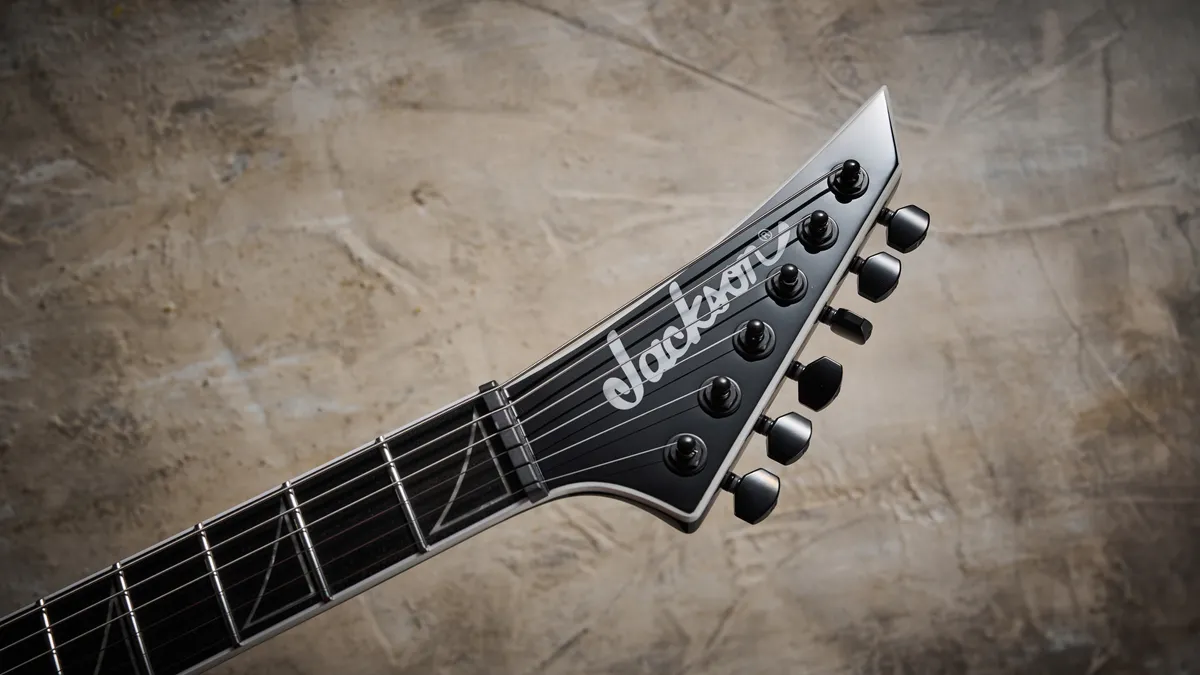
Unsurprisingly, his signature instrument is stripped down to the essentials. There are no unnecessary extras here — only stability, simplicity, and raw performance aimed directly at heavy music.
The guitar features a three-piece maple neck with neck-through-body construction for maximum sustain and structural strength. Graphite reinforcement supports the truss rod for added durability. The ebony fingerboard carries 24 jumbo stainless steel frets, glow-in-the-dark Luminlay side markers, and inverted pearloid ghost fin inlays. A compound fingerboard radius shifts from 12 to 16 inches, making both rhythm work and high-speed lead playing equally comfortable.
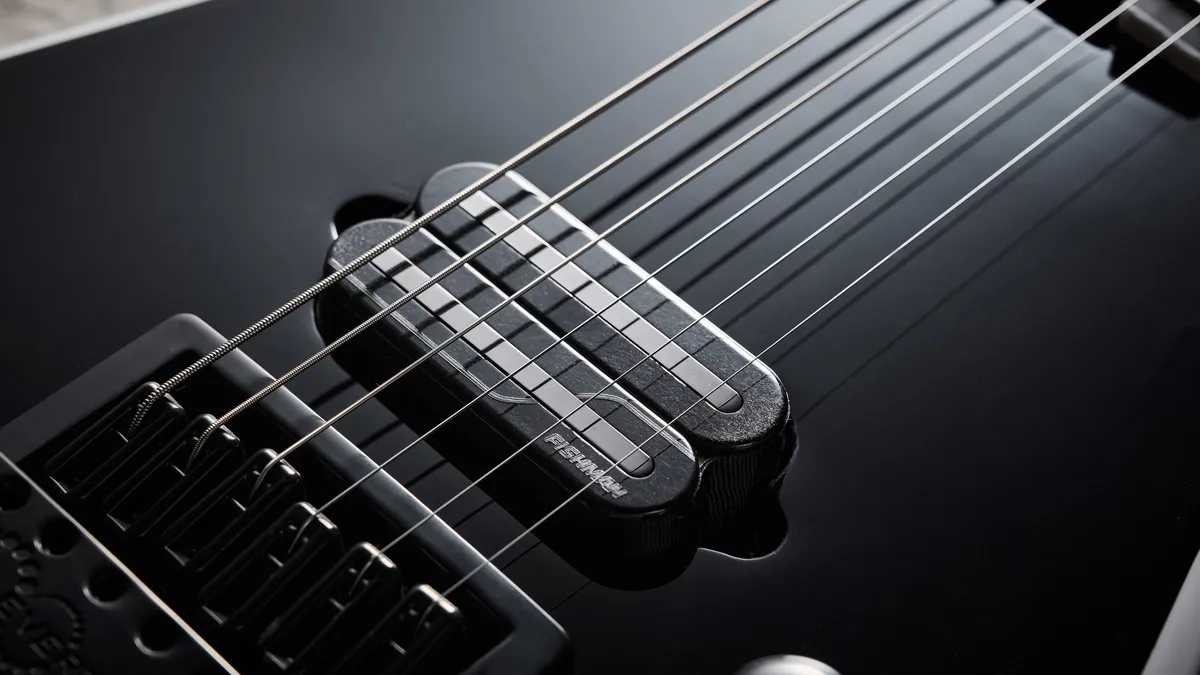
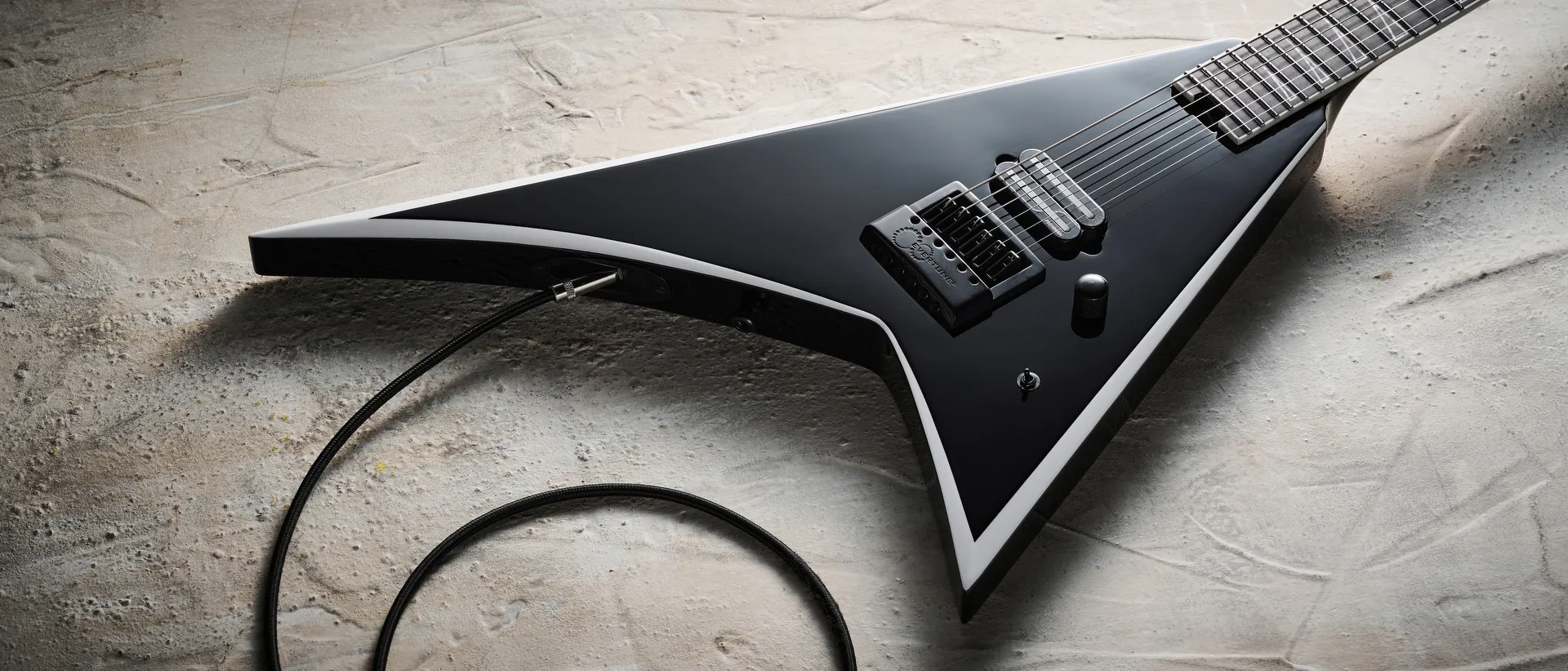
At the headstock end, the reverse design houses Jackson locking die-cast tuners. On the opposite side, an Evertune F6 bridge locks the tuning stability into place. The body itself consists of alder wings joined around the central maple section, all sculpted into the iconic Rhoads V-shape with white bevels against a gloss-black finish.
Controls remain extremely simple: one master volume knob and a single Fishman Fluence Open Core Modern humbucker. A three-way toggle allows players to switch between active, passive, and single-coil-inspired voices.
Specifications:
• Made in Korea
• Six-string electric guitar
• Alder body
• Three-piece maple neck
• Ebony fingerboard
• 25.5” scale length (648 mm)
• Black plastic nut / 42.86 mm width
• 24 jumbo stainless steel frets
• Jackson locking tuners
• Evertune F6 bridge
• 50 mm string spacing at the bridge
• Fishman Fluence Open Core Modern OEM-MO6-ABB pickup
• Master volume control
• Three-way toggle switch
• Weight: 3.3 kg
• No left-handed version available
• Black finish with white bevels
• Semi-rigid Jackson case included
Because of the unusual Rhoads body shape, the included case is enormous. It feels more like a flight case for a stage keyboard than a guitar case. However, since standard cases won’t fit this shape properly, the oversized case becomes a very welcome addition.
Lifting the guitar out of the case immediately reveals a noticeable sense of weight. Although 3.3 kg is far from excessive, the balance of the instrument makes it feel heavier in hand. Visually, the guitar looks stunning. The gloss-black finish gives it a premium and menacing appearance, though it also attracts fingerprints and dust very easily.
Close inspection reveals only minor cosmetic imperfections, including slight paint bleed near the white bevels and binding areas. A tiny circular mark near the 23rd fret appears to be either a tooling mark or a small production artifact, though it has no impact on playability.
Straight out of the box, the Evertune bridge was not properly adjusted, leaving the guitar out of tune. Unlike traditional bridges, setting up an Evertune requires a specific process. The strings must first be loosened completely, then gradually tightened until the pitch remains unchanged while turning the tuning machines. After that, two additional full turns move the system into “zone 2,” where final pitch adjustment is performed using the included hex key at the bridge saddles. The factory tuning comes set to D Standard.
Once configured correctly, the bridge allows players to choose how responsive the strings are to bends and vibrato. In one setting, strings can remain completely pitch-stable no matter how hard they are bent. The sensation is unusual at first — bending a string without hearing pitch change feels unnatural — but for the ultra-tight rhythm playing associated with Christian Andreu, the benefits are enormous. Every note stays perfectly in tune regardless of attack or pressure.
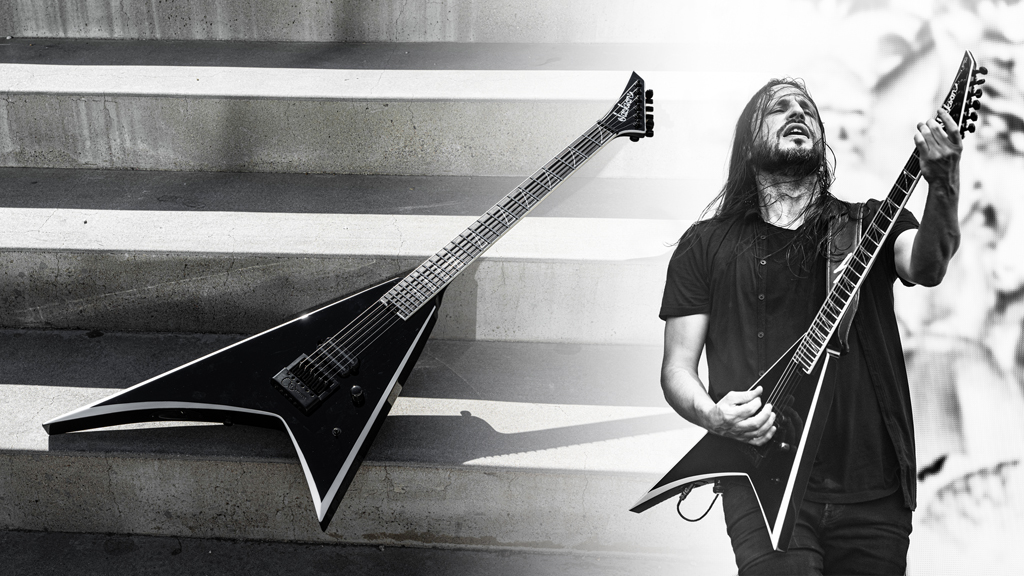
Naturally, the first riffs played on the guitar came from Gojira, starting with “Backbone.” It instantly becomes obvious that this instrument was designed specifically for crushing palm-muted riffs and death-metal-inspired tremolo picking. The stock 10-52 string set feels perfect for lower tunings, while the low action — just 1 mm at the 12th fret on the low E string — makes fast playing effortless.
At first, there’s a subconscious urge to apply vibrato to notes, but the Evertune responds differently, requiring some adjustment. Fortunately, the bridge can be configured so that lower strings remain pitch-stable while upper strings still allow bends and vibrato. This flexibility explains why so many modern metal guitarists have adopted Evertune systems.
Although Jackson does not officially specify the neck profile, it feels like a slim D-shape. The neck is extremely fast and encourages technical playing. Combined with the aggressive V-body design and jumbo frets, upper-fret access is outstanding.
The guitar was first tested in a home studio through an audio interface running the Neural DSP Gojira plugin. The pickup’s output level immediately stood out as extremely hot. Even with the interface gain set to zero, the signal exceeded 0 dBFS, making the plugin sound overly saturated.
After reducing the input level using an SSL E Channel Strip, the tone became much more controlled. In active mode, the pickup delivers the classic modern metal sound: razor-sharp attack, aggressive upper mids, and a tight low end. It’s the kind of tone that encourages endless chugging on the low string.
Switching to the middle toggle position activates the passive voice. This mode offers slightly less gain, more midrange presence, and a touch less bass response. The sound becomes more dynamic and less compressed than the active mode, though it still clearly leans toward heavy music.
The third position activates the single-coil emulation. Despite remaining fairly high-output, the tone becomes noticeably brighter and thinner. With proper EQ adjustment, it delivers a surprisingly convincing single-coil character. Clean ambient passages — especially parts like the intro to “Flying Whales” — sound particularly impressive with reverb and delay added.
Of course, it’s no surprise that the signature model of one of the heaviest bands on earth turns out to be a highly specialized instrument. For precision riffing, technical metal leads, and brutally heavy playing, the Jackson Pro Plus Series Signature Christian Andreu Rhoads RR24 EVTN6 excels brilliantly. The Evertune bridge is genuinely remarkable, and the neck playability is exceptional.
That said, V-shaped guitars remain awkward by nature. They are difficult to play while seated, challenging to place on stands, and nearly impossible to lean safely against anything without fear of them falling over.
If you want crushing tones and the unmistakable appearance of a true metal guitarist, the Jackson Pro Plus Series Signature Christian Andreu Rhoads RR24 EVTN6 absolutely succeeds. It’s a superb stage and studio instrument with rock-solid construction and outstanding tuning stability thanks to the Evertune bridge. Its tonal range may feel somewhat focused and specialized, but that purpose is obvious the moment you lay eyes on it.

