

Fender Wins Legal Battle Over Stratocaster Shape in Germany — What Does It Mean for S-Type Guitars in Europe?
March 19, 2026, 9:15 a.m.
The iconic guitar manufacturer Fender has announced a victory in a recent legal dispute in Germany concerning the protection of the famous Stratocaster body shape.
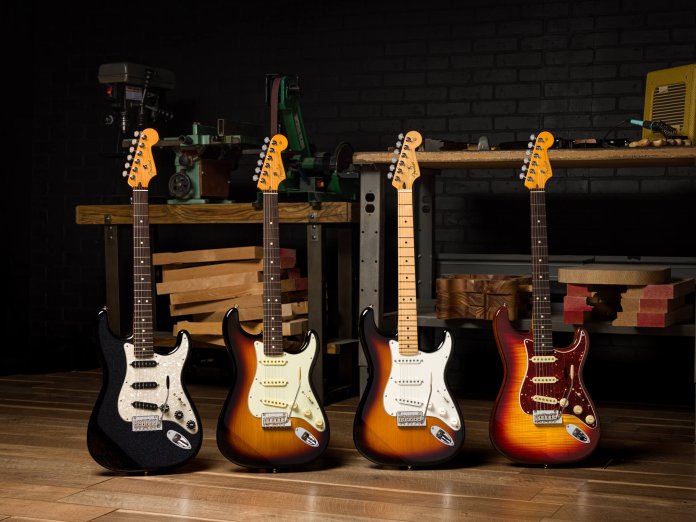
According to the company, the decision could become an important legal precedent that strengthens the protection of Fender’s intellectual property and the unique design of one of the most recognizable guitars in music history.
The case was filed against the Chinese manufacturer Yiwu Philharmonic Musical Instruments Co. and was heard at the Düsseldorf Regional Court in Germany.
According to Fender, the court supported the company’s claim that the manufacturer had imported guitars that reproduced the distinctive Stratocaster body design. The court determined that the design should not be viewed merely as a functional trademark but instead qualifies as a copyright-protected work of applied art under German and European law.
Statement from Fender’s Leadership
In an official press release, Aarash Darroodi, General Counsel and Chief Administrative Officer at Fender, commented on the significance of the decision.
He stated:
“This ruling is an important confirmation that the Stratocaster represents an original creative work. It also marks a meaningful step forward in protecting the integrity of Fender’s designs and intellectual property.
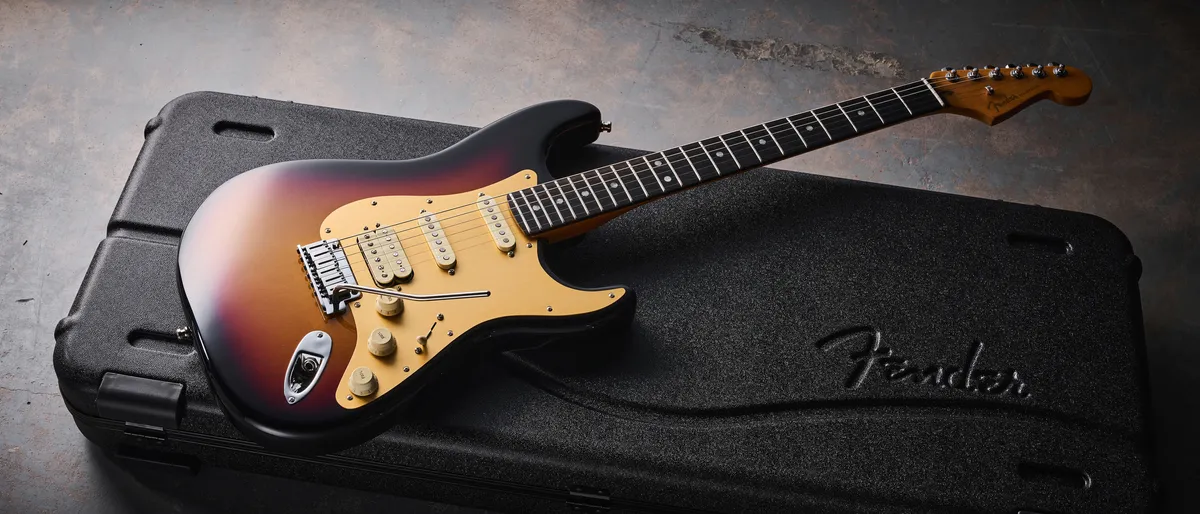
Decisions like this reinforce fair competition and help ensure that when musicians encounter the iconic guitar shapes associated with Fender, they can trust the craftsmanship, quality, and heritage behind them.”
What This Means for Yiwu
The ruling is clearly problematic for Yiwu Philharmonic Musical Instruments Co., a Chinese manufacturer that primarily sells budget guitars and musical instruments through online marketplaces such as AliExpress and similar international platforms.
However, the broader implications of this case for the global guitar market remain uncertain.
A Key Detail: Default Judgment
According to the German publication Backstagepro.de, the ruling did not come after a long and complex courtroom battle, which has often characterized trademark disputes in the guitar industry.
Instead, the court issued a default judgment.
This means the defendant did not respond to the court summons and did not send legal representation to defend its position. As a result, the company effectively did not appear in court to challenge Fender’s claims.

How Strong Is the Legal Precedent?
This detail could significantly affect the strength of the precedent created by the case.
On one hand, the ruling is enforceable against Yiwu Philharmonic Musical Instruments and could theoretically be used against other companies.
On the other hand, because the defendant did not participate in the legal process, Fender’s arguments were never formally contested in court.
In practical terms, if Fender attempts to use this ruling against another manufacturer that decides to challenge it legally, the case could involve a much more detailed and rigorous legal examination.
The Difference Between Stratocaster and S-Type Designs
Future legal disputes may also require clearer distinctions between guitars that, according to Fender, directly reproduce the Stratocaster body shape and those commonly referred to as S-type guitars, which share similar ergonomic concepts but do not necessarily infringe on intellectual property rights.
This distinction is particularly important given the large number of manufacturers producing guitars inspired by the classic Strat-style design.
A Parallel Case Involving Gibson
A related legal situation recently occurred in the United States during a long-running trademark dispute between Gibson and Dean.
Although Gibson achieved an overall legal victory in that case, the company ultimately lost the trademark protection for the ES body shape.
The court ruled that the ES design had become generic, partly because expert witnesses representing both Dean and Gibson acknowledged that many guitar manufacturers had used similar shapes in the decades following its introduction.
If similar arguments were applied to the Stratocaster body design, comparable debates could arise in the future.
What Happens Now
Despite the legal complexities and speculation, the court ruling remains fully enforceable.
Yiwu Philharmonic Musical Instruments Co. is now legally prohibited from:
-
manufacturing
-
offering for sale
-
distributing
guitars featuring the Stratocaster body shape within Germany and across the European Union.
If the company violates the ruling, it could face substantial financial penalties. In cases where fines cannot be enforced, the law even allows for the possibility of prison sentences.
Whether the decision will eventually apply to other brands importing similar guitars remains unclear. However, one thing is certain: Fender now holds a stronger legal position when it comes to protecting one of the most famous guitar designs in history.

