

What I learned spending an evening with seven original Gibson Les Pauls from 1958–1960
Dec. 31, 2025, 9:15 a.m.
“Not every ’Burst was magical, but these lived up to the legend”
It’s incredibly rare to spend time with even a single authentic vintage Gibson Les Paul Standard built between 1958 and 1960.
Yet in October, when Guitarist teamed up with Gibson Garage London for a special ’Burst celebration, something extraordinary happened — and, honestly, a little intimidating.
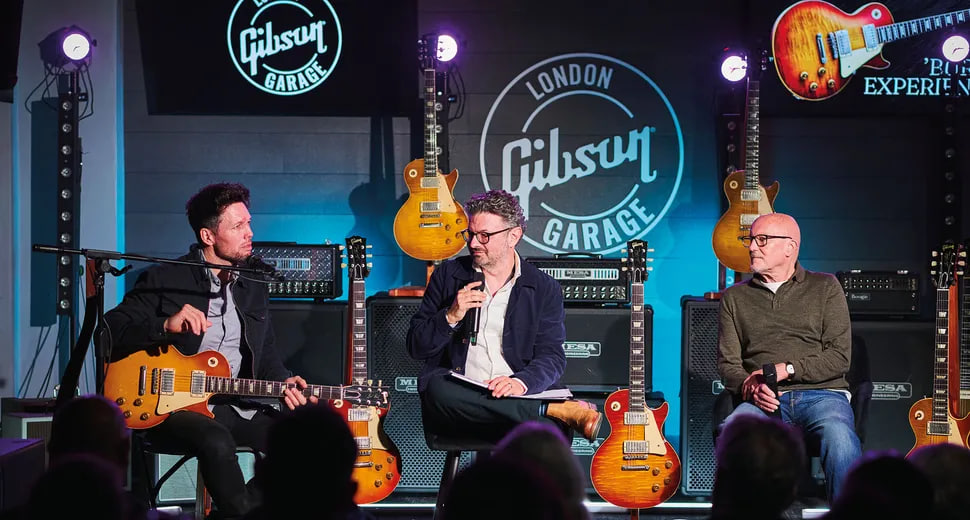
Thanks to the generosity of several collectors, we didn’t just gather one guitar, but seven original ’Bursts in one room. The venue was packed with players and enthusiasts eager to hear history come alive.
Providing the soundtrack was blues virtuoso Aynsley Lister. Fresh off an exhausting European tour and arriving home at 2am the night before, he still showed up and delivered a masterclass. To be fair, the instruments at his disposal were exceptional.
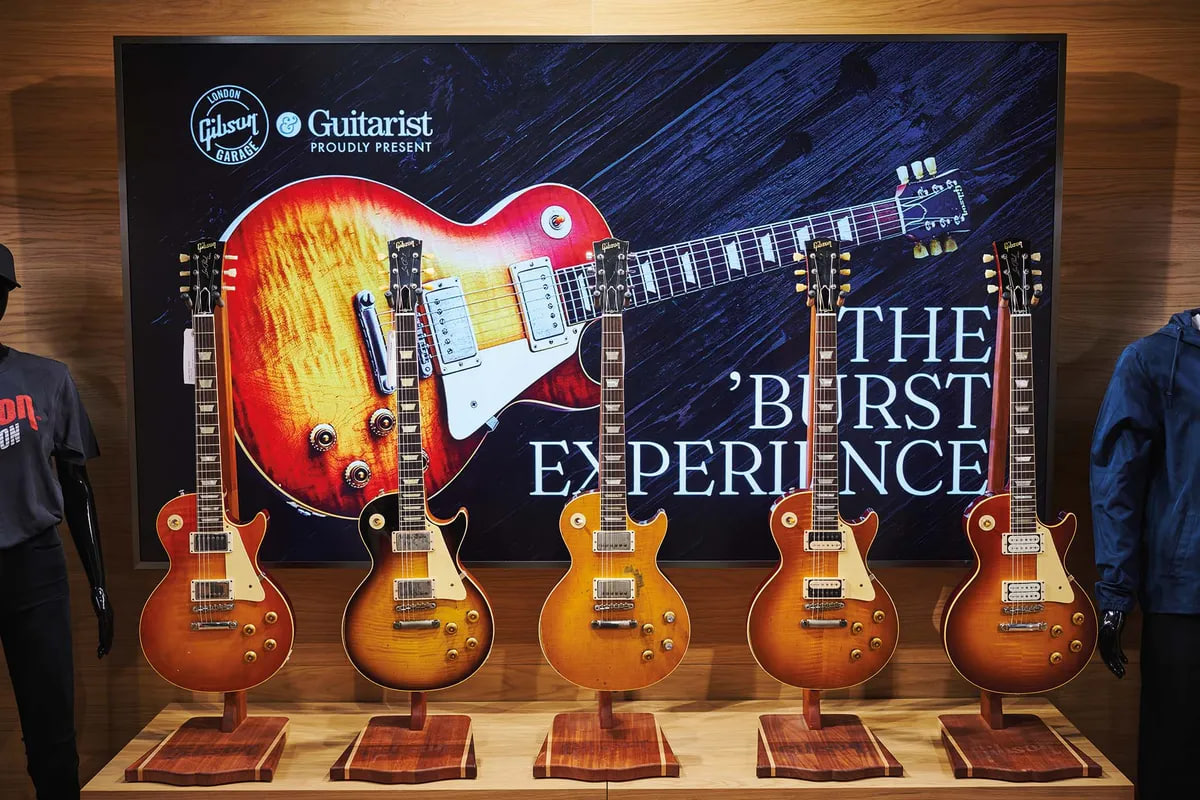
On stage stood two 1958 models, an ex-Mick Taylor ’59, the stunning and celebrated Minnesota ’59, the famous Grainger — technically a 1960 built to ’59 specs — plus a 1960 Les Paul Standard fitted with a Bigsby.
Also present was a 1954 Goldtop, allowing us to compare early PAF pickups with the P-90 soapbars they replaced. And then there was the ultimate guest: Gary Moore’s legendary ’59 Stripe Les Paul, courtesy of Bonhams.
With Gibson hosting, amplification came via a Mesa Fillmore 50 combo. Its clear, responsive voice — powered by 6L6 tubes — proved ideal, sitting somewhere between clean articulation and singing overdrive, reminiscent of a ’60s Marshall Bluesbreaker when pushed.
The evening opened with a remarkably clean ’58 ’Burst, still wearing a vivid cherry sunburst that had barely faded. That intense red hue, especially common in 1958, was achieved using dye-based color with a hint of blue added for depth.
The cherry was sprayed over a yellow pigmented base coat. Over time, the dye faded while the pigment remained, creating the famous Unburst effect — guitars now appearing uniformly honey-colored.
When Gibson revised the finish formula in 1960, removing dyes and the blue component, many guitars emerged with what’s often called a Tangerineburst look.
Hearing both ’58s was a revelation: the howl of the Patent Applied For pickups delivered aggression without harshness. It’s a tone that defines why the Les Paul became iconic.
Pickup maker Stuart Robson of Sunbear Pickups explained that original PAFs typically used Alnico II and V magnets, with some III and IV. Being hand-wound, outputs varied, but surviving examples rarely exceed 9k or drop below 7k.
Moving on to the ’59s — including Mick Taylor’s former guitar and Minnesota — Aynsley noted little difference in neck feel, despite the common belief that ’58 necks are significantly chunkier.
Tonally, all retained that sweet yet ferocious bite, though each had its own personality: Taylor’s ’59 sounded darker and dirtier, while the first ’58 was clearer and warmer.
Of the roughly 1,200 ’Bursts produced between 1958 and 1960, fewer than a third featured visible flame. Strongly figured tops were extremely rare, making Minnesota a true unicorn. Ironically, most modern Gibson reissues feature figured tops — market demand often overrides historical accuracy.
Gary Moore’s Stripe also displayed bold, uneven figuring. Though unplayed, Bonhams’ Claire Tole-Moir detailed its history and significance. The imperfect bookmatching reminded us that late-’50s craftsmanship prioritized tone over visual symmetry.
Interestingly, Stripe remained in Moore’s collection longer than the famed Greeny, suggesting it may have been his ultimate all-rounder.
A 1960 Les Paul Standard with Bigsby followed. Aynsley noted the slimmer neck, which isn’t always preferable for larger hands. Sonically, however, it still carried the jagged, vocal quality shared by every ’Burst that night.
Not every ’Burst was a masterpiece — that’s a fact. But the guitars played at Gibson Garage London unquestionably earned their legendary status.
The final surprise was the 1954 Goldtop. Its P-90s sounded rawer and punchier than the PAFs — and, to everyone’s surprise, Aynsley declared it his favorite tone of the night.
All told, it was an unforgettable evening. Thanks to Gibson Garage London, Bonhams, and the generous owners — Andrew Raymond, Peter Hall, Simon White, Paul Johns and Bob Wootton — for making it possible.
If you think we should do it again, maybe the ’Bursts will ride once more.

