

🎸 Tariffs on Trial: What the Supreme Court’s Decision Could Mean for the Guitar Industry in 2026
Feb. 25, 2026, 9:15 a.m.
The US Supreme Court has ruled that President Donald Trump exceeded his legal authority when he invoked emergency legislation to impose sweeping tariffs on numerous countries beginning in early 2025.
Tariffs have been a cornerstone of Trump’s economic agenda since the start of his second presidential term in January 2025 — much as they were during his first administration. However, the Supreme Court’s decision, issued on Friday, February 20, 2026, represents a significant setback to that strategy, as several of the tariffs enacted under Trump have now been struck down.
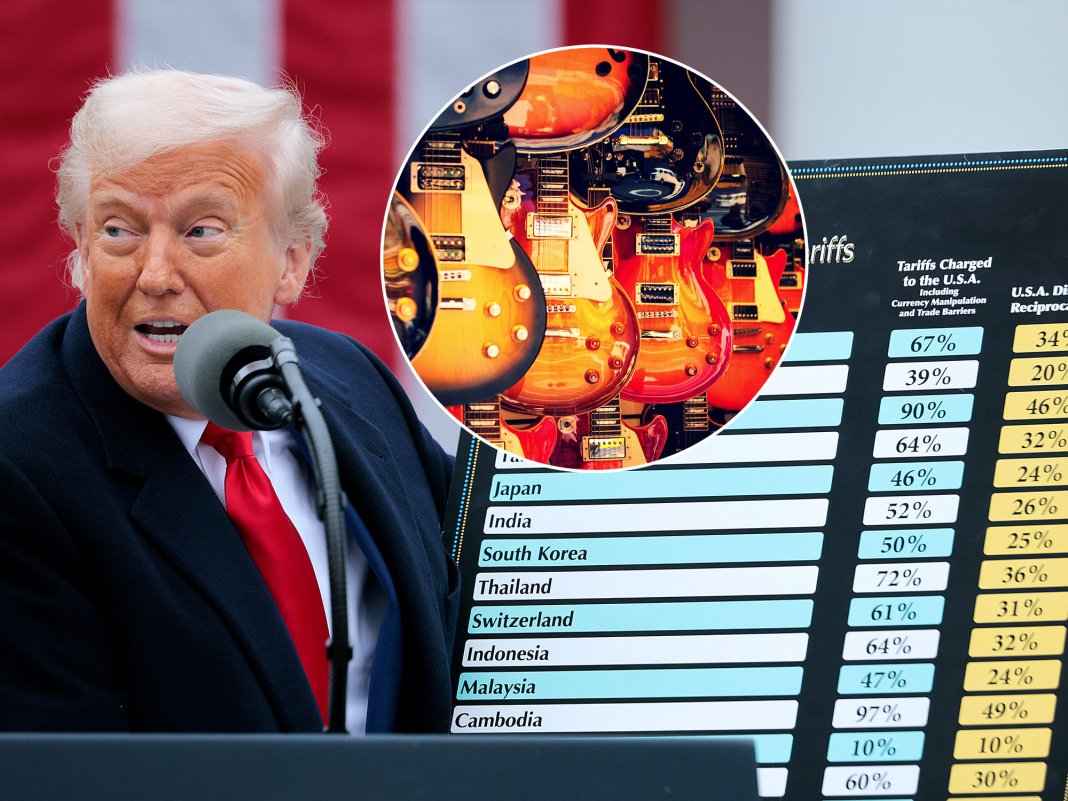
It is important to note that the ruling applies only to specific tariffs, not to the entirety of the trade measures introduced since Trump returned to office.
So what does this mean for the guitar industry? At present, the impact appears likely to be limited.
While tariffs are central to the discussion, the ruling specifically targets Trump’s February 2025 use of the International Emergency Economic Powers Act (IEEPA), a 1977 law that allows presidents to regulate trade by executive order during a national emergency.
Trump argued that drug trafficking from China, Mexico, and Canada constituted such an emergency, justifying the use of the act. He later relied on the same legislation in April 2025 to introduce global tariffs ranging from 10 to 50 percent on most countries.
Despite the court’s decision, guitar manufacturers have little immediate reason for celebration. A range of industry-specific tariffs remain in effect — particularly those affecting steel, aluminum, and, most critically, lumber. These measures fall under Section 232 of the 1962 Trade Expansion Act and are unaffected by the Supreme Court’s ruling.
As a result, much of the financial pressure placed on guitar brands by Trump’s tariff-heavy policies remains intact. Still, the ruling raises an important question: could this decision set a precedent that eventually leads to the reversal of additional tariffs?
Following the introduction of tariffs last year, NAMM President and CEO John Mlynczak spoke publicly about the “deeply interconnected” global supply chain that sustains the guitar industry — and how that system has been disrupted by Trump’s trade policies.
“The reason companies can afford to build their highest-end instruments in the United States is because of the revenue generated from mid-level and entry-level products made overseas,” said John Mlynczak. “Our supply chain is deeply interconnected.”
He emphasized that instrument manufacturing is rarely confined to a single country.
“Instruments are not made entirely in China or Mexico. Certain components are produced exceptionally well in China and then imported for final assembly. Other components come from factories in Mexico that specialize in specific parts, which are then assembled in the US. This happens because the work is highly specialized.”
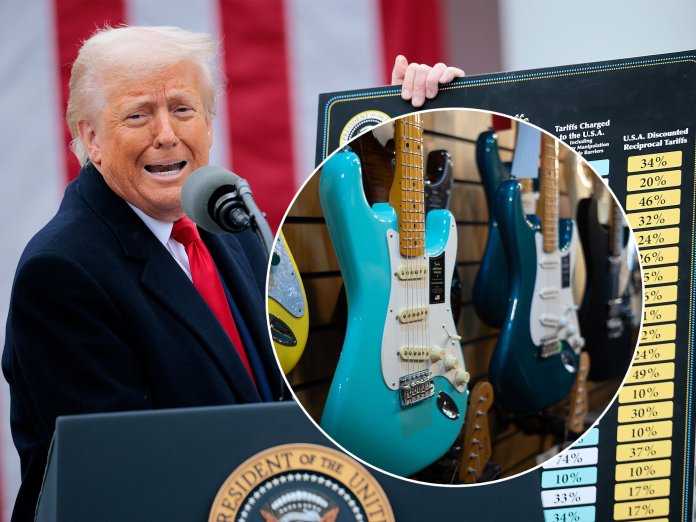
Mlynczak later joined forces with executives from Fender, Gibson, PRS, and other major brands to lobby Congress over tariffs on imported wood.
“Tariffs are incredibly nuanced and complex,” he acknowledged. “There are currently multiple Section 232 investigations underway across different industries.”
“One of those investigations focuses on timber imports. Our primary objective was to ensure that we submitted letters to Congress and formally participated in the investigative process.”
“We also met directly with senior members of Congress to explain that American-made brands simply cannot produce these instruments without sourcing wood from overseas. These wood species do not grow in the United States.”
In response to the new ruling, the anti-tariff advocacy group We Pay the Tariffs has called for “swift refunds” to businesses that have already paid the affected tariffs.
“The administration’s only responsible course of action now is to implement a fast, efficient, and automatic refund system that returns tariff funds to the businesses that paid them,” said the group’s director, Dan Anthony.
As of now, Donald Trump has not publicly commented on the Supreme Court’s decision.

