

The Truth About ‘Bursts’: Why Not Every Gibson Les Paul Standard 1960 Is the Same
April 12, 2026, 9:15 a.m.
“There are truly great ’Bursts, some that are average, and others that fall short” — this statement perfectly captures the reality behind the legendary late-’50s and early-’60s guitars by Gibson.
The instrument in focus is a pristine Gibson Les Paul Standard 1960, known as a Double-O. Today, these guitars are considered holy grails, but that wasn’t always the case. Back in the day, many players simply didn’t recognize their true value.
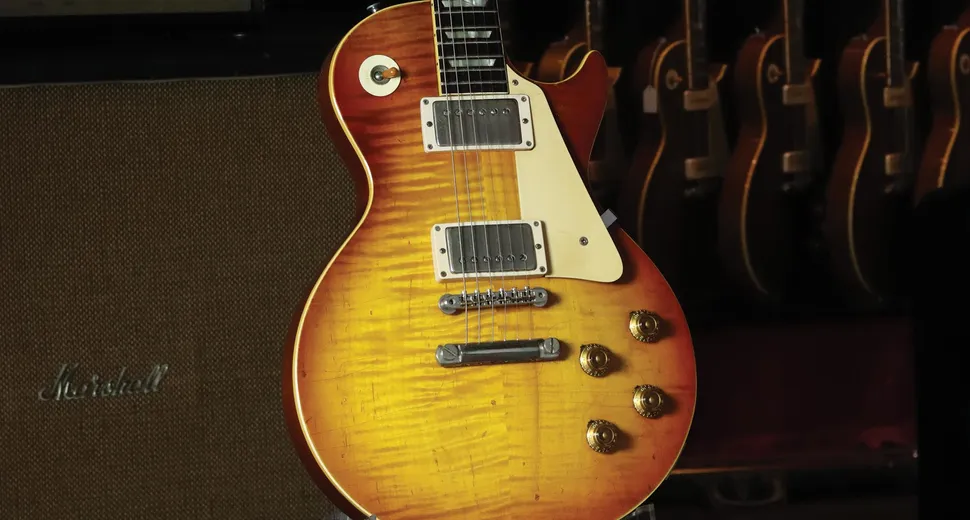
What Is a Double-O?
When is a ’59 Burst not actually a ’59? When it’s a Double-O.
Most people associate 1960 Les Pauls with bright cherry sunburst finishes, reflector knobs, and slimmer necks. However, these features were introduced later in the year.
Early in 1960, Gibson continued using leftover 1959 parts — including bodies, necks, and pickups. These guitars became known as Double-O models because their serial numbers begin with two zeros.
As a result, they look, feel, and sound almost identical to 1959 Les Pauls.
When Sunburst Wasn’t Popular
It may seem surprising today, but sunburst Les Pauls were not always desirable. They were expensive and considered quite heavy.
Additionally, the red aniline dye used in finishes faded quickly under sunlight. Many guitars displayed in shop windows lost their vibrant color over time.
Most players didn’t fully understand their tonal potential until Keith Richards appeared with one on The Ed Sullivan Show. Soon after, musicians like Mike Bloomfield and Eric Clapton helped popularize them.
Later, when more stable pigments became available, Gibson abandoned aniline dye, and the brighter finishes earned the nickname “tomato soup.”
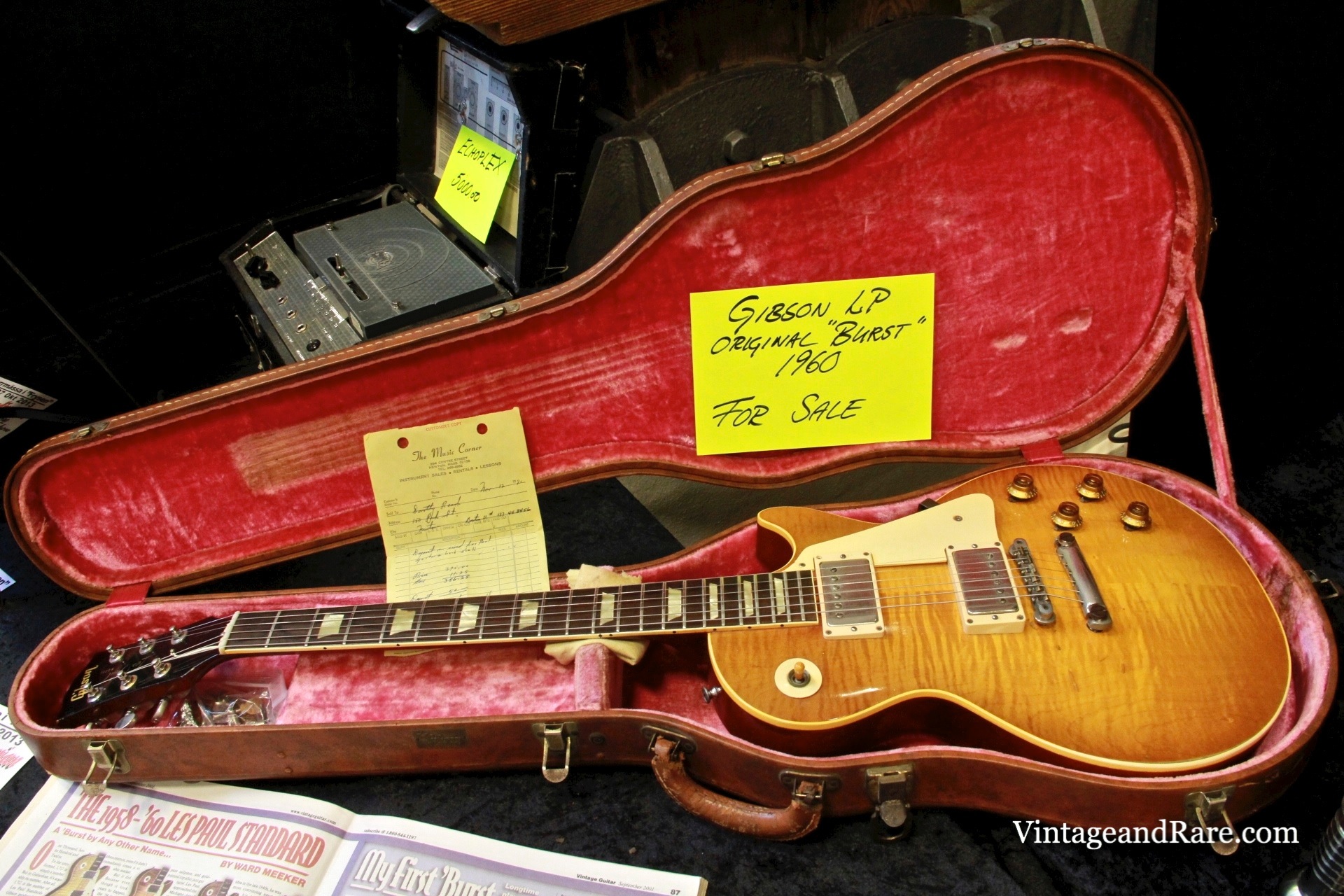
A Closer Look at This Guitar
This particular Gibson Les Paul Standard 1960 has been owned for around seven years. Its color closely resembles a 1959 model, retaining much of its original aniline dye.
The guitar weighs 9 pounds 9 ounces, but it feels well balanced and does not strain the player excessively.
There is visible playwear on the back, including what are often called “spaghetti marks,” along with additional wear near the upper bout by the switch.
The pickups are well matched, measuring 8.23k (neck) and 8.32k (bridge). Both feature double black bobbins, and their covers have never been removed.
Tonally, the guitar is quite aggressive, but rolling the volume down slightly produces a smooth, clean response.
Original Condition
The tuner buttons have been replaced with parts from Uncle Lou’s, as the originals deteriorated over time — a common issue.
Aside from that, the guitar remains fully original, including the frets, which are in excellent condition.
Not All 1960s Are the Same
Double-O guitars are highly regarded, though many people assume the worst when they hear “1960.”
In reality, there is significant variation among them. Early 1960 models often feature thicker necks, while later ones can be extremely slim.
These changes occurred gradually rather than all at once.
While some believe neck thickness affects tone, the quality and characteristics of the wood play a much larger role. Some slim-neck 1960 models can sound richer than certain 1959 guitars.
The Reality of ‘Bursts
It’s important to understand that not all ‘Bursts are equal. Some are exceptional, others are average, and some are less impressive.
This particular guitar ranks above average, though it may not be the very best example.
Its weight is the main drawback — great for studio use or seated playing, but less ideal for long performances while standing.
The Collector Market
While collectors have long focused on 1959 Les Pauls, 1960 models were overlooked for a time.
This created opportunities to acquire rare Double-O guitars, which were often simply labeled as either ’59 or ’60.
Early examples retaining 1959 specifications are especially desirable, particularly those produced before serial numbers beginning with 02.
Variation and Craftsmanship
The weight and characteristics of ‘Burst guitars vary widely. This reflects the reality that Gibson built these instruments using whatever materials were available at the time.
Each guitar is unique — a product of its wood, construction, and era.

