

🚀 The Compact Modeling Revolution: Why Neural DSP Quad Cortex Mini Is the Most Anticipated Release in Years
Feb. 14, 2026, 9:15 a.m.
When Neural DSP unveiled the Neural DSP Quad Cortex mini, the guitar world paid very close attention. This is the company’s third hardware release — and arguably the one players have been waiting for most. The big question: can you truly fit the entire Quad Cortex experience into a sub-10-inch pedal without sacrificing performance?
And here is the key news: 🔥 Neural DSP Quad Cortex mini is now available for preorder in our store.
A Full Quad Experience — Just Smaller
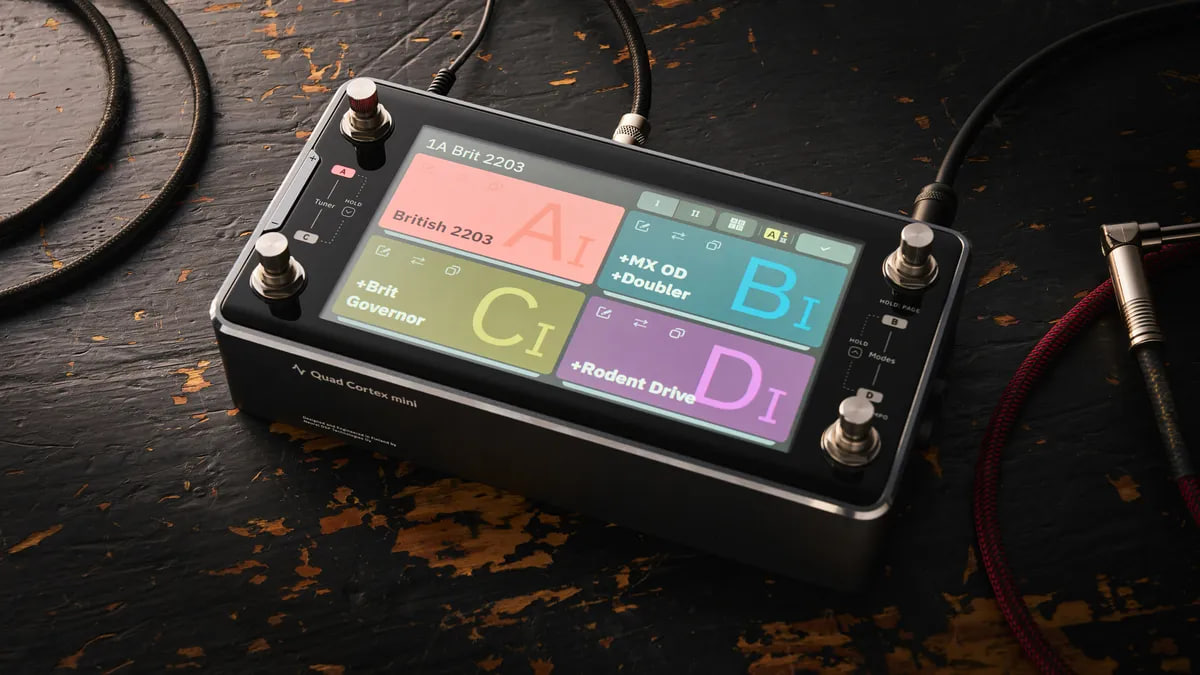
There is no denying it: the Quad Cortex mini sits in the premium price bracket. However, this is a textbook example of getting exactly what you pay for. It is an extraordinarily powerful and versatile unit that compresses world-class modeling performance and studio-grade sound into the smallest possible footprint.
A complete Neural DSP Quad Cortex inside a pedal under 10 inches long is a remarkable engineering accomplishment.
Since the original Quad Cortex disrupted the market in 2020, Neural DSP has remained at the forefront of amp modeling innovation. Despite fierce competition from Line 6, Fractal, IK Multimedia, Fender, and others, Neural DSP’s intuitive UI philosophy combined with cutting-edge modeling technology has positioned the company as a clear industry benchmark.
By 2026, the lineup seemed almost complete:
-
The full-size Neural DSP Quad Cortex became a gold standard floor unit.
-
The Nano Cortex delivered a compact, Capture-focused experience.
Yet there was a noticeable gap between them — a mid-sized option offering the organic “Quad” workflow with a screen, while remaining stage- and studio-friendly.
That gap is now filled by the Quad Cortex mini.
Design & Build Quality
Often compared to the iPhone of modeling, the Quad Cortex mini is dominated by its 7-inch touchscreen — identical in size to the larger model. The display covers nearly the entire top surface.
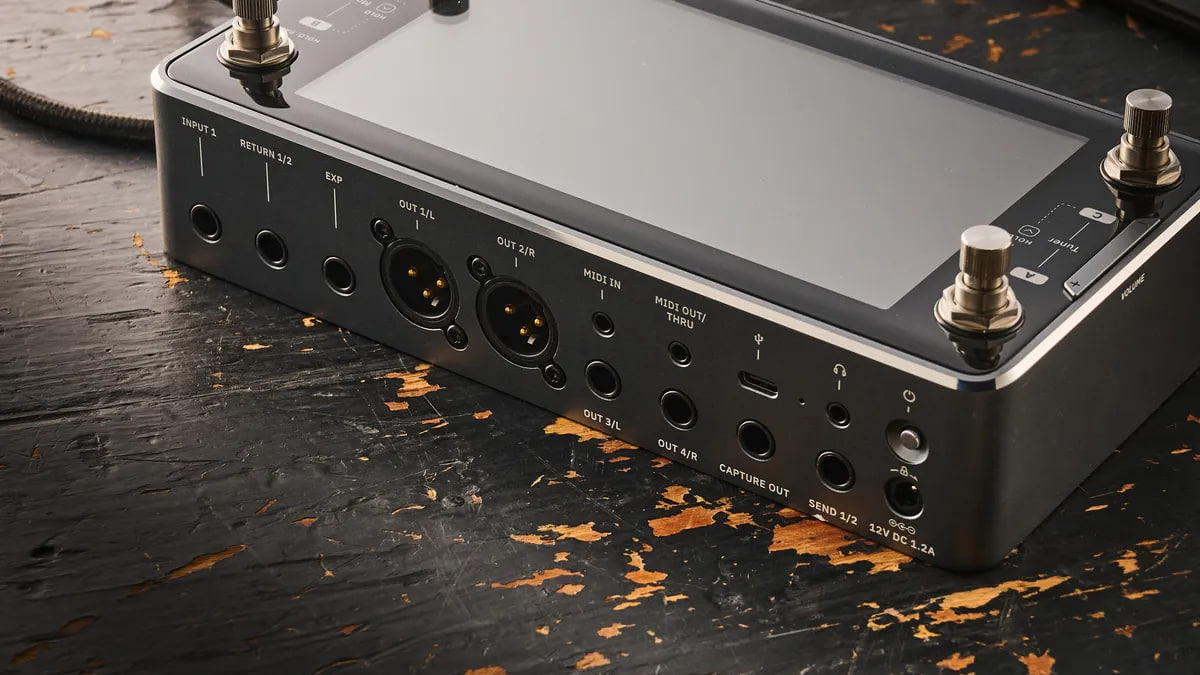
Four footswitches sit at the corners, with an output level control on the left. Around the back, you will find MIDI, stereo XLR, stereo ¼-inch I/O, USB-C, headphones out, and an effects loop. Internally, the processing power mirrors the flagship Neural DSP Quad Cortex.
At $1,399, it is positioned closer to the full model than to the Nano. The price may give some players pause, but feature-wise it remains extremely close to the flagship.
Durability: Is That Too Much Glass?
Many players initially question the large glass surface. However, according to the manufacturer, extensive stress testing was performed. The footswitches are engineered to withstand repeated pressure without damaging the screen.
Real-world use suggests impressive robustness. The matte gray metal chassis feels solid and gig-ready. Despite its sleek appearance, it inspires confidence for both studio and stage applications.
Usability: Truly No Compromises?
Marketing suggests “No compromise, just smaller.” Realistically, fitting so much power into such a compact format requires some adaptation.
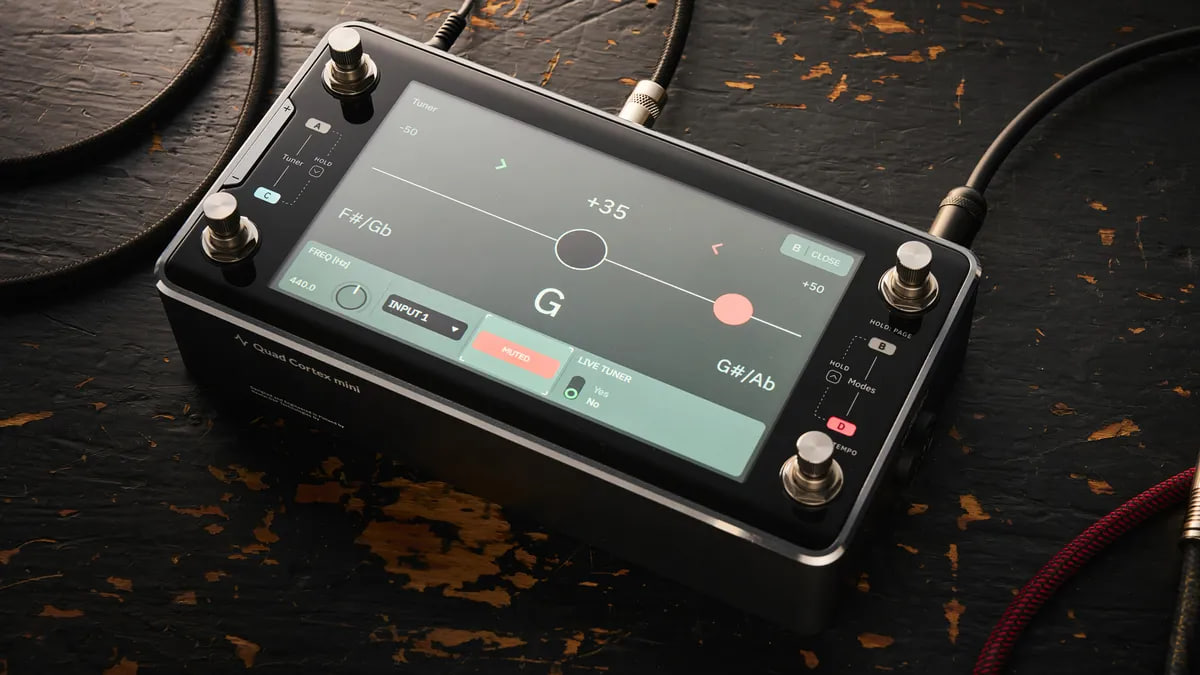
With only four footswitches, multi-function combinations are essential:
-
A + C activates the tuner.
-
B + D switches between Stomp, Scene, and Preset modes.
-
Holding B moves through banks.
There is a learning curve. Accidentally switching presets instead of engaging an effect is possible if you are not attentive.
However, Neural DSP introduced clever refinements. The rotary footswitch editing system allows fast parameter adjustments, and touchscreen navigation remains smooth and intuitive.
Functionally, everything from the larger unit is present.
Specifications & Features
Type: Amp modeler, multi-effects, and Capture device
Controls: 7-inch touchscreen, 4 footswitches
90+ amps
100+ effects
1000+ IRs
2000+ Capture profiles
Neural Capture V1 and V2
16-channel USB-C audio interface
Community Capture library
Connectivity: MIDI, USB-C, stereo XLR I/O, stereo ¼-inch I/O, Capture Out, headphones
Power: 12V DC 1.2A
Dimensions: 228 x 118 x 65 mm
Weight: 1.5 kg
Tone & Performance
If six stars were possible, this section might deserve them.
Neural DSP currently sets the benchmark for digital guitar sound. Factory presets showcase Fender-inspired cleans, Marshall-style crunch, and EVH-influenced high-gain tones — all highly authentic.
Clean and edge-of-breakup tones are particularly impressive. Dynamic response, pick attack sensitivity, and organic feel are reproduced with remarkable realism.
The Captain 50 model (based on a Morgan SW50 concept inspired by Dumble designs) delivers outstanding articulation and presence.
With Capture V2, improvements include more accurate sag, bloom, dynamic response, and parameter tracking.
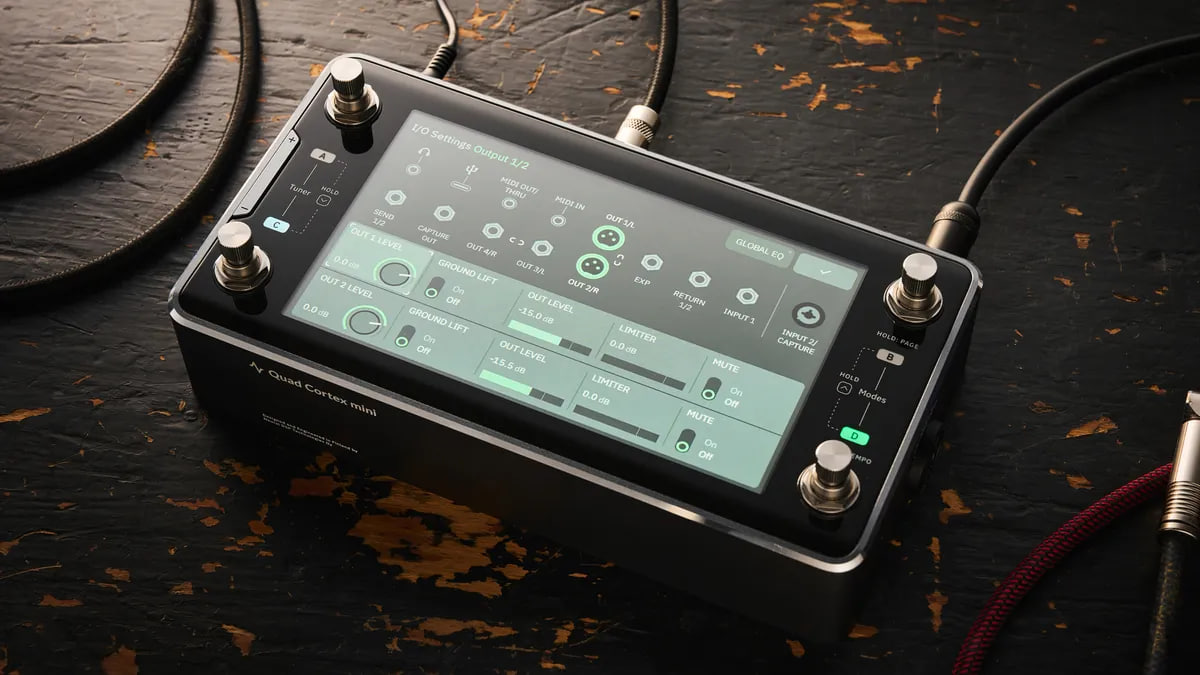
Signal chain flexibility is identical to the full Neural DSP Quad Cortex, allowing complex routing and creative experimentation.
Final Verdict
The Quad Cortex mini is undeniably premium priced. Usability requires adjustment. But in terms of sheer processing power per square inch, feature depth, and tonal excellence, it stands among the most powerful compact modeling pedals available today.
For players prioritizing portability without compromising professional sound, the competition has serious catching up to do.
For now, the game belongs to Neural DSP.
Ratings
Build Quality: ★★★★½
Usability: ★★★★☆
Sounds: ★★★★★
Overall: ★★★★½
Co-owner of Neural DSP on the history of the brand and the new Quad Cortex Mini

