

Positive Grid Reactor Review: Can an AI-Powered Guitar Amp Really Transform Your Tone?
June 22, 2026, 9 a.m.
When discussing new music technology in 2026, few topics generate stronger reactions than artificial intelligence. Many musicians have become increasingly skeptical about AI-related promises, especially after years of claims that generative technologies would revolutionize creativity. Instead, many players now view AI with caution, particularly when it comes to music creation and artistic expression.
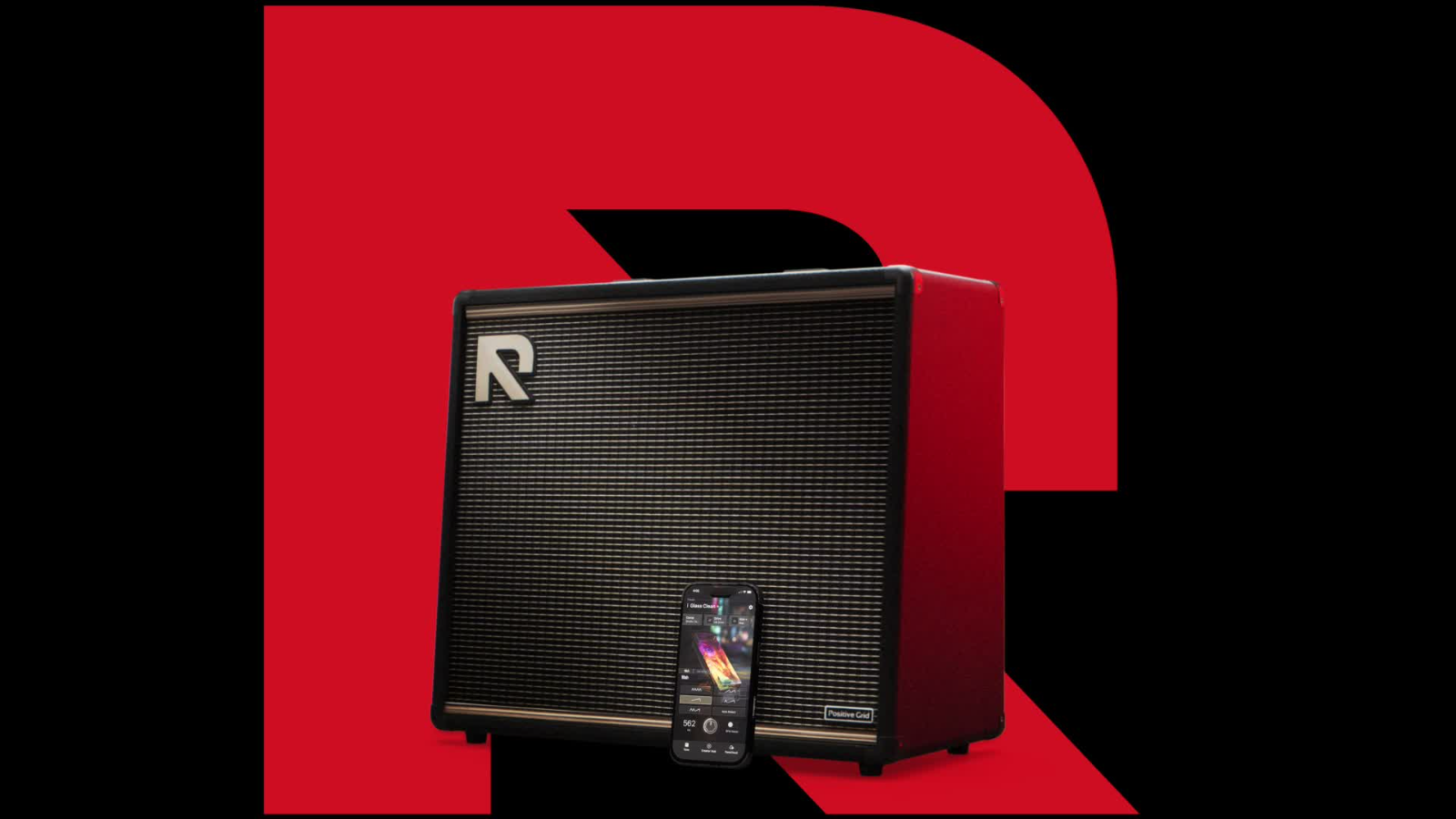
While fully AI-generated music remains controversial among musicians, there is still an important question worth asking: can artificial intelligence be used in a practical and genuinely helpful way for guitar players?
This question arrives at a fascinating moment for Positive Grid, the company behind the hugely successful Spark smart amplifier ecosystem. With the introduction of the new Reactor, the company enters the affordable gigging amplifier market with a product that not only offers modern modeling technology but also introduces something entirely new: an amplifier capable of holding a conversation with its user.
A New Direction Beyond Spark
One of the first things Positive Grid emphasizes is that the Reactor is not part of the Spark family.
Although the Spark series has spent years building an excellent reputation among guitarists thanks to its intelligent practice tools and impressive sound quality, Reactor was designed from the ground up as a dedicated performance amplifier.
Over the years, Positive Grid attempted to push the Spark ecosystem beyond home practice. Products such as the Spark Cab allowed Spark amplifiers to be used on stage, while the Spark Edge and Spark Live systems expanded functionality toward full-band applications.
However, the Spark platform never completely escaped its origins as a home-practice solution.
With Reactor, Positive Grid combines elements of both the Spark ecosystem and the company's professional BIAS X modeling software into a completely new hardware platform designed specifically for rehearsals, performances, and stage use.
Introducing Amp Intelligence
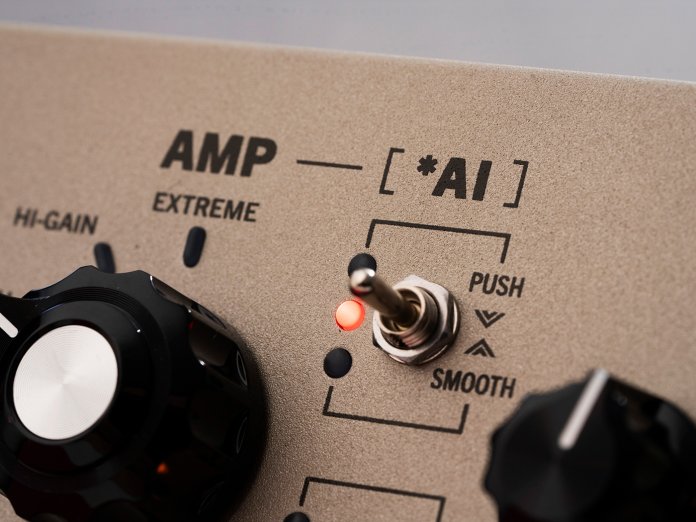
The most heavily promoted feature of the Reactor is something called Amp Intelligence.
Despite the AI branding visible on the amplifier itself, Positive Grid explains that AI here stands for "Amp Intelligence" rather than simply artificial intelligence.
According to the company, Amp Intelligence represents a new type of sound engine capable of building guitar tones on demand.
In practical terms, it functions as an AI-powered assistant trained on more than 200 amplifier designs. The system has analyzed amplifiers at a circuit level, including:
- gain stages;
- transformers;
- bias characteristics;
- harmonic behavior;
- overall amplifier response.
Using this information, the system can generate tone suggestions based on user requests.
Talking to Your Amplifier
Through the Reactor mobile application, users can communicate with Amp Intelligence in several ways:
- written text descriptions;
- photographs;
- uploaded audio clips;
- recorded musical examples.
The system analyzes the submitted information and creates suggested presets.
Those presets can then be adjusted either through the mobile app or directly from the amplifier’s control panel.
The software is also designed to learn a player's preferences over time, theoretically becoming more accurate as it gains a better understanding of the user's tonal tastes.
Reactor 50 Specifications
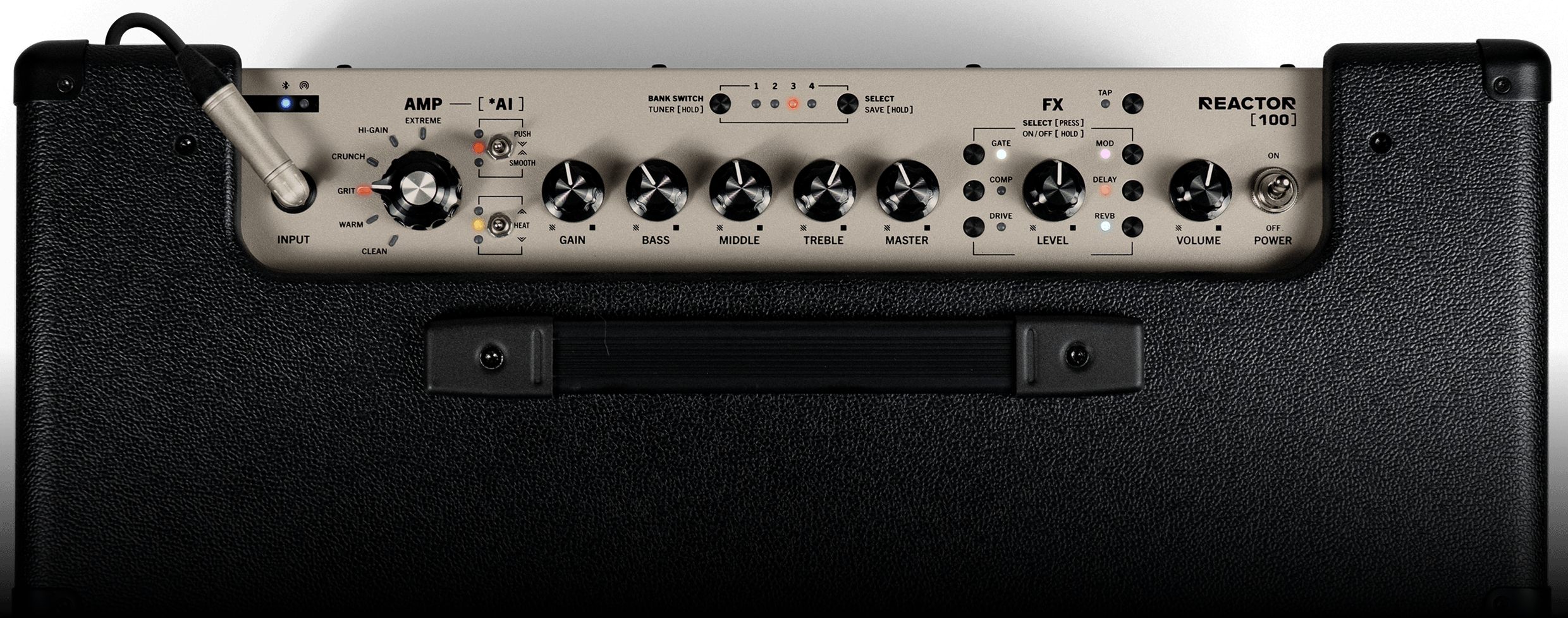
The standard Reactor model delivers 50 watts of power and includes an impressive feature set for its price category.
Specifications include:
- custom-designed 12-inch speaker;
- switchable power settings of 50W, 25W, and 1W;
- cabinet-simulated line output;
- USB-C recording interface;
- MIDI connectivity;
- headphone output;
- power amp input;
- effects loop;
- Bluetooth support for app communication and audio streaming.
Internally, players gain access to:
- 24 amplifier models;
- 28 effect types.
The amplifier also offers six primary amp categories ranging from clean tones to extreme high-gain sounds, along with eight onboard signal-chain presets.
Build Quality and Physical Design
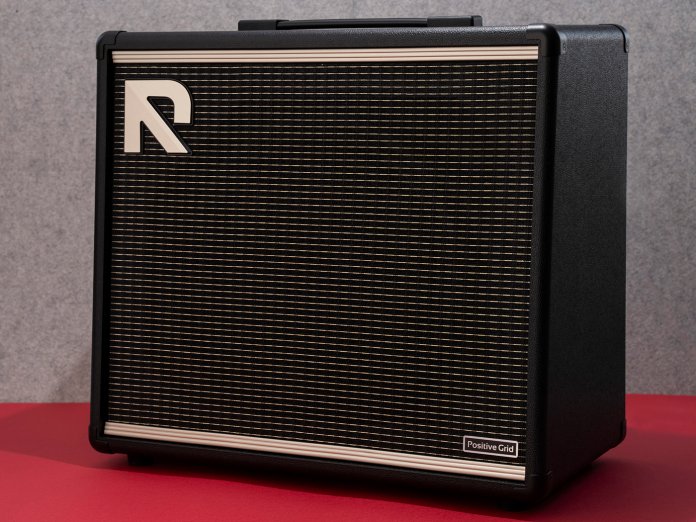
Upon unboxing the Reactor, the amplifier immediately feels substantial and well-built.
Weighing approximately 10.4 kilograms, it remains lighter than a Boss Katana 50, although slightly heavier than a Blackstar ID:X.
Construction quality is impressive throughout.
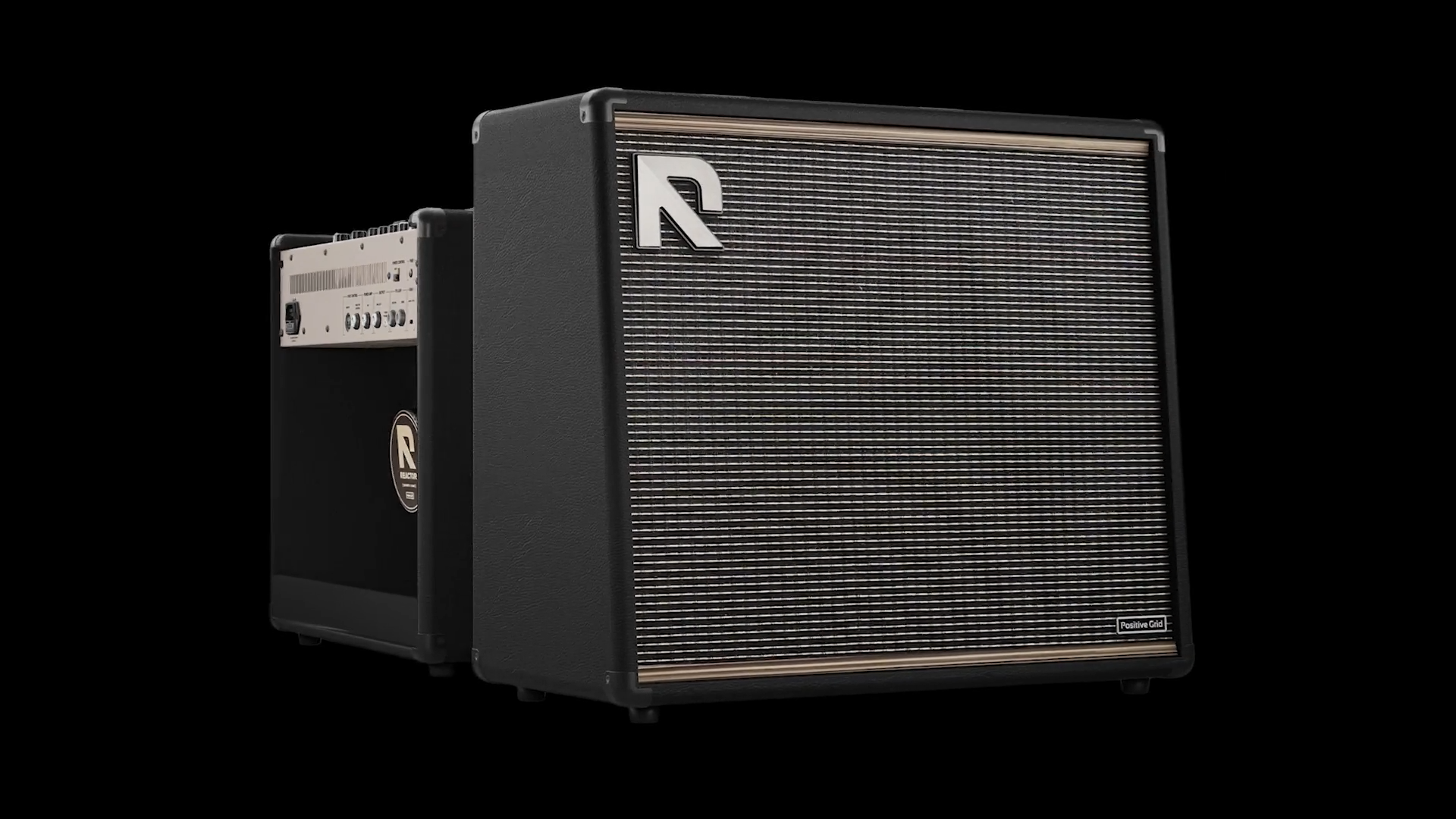
The cabinet feels sturdy, while the simple black tolex covering and black-and-gold grille cloth create a professional appearance suitable for both stage and studio use.
Control knobs, switches, and buttons feel solid and premium, reinforcing the overall impression of a carefully designed product.
App Experience
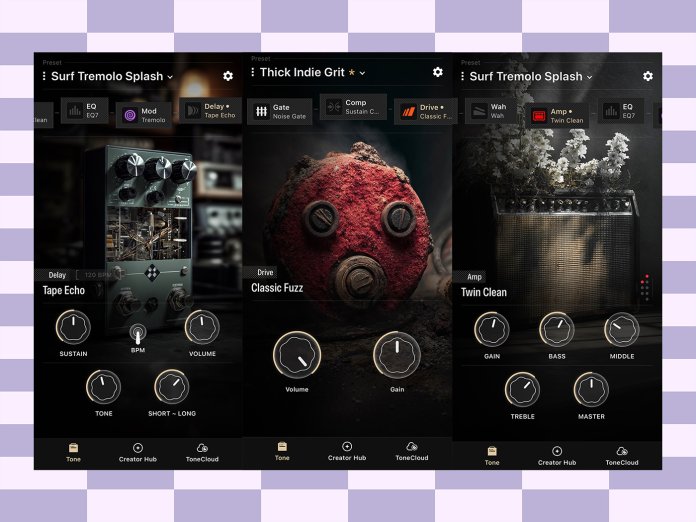
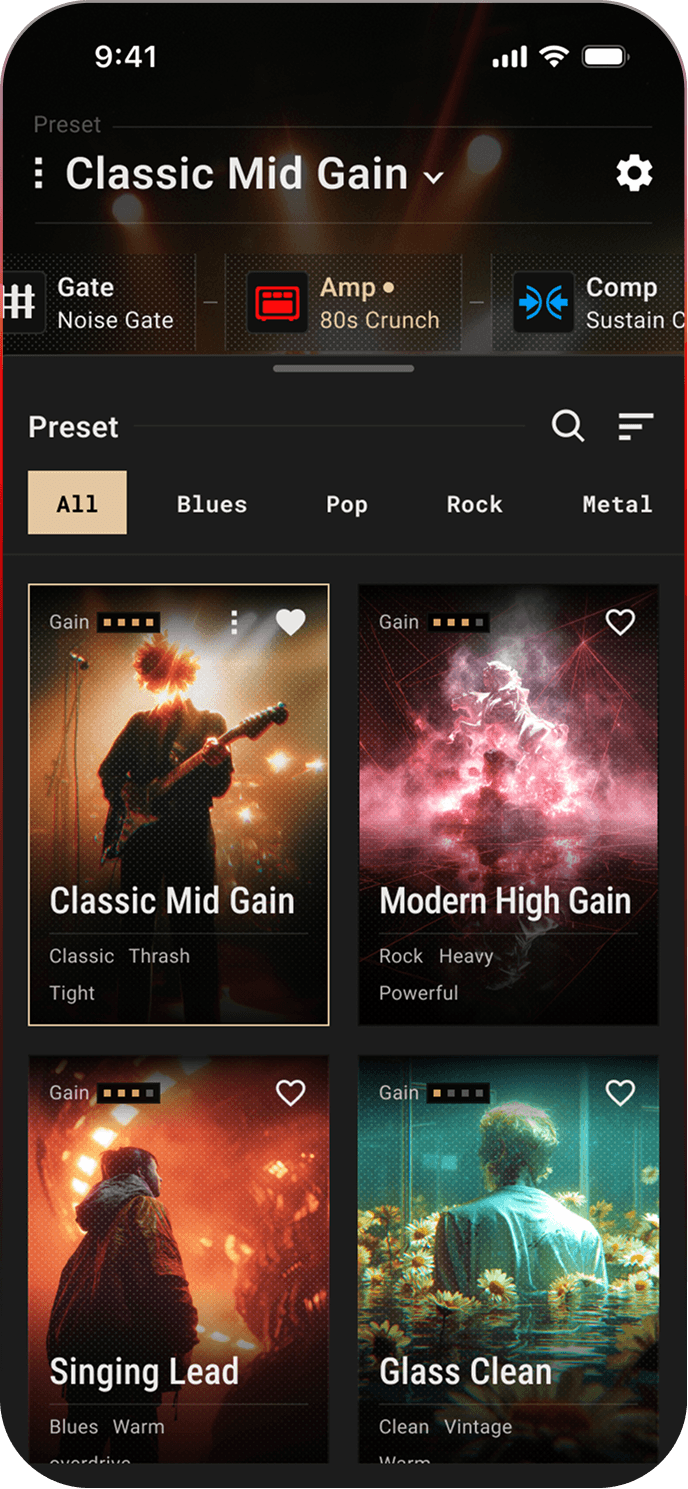
Setting up the amplifier with the Reactor app is remarkably straightforward.
Testing on an iPhone 16 resulted in a connection within seconds, after which the application immediately displayed the current signal chain and amplifier settings.
Real-time editing works smoothly, with changes reflected instantly between the hardware and software interfaces.
However, there is one controversial design decision.
Instead of using recognizable images of famous amplifiers and pedals, Positive Grid chose to represent many components using AI-generated artwork.
The reviewer strongly criticizes this choice for several reasons:
- the graphics often look unattractive;
- identifying equipment visually becomes more difficult;
- beginners may struggle to recognize different amplifier and effect types.
According to the review, traditional artwork created by human designers would have been a much more effective solution.
ToneCloud and Community Features
Although Reactor lacks some of the home-practice features found in the Spark ecosystem, such as SmartJam, users still gain access to ToneCloud.
The platform allows players to:
- search community-created presets;
- download sounds created by other users;
- share their own patches.
Given the success of ToneCloud within the Spark ecosystem, the library is expected to become a valuable resource for Reactor users as well.
Does Amp Intelligence Actually Deliver?
Inside the Creator Hub section of the application, users can choose between four different methods of tone creation.
The most obvious starting point is text-based prompting.
This is where expectations sometimes collide with reality.
Despite marketing claims suggesting that virtually any imaginable tone can be generated on demand, the reviewer discovered that the system largely works by modifying the existing collection of 24 amplifier models rather than inventing entirely new amplifier designs.
Attempts to create impossible hybrid amplifiers—for example, combining Fender-style clean tones with the aggressive character of a Marshall stack—did not produce genuinely new amplifier architectures.
Instead, the system simply adjusted existing models using EQ and effects.
The Reality of the Chatbot Experience
Like many modern AI systems, Amp Intelligence can be both impressive and frustrating.
At times, it understands requests immediately and generates highly usable sounds.
At other times, the results miss the intended target completely.
The software also tends to overcomplicate signal chains by adding additional effects rather than adjusting existing amplifier parameters directly.
In some situations, the system appeared to ignore requests entirely while insisting that it had completed the requested changes.
This occasionally resulted in what the reviewer jokingly described as an argument with a guitar amplifier.
Fortunately, when requests remain clear and straightforward, Amp Intelligence demonstrates a surprisingly strong success rate.
Audio Analysis and Image Recognition
Interestingly, audio-based tone matching often produces better results than text prompts.
When provided with an actual song or sound reference, the system has a clearer understanding of the desired outcome and generally delivers more accurate presets.
The image-analysis feature feels somewhat experimental but can still produce interesting results.
For example:
- photographs of real amplifiers prompt attempts to recreate their sound;
- images of unusual guitars generate matching tone suggestions;
- even a photo of a household cat inspired a tone designed to reflect its "playful and agile character."
While sometimes playful, the feature can also be genuinely useful in specific situations.
Fix My Tone
Another useful function is called Fix My Tone.
This feature analyzes the user's existing sound and suggests improvements based on specific complaints or goals.
For beginners especially, the educational aspect is valuable because the software explains:
- what changes are being made;
- why those changes are recommended;
- how different parts of the signal chain influence the final sound.
This helps newer players understand signal flow and tone shaping more effectively.
Processing Speed
One area where Amp Intelligence falls short of marketing expectations is speed.
Although the company claims tones can be generated within seconds, real-world testing often required significantly longer wait times.
Image-based requests sometimes took one to two minutes to process.
The reviewer notes, however, that testing was performed using a pre-release version of the software, meaning future optimization may improve performance.
Sound Quality
Ultimately, the most important question remains simple:
Does the amplifier sound good?
The answer is a strong yes.
The Positive Grid Reactor 50 delivers impressive sound quality throughout its range of tones.
One of the first things users will notice is volume.
For a 50-watt digital combo, the Reactor is exceptionally loud, with more than enough power to keep up with a small band rehearsal or live performance.
Even at maximum volume, clarity remains excellent.
The 25-watt mode still offers substantial headroom, while the 1-watt mode retains warmth, punch, and character, making it suitable for late-night practice sessions.
Amplifier Models and Tone Quality
If users can overlook the controversial visual design choices, the amplifier models themselves are genuinely impressive.
According to the review, they represent a noticeable improvement over the already respected sounds found in the Spark lineup and move significantly closer to the studio-quality tones available within BIAS X.
The custom 12-inch speaker does an excellent job of delivering these sounds with authority and depth.
Additional Tone-Shaping Controls
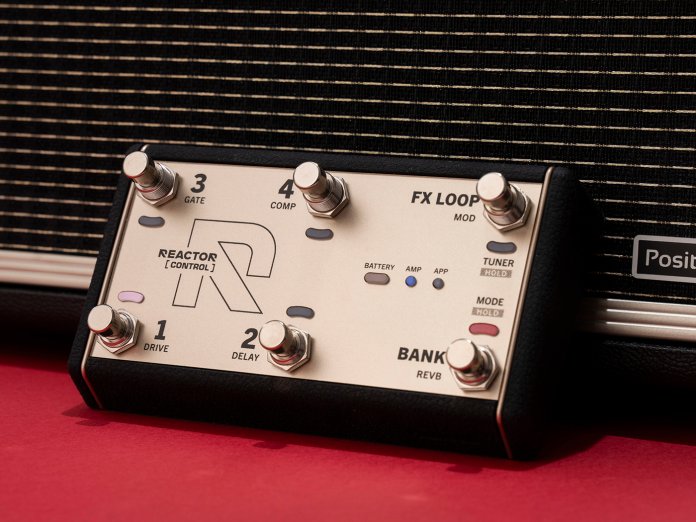
Two dedicated switches offer further tonal flexibility.
Heat
The Heat control adjusts feel and harmonic response without changing overall volume.
Its effects are most noticeable when using higher-gain sounds, adding subtle but useful variations in playing dynamics.
Smooth / Push
This control functions similarly to a midrange-shaping tool.
- Push mode provides greater presence and helps cut through a mix.
- Smooth mode produces a rounder, more rhythm-friendly character.
The functionality resembles similar controls found on amplifiers such as the Boss Katana.
Effects Section
The onboard effects are generally strong, though not revolutionary.
As with many Positive Grid products, overdrive and distortion effects remain particular highlights.
Players can use:
- one drive effect;
- one modulation effect;
- one delay;
- one reverb.
While the interface initially suggests only a single studio reverb option, deeper exploration reveals eight different reverb variations covering:
- Room;
- Hall;
- Plate;
- Chamber;
- and additional ambient spaces.
One surprising omission is the absence of a traditional spring reverb model.
Pedal Compatibility
The Reactor also performs well as a pedal platform.
Users can freely move effect blocks throughout the signal chain, offering a level of routing flexibility not always available in entry-level modeling amplifiers.
This becomes especially useful when incorporating external pedalboards through the amplifier’s effects loop.
Even complex fuzz pedals and expansive ambient reverbs are handled effectively.
Final Verdict
The reviewer ultimately believes that Positive Grid may be placing too much marketing emphasis on Amp Intelligence.
Because of this, many players may dismiss Reactor as merely "the AI amplifier" before experiencing its true strengths.
In reality, even if a guitarist never opens the Amp Intelligence section of the application, the Positive Grid Reactor 50 remains one of the most impressive affordable modeling amplifiers currently available.
Its strengths include:
- excellent sound quality;
- exceptional volume;
- intuitive operation;
- flexible routing options;
- strong integration with mobile software.
Users can spend an afternoon creating presets, save them, and then perform for years without ever needing to reopen the app. Everything required for day-to-day tone adjustment is available directly from the amplifier itself, making Reactor a serious contender in the modern modeling amplifier market.

