

Paul Reed Smith Rocks for a Great Cause
July 18, 2026, 9 a.m.
Based in Stevensville, Maryland, PRS Guitars has earned its reputation as one of the world's leading manufacturers of electric guitars and amplifiers. Throughout the years, the company has worked alongside many of the biggest names in the music industry. Legendary artists such as Carlos Santana, Mark Tremonti, John McLaughlin, John Mayer, and numerous other accomplished guitarists have trusted Paul Reed Smith and PRS Guitars to help shape their signature sound.
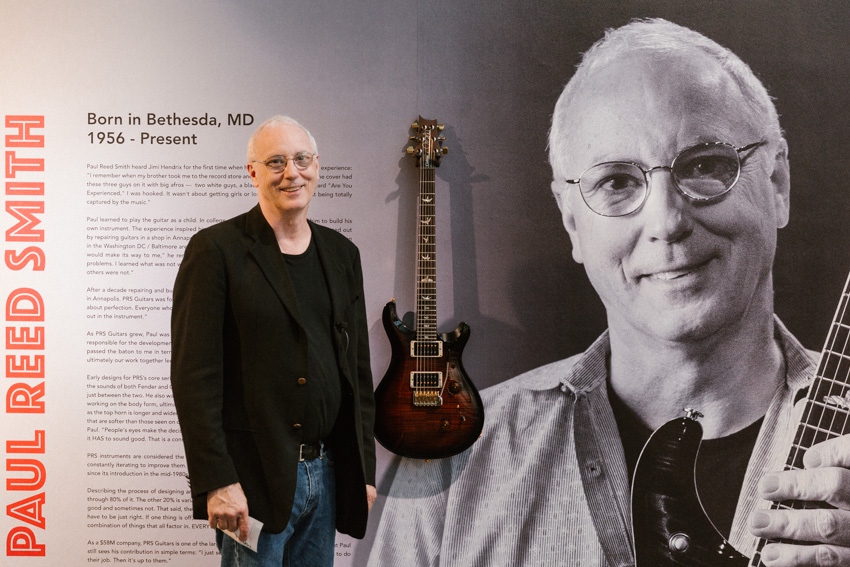
For Paul Reed Smith, the journey began with a deep passion for music long before the company existed. As a young musician, he fell in love not only with the guitar itself but also with the emotions and creativity the instrument could express. That passion eventually inspired him to build guitars of his own, laying the foundation for what would become PRS Guitars.
Even while managing one of the most respected guitar companies in the world, Paul Reed Smith continues to perform as an active musician. He regularly tours with The Paul Reed Smith Band, appearing on stages across Germany, China, Italy, and many other countries. The band features Michael Ault, Bill Nelson, Mia Samone, and brothers Gary Grainger and Greg Grainger, combining their talents to deliver energetic funk-rock performances that consistently captivate audiences.
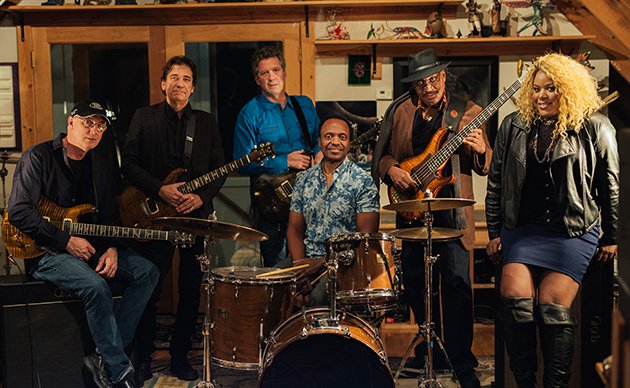
Looking back on the group's international tours, Paul Reed Smith recalled that the concerts in China were especially memorable.
"Performing in China was an incredible experience. The audiences had never really seen or heard anything like what we brought to the stage. It reminded me of what it must have felt like playing at The Fillmore back in 1969, when everything seemed completely new. Both our shows in Beijing and Shanghai were completely sold out, and the response from the audience was unforgettable."
One of the band's notable performances took place on Friday, February 17, at the Avalon Theatre as part of the Susan G. Komen Concert for the Cure. Guests could purchase a premium ticket that included both the pre-show reception beginning at 6:30 p.m. and the concert itself, while general admission tickets were also available for those attending only the performance.
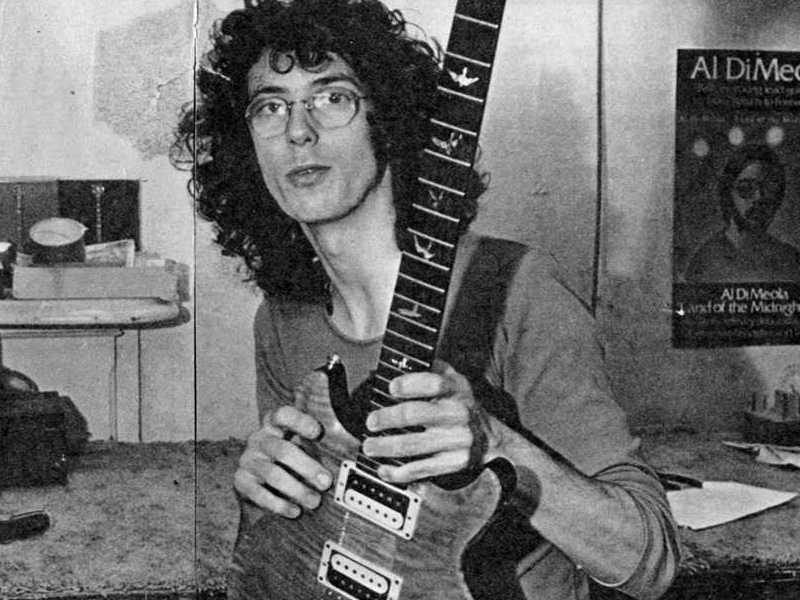
How did your passion for guitars begin, and who became the first major customer for PRS Guitars?
Reflecting on the beginning of his musical journey, Paul Reed Smith explained that his fascination with guitars started during childhood.
The first spark came when his mother brought home a The Beatles record and confidently told him that the band was destined to become something extraordinary.
A few years later, his father introduced him to another record that had already become hugely popular in England and was expected to make a major impact in the United States.
The album cover immediately caught the young Paul Reed Smith's attention. Curious to hear what made the record so special, he secretly opened it without permission and listened to it from beginning to end.
That album was Jimi Hendrix's groundbreaking debut, Are You Experienced.
According to Paul Reed Smith, listening to that record changed everything. From that moment forward, he knew the guitar would become far more than a hobby—it would shape the course of his entire life.
After discovering the music of Jimi Hendrix, Paul Reed Smith became completely immersed in the world of guitars.
He recalled spending as much time as possible attending performances by local bands, carefully watching guitarists and absorbing everything he could learn from them. Whenever a band played in the area, he made every effort not to miss the show. Live music quickly became an essential part of his education as both a player and a future guitar builder. Over the years, he estimated that he had performed with approximately forty to fifty different bands.
During that period, his daily routine revolved around two passions. He built guitars throughout the day and spent his evenings performing on stage. Creating instruments and playing them in front of audiences naturally complemented one another, allowing him to refine his understanding of what musicians truly needed from a guitar.
One experience, in particular, convinced him that he was moving in the right direction.
While visiting Washington Music Center, he opened the case of one of the guitars he had built. Almost immediately, people gathered around to examine the instrument. The unexpected attention made a lasting impression on him, showing that musicians were genuinely interested in his work. That moment also taught him the importance of listening carefully to the reactions and opinions of players who would ultimately use his guitars.
His earliest sales went to two well-known Washington, D.C. bands—The Nighthawks and Cherry Smash. Those first customers helped introduce his instruments to the local music community and gave his young business valuable exposure.
Before long, word of his craftsmanship spread much further. He was soon building guitars for internationally respected artists, including Peter Frampton, Al Di Meola, Carlos Santana, and Howard Leese of Heart.
Among those early milestones, Howard Leese holds a special place in PRS history because he purchased the very first PRS guitar featuring a curly maple top—a design element that would later become one of the company's most recognizable trademarks.
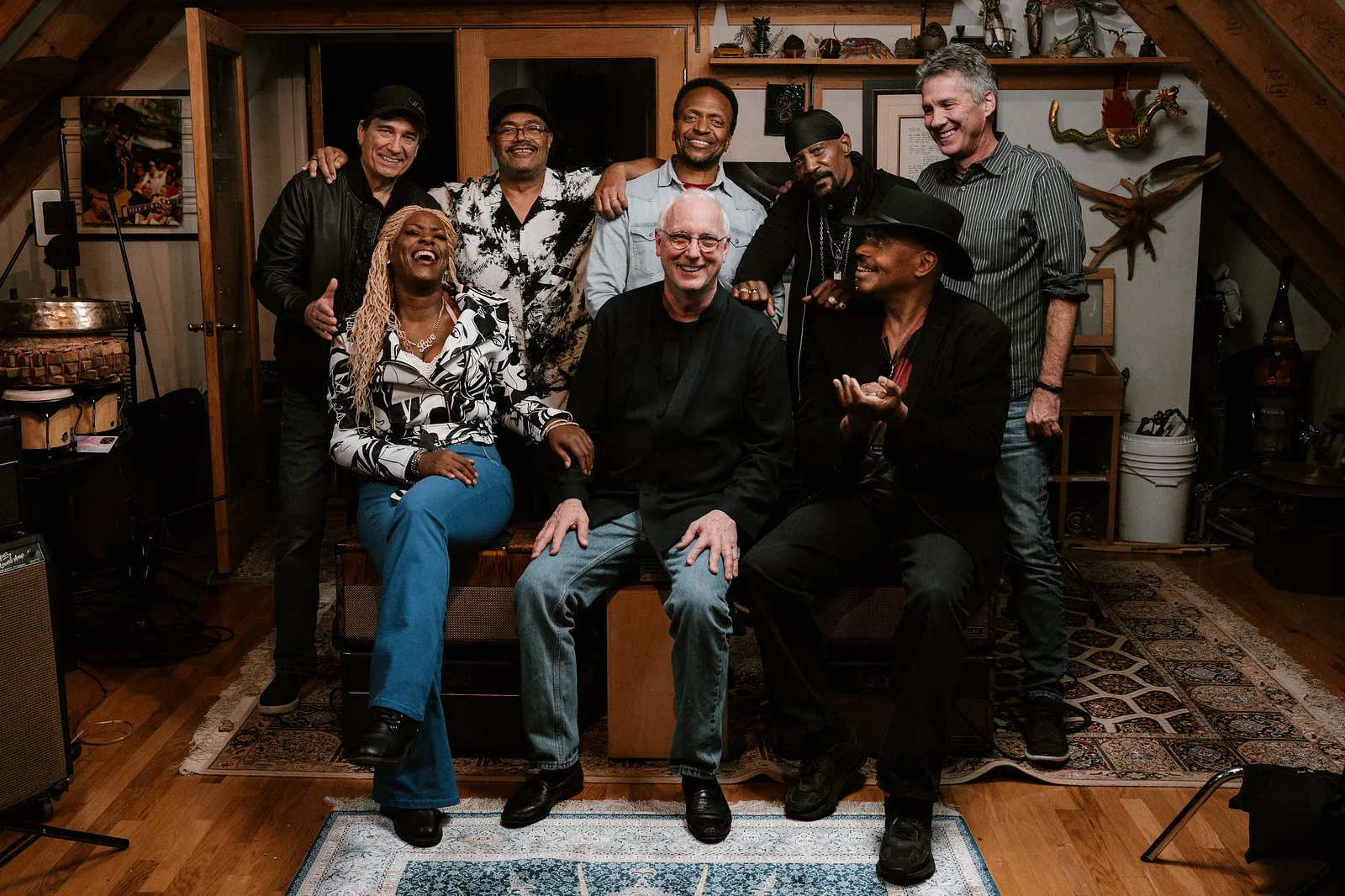
How did The Paul Reed Smith Band come together?
When asked about the origins of his band, Paul Reed Smith explained that the current lineup evolved gradually rather than appearing overnight.
The story began with a group known as The Band of a Thousand Names, which eventually adopted the name The Dragons. The musicians performed under that banner for many years. Later, as the project evolved and The Dragons name was retired, promoters increasingly advertised the group using Paul Reed Smith's own name. Over time, that naturally became the band's official identity, and it has been known ever since as The Paul Reed Smith Band.
Speaking about his fellow musicians, Paul Reed Smith expressed great admiration for Gary Grainger, Greg Grainger, and Mia Samone, describing them as exceptional performers and wonderful people to work with.
He also shared how he first developed his musical relationship with Gary Grainger. For roughly a year and a half, he performed with the band led by Julia Nixon, the singer well known for her role in the Broadway production of The Color Purple. Julia Nixon regularly played at a venue in Bethesda where Paul Reed Smith also performed every Wednesday. Those performances ultimately led to a long-lasting musical partnership that would continue into the formation of his own band.
Touring the World with The Paul Reed Smith Band
During the interview, Paul Reed Smith was asked which countries had left the strongest impression on him after years of touring. Over the course of its career, The Paul Reed Smith Band has performed in numerous countries, including Germany, Italy, Japan, and China.
Without hesitation, Paul Reed Smith pointed to China as one of the most memorable experiences.
He explained that audiences there had never encountered a band quite like theirs before. The music, the energy, and the overall performance felt completely new to the people attending the concerts, creating a unique connection between the band and the audience.
According to Paul Reed Smith, the atmosphere reminded him of the legendary performances at The Fillmore in 1969, when audiences were discovering an entirely new musical experience. He felt that the same sense of excitement existed during the band's concerts in Beijing and Shanghai. Both venues were completely filled with enthusiastic fans, making those performances some of the most rewarding of his career.
Germany also holds a special place in his memories.
One of his favorite concerts took place in an unusual setting—a stage inside the large exhibition tent of Hans Thomann, the founder of one of Europe's best-known online musical instrument retailers. Looking back, Paul Reed Smith described the show as one of the most enjoyable performances the band had ever played.
He especially remembered the outstanding performance of Mia Samone. At one point during the concert, she addressed the audience in German, and the crowd responded with tremendous enthusiasm. The reaction was immediate, and the atmosphere throughout the venue became even more electric.
For Paul Reed Smith, it remains one of those concerts that perfectly captured the excitement and spontaneity of performing live.
Performing for a Meaningful Cause
Another important topic of the interview was the band's participation in the Susan G. Komen Concert for the Cure, held at the Avalon Theatre.
When asked whether The Paul Reed Smith Band had a personal connection to the Susan G. Komen Foundation, Paul Reed Smith answered that they certainly did.
He explained that one of the members of the band serves as the head of Johns Hopkins Oncology, giving the group a direct and personal understanding of the importance of supporting cancer research and patient care.
This performance marked the band's second consecutive appearance at the Concert for the Cure. Paul Reed Smith said that everyone involved was proud to contribute to an event that combines live music with fundraising efforts for such an important cause.
He also noted that the band had previously performed at the Avalon Theatre on three separate occasions and had always enjoyed returning to the venue. In his opinion, it is a beautiful theater with a wonderful atmosphere, making it an ideal place for both musicians and audiences.
Looking ahead to the concert, Paul Reed Smith expressed his hope that the theater would once again be filled with people and that the performance would help inspire generous support for the foundation's fundraising mission. Bringing music and charitable work together, he said, is something the band is always proud to be part of.
Forty Years of PRS Guitars: How the Company and the Guitar Industry Have Evolved
During the interview, Paul Reed Smith was also asked to reflect on how both PRS Guitars and the music industry have changed over the past three decades. Reaching the company's 30th anniversary in 2015 marked an important milestone, offering an opportunity to look back at the evolution of guitars, recording technology, and the way musicians create music today.
According to Paul Reed Smith, change is constant, and in many cases it happens much faster than people realize.
He recalled visiting the largest online musical instrument retailer in the United States. Despite the building being filled with recording studios, modern equipment, and every tool a musician could need, no one could locate a working CD player. Eventually, staff members found an old unit covered in dust at the back of a storage room just so they could play a compact disc.
For Paul Reed Smith, that simple moment perfectly illustrated how dramatically the industry has transformed. The way musicians listen to music, record albums, and purchase equipment has changed completely compared to previous decades.
When discussing the evolution of the guitar itself, he explained that progress does not move in only one direction. In his view, today's instruments simultaneously embrace innovation while revisiting ideas that proved successful in the past.
As one example, he pointed to the enormous growth of the guitar effects pedal market. Modern players now have access to an incredible variety of pedals capable of reshaping their tone in countless ways, making this one of the fastest-growing segments of the guitar industry.
At the same time, PRS Guitars continues to respect traditional design principles. Paul Reed Smith described the PRS 594 as an instrument that looks both backward and forward at the same time, combining classic inspiration with modern engineering. By contrast, he sees the PRS 509 as a model that pushes the instrument further ahead by introducing new ideas and expanded tonal versatility.
He emphasized that the development of musical instruments is rarely straightforward. A violin built today still follows essentially the same design that has existed for centuries, whereas the electric guitar continues to evolve with new technologies, construction methods, and player expectations.
Even so, not every innovation automatically represents an improvement.
For that reason, the philosophy behind PRS Guitars has always been simple: preserve everything that has proven to work over time while eliminating unnecessary compromises and introducing new ideas only when they genuinely make the instrument better.
Which Artists Have Left the Greatest Impression?
When asked which musicians he most enjoys seeing play PRS Guitars, Paul Reed Smith admitted that choosing just one would be nearly impossible.
Instead, he mentioned the artists who have stood beside the company for many years, including Mark Tremonti, Carlos Santana, John Mayer, John McLaughlin, and many other longtime members of the PRS family.
He also shared a memorable story about performing alongside John McLaughlin during one of the company's events several years earlier. Throughout almost the entire performance, Paul Reed Smith had the opportunity to share the stage with the legendary guitarist.
There was, however, one exception.
When John McLaughlin began performing a classic Mahavishnu Orchestra composition, Paul Reed Smith stepped off the stage on purpose. Rather than continue playing, he wanted to experience that performance from the audience's perspective.
He recalled cheering enthusiastically while watching one of his musical heroes perform, describing the moment as both inspiring and unforgettable.
Which PRS Guitars Instrument Is Your Personal Favorite?
When asked which guitar he has built over the years means the most to him personally, Paul Reed Smith did not hesitate before answering.
He explained that the instrument created for Carlos Santana holds a unique place in the history of PRS Guitars. More than any other model, it helped establish the company's reputation and introduced the brand to a much wider audience.
According to Paul Reed Smith, his relationship with Carlos Santana played a pivotal role during the early years of the company. Once Santana began performing with one of his guitars, PRS Guitars started attracting widespread attention from musicians and the guitar press. Articles began appearing in major publications, and the company quickly gained recognition throughout the industry.
The guitar he referred to was the original Santana model, featuring a single control knob and two switches. Looking back, Paul Reed Smith believes that this particular instrument had the greatest impact on the future of the business and became one of the defining milestones in the company's history.
Although that guitar remains the most historically significant to him, he also admitted that he owns another personal instrument that he continues to enjoy playing. Every time he plugs it into an amplifier, he is reminded of how beautifully it responds, producing a tone that still impresses him every time he hears it.
Life Beyond PRS Guitars
Toward the end of the interview, Paul Reed Smith was asked how he spends his time outside of running PRS Guitars and performing with his band.
He replied that charitable work has become an important part of his life. In particular, he takes great pride in helping raise funds for Johns Hopkins, supporting medical research and healthcare initiatives that make a meaningful difference in people's lives.
Family, however, remains his highest priority.
While he genuinely enjoys traveling and performing in different countries, Paul Reed Smith admitted that he never enjoys being away from home for too long. No matter where his work takes him, he always looks forward to returning to his wife and children.
He spoke warmly about the importance of spending time with his family, explaining that he never takes those moments for granted and values every opportunity to be with the people closest to him.
When asked what he appreciates most about living on Maryland's Eastern Shore, his answer was simple.
He said that it is the people who make the area so special. Throughout his life, he has admired the kindness, honesty, and character of the people of Maryland, and those qualities continue to make the state feel like home.
As the conversation came to a close, Paul Reed Smith summed up his feelings with a brief but heartfelt statement:
"This is my home."
Those few words capture not only his connection to Maryland but also the philosophy that has guided his career. Through PRS Guitars, his music, and his charitable efforts, Paul Reed Smith continues to inspire musicians around the world, proving that passion, dedication, and a genuine love for craftsmanship can leave a lasting mark on an entire industry.

