

"People Still Just Want a Strat or a Les Paul": Phillip McKnight Explains Why Innovative Guitar Designs Often Struggle
July 5, 2026, 9 a.m.
Although guitar manufacturing continues to evolve, classic designs like the Fender Stratocaster and Gibson Les Paul remain the industry's undisputed favorites. Their popularity has been so enduring that Fender and Gibson—the world's two largest guitar manufacturers—have even taken legal action over the years to protect their iconic designs and maintain their position in the marketplace.
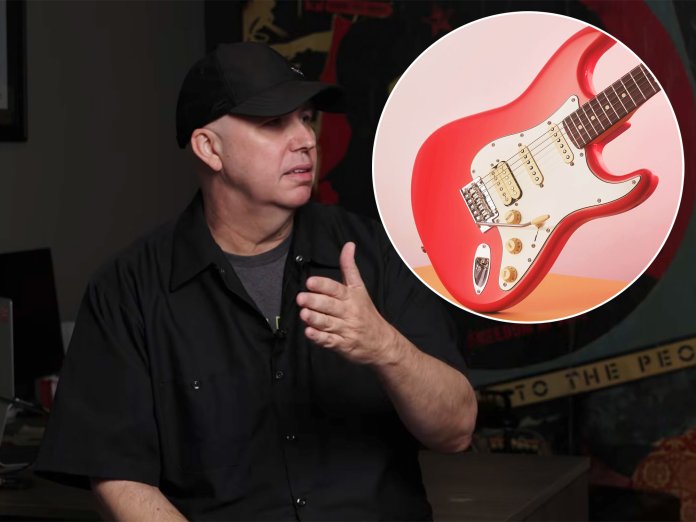
Introduced in 1954 and 1952 respectively, the Stratocaster and Les Paul have become two of the most recognizable electric guitars ever created. Countless legendary players have built their careers around these instruments, inspiring generations of musicians who often begin their own guitar journey with one of these models—or a guitar heavily influenced by them.
That raises an important question: does the guitar industry truly lack innovation, or is consumer demand itself keeping classic designs at the top?
During a recent episode of Guitar Center's Inside the Noise podcast, YouTube personality, guitar repair expert, and gear reviewer Phillip McKnight shared his thoughts on why many groundbreaking guitar designs ultimately fail to achieve lasting commercial success.
According to Phillip McKnight, history is filled with innovative instruments that deserved far more recognition than they received.
"I own a whole collection of innovative guitars that disappeared from the market. I have Parker Fly models, and I also own an Ibanez Maxxas—the first guitar Ibanez designed entirely as its own original instrument rather than a copy. Commercially, it was a huge failure for the company. It's a hollowbody guitar, it's fantastic, the neck feels incredible, and it got so many things right. Unfortunately, when it was released, everyone simply wanted RG models instead."
He believes these forgotten instruments remain fascinating because they represent genuine attempts to rethink traditional guitar design.
"I love these guitars because they show someone saying, 'We're going to improve this.' It isn't the guitar's fault that it failed commercially. The market simply says, 'I'd still rather have a Strat or a Les Paul.'"
During the discussion, Phillip McKnight was joined by Guitar Center CEO Gabe Dalporto, who is currently leading the retailer's ambitious effort to develop an entirely new in-house guitar brand.
The initiative previously generated considerable debate after Guitar Center invited customers to submit design ideas. Some members of the guitar community criticized the program, arguing that contributors would give up valuable intellectual property rights in exchange for relatively limited compensation.
Later, Gabe Dalporto explained why the company believes creating a genuinely original instrument is so important.
As he put it:
"The world doesn't need another Telecaster or Stratocaster clone. It simply doesn't."
In the latest episode of Inside the Noise, Dalporto also described today's guitar market as highly conservative.
"The real question is, how far can you push innovation while still creating something that truly resonates with players? That's exactly the challenge we're trying to solve."
The discussion highlights an ongoing reality within the guitar industry: while manufacturers continue to develop bold new ideas, most musicians still gravitate toward familiar, time-tested designs. As Phillip McKnight suggests, the obstacle is often not a lack of innovation but the enduring preferences of guitar players themselves.

