

A Happy Accident That Changed Rock Forever
Jan. 10, 2026, 9:15 a.m.
How Eddie Van Halen’s Brown Sound Was Born From an Overpowering Marshall and a Voltage Mistake
Sometimes, it only takes a mistake — used creatively — to change popular culture forever. Eddie Van Halen’s legendary “Brown Sound” is proof that innovation often comes from experimentation, curiosity, and a willingness to push gear beyond convention.
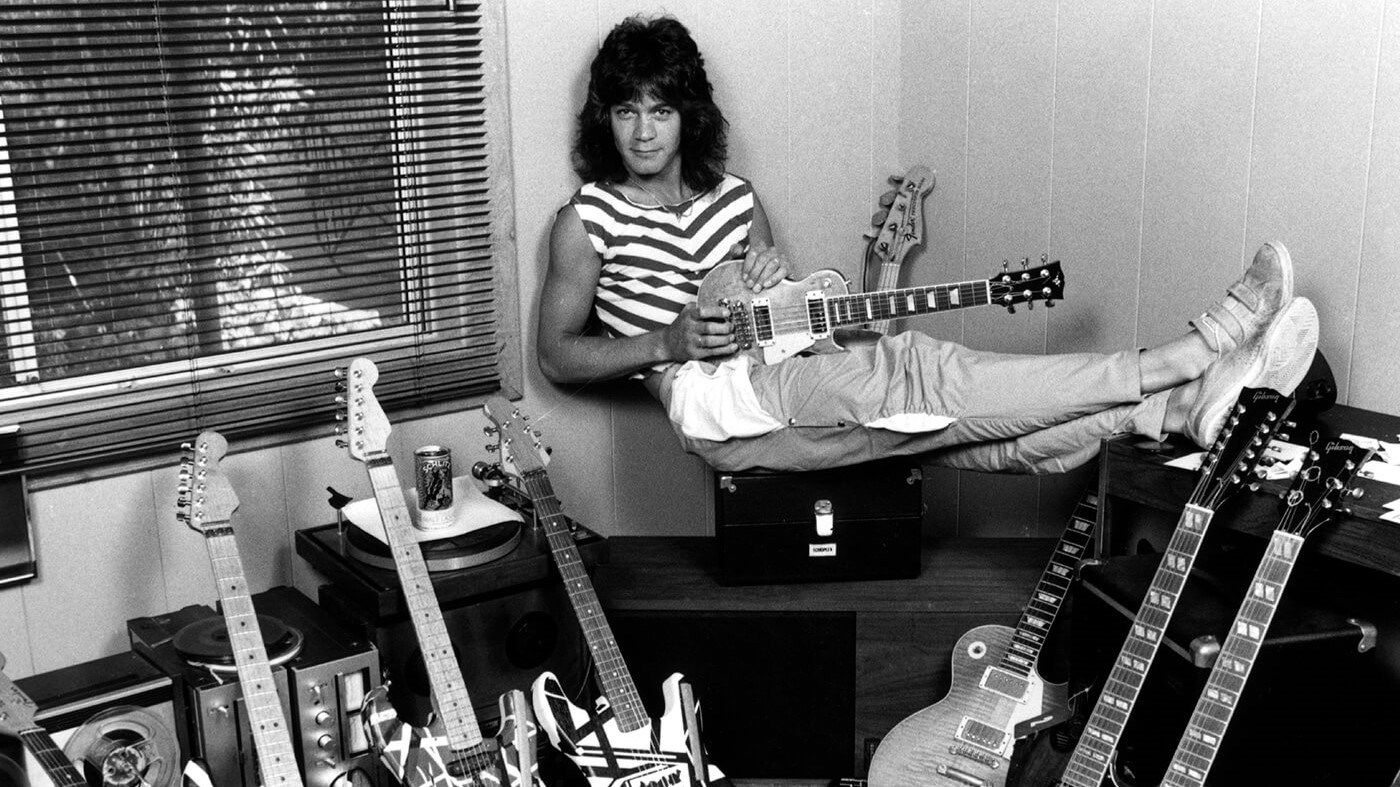
The Most Sought-After Guitar Tone — and the Most Misunderstood
Eddie Van Halen’s Brown Sound remains one of the most iconic guitar tones ever recorded. Countless players have chased it, yet many misunderstand how it actually came to life. For years, the common belief was that Eddie simply cranked his Marshall well past its intended limits. The reality, however, is far more nuanced.
Clearing Up the Myths Around the Brown Sound
At its core, the Brown Sound was produced by a 100-watt Marshall running on reduced line voltage. A Variac — a variable voltage transformer — was used to deliberately “starve” the amp of power, shaping its response and feel.
Contrary to popular lore, Eddie’s early amps were completely stock. Multiple technicians who serviced his vintage Marshall heads have confirmed there were no modifications at the time. The famous Jose Arredondo mods came later.
The term “Brown Sound” itself makes perfect sense when you think about electricity: a total loss of power is a blackout, while a partial voltage drop is a brown-out — when lights dim rather than shut off. Eddie’s amps lived in that brown-out zone.
What Is a Variac — and Why It Matters
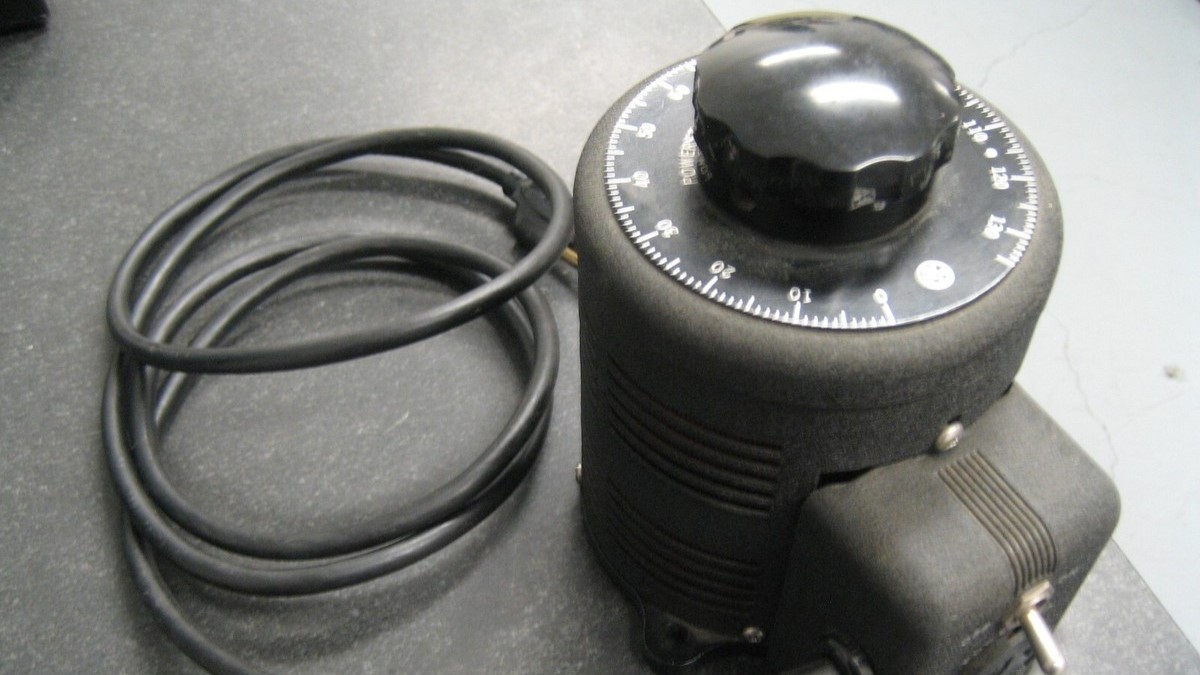
A Variac allows precise control over the voltage supplied to an amplifier. Although the U.S. standard is 120 volts, actual wall voltage can fluctuate between 100 and 127 volts, with an average closer to 117.
Before 1984, the U.S. standard hovered around 110 volts. That means many vintage amps were designed for lower voltage and could suffer when plugged into modern outlets. A Variac solves this by matching — or intentionally reducing — voltage. Eddie, ever the sonic experimenter, took full advantage of this.
Why Eddie Van Halen Turned to a Variac
Early on, Eddie jokingly claimed he used the Variac to boost voltage and push his Marshall harder. He later admitted that statement caused fans to destroy their own amps. Protecting his signature sound, Eddie was known to occasionally mislead about his setup.
In an interview with the Smithsonian’s National Museum of American History, Eddie explained the real origin story. While working at a music store, he finally bought a Marshall — the amp of his heroes. But the volume was uncontrollable. No matter how he positioned it, the amp was painfully loud.
A second Marshall purchase led to a breakthrough. It turned out to be a UK 220-volt model, plugged unknowingly into a U.S. outlet. The amp sounded incredible, yet noticeably quieter. That’s when Eddie realized volume could be controlled through voltage.
After burning out household dimmers, he discovered the Variac. By lowering voltage anywhere from 110 down to 60 volts, he could keep everything dimed while controlling loudness. Small clubs, big rooms, and studio sessions all had their own ideal settings — with around 89 volts becoming the magic number for recording.
The Variac Legacy
Other legendary bands use similar concepts today. AC/DC, for example, run their rigs through advanced Kikusui power supplies to maintain consistent voltage. For Marshall heads, the sweet spot often sits around 234–236 volts.
Eddie Van Halen’s brilliance extended far beyond his hands. His voltage experiments reshaped amplifier design philosophy and inspired generations of builders. Even today, a Variac remains a powerful tool — whether you’re chasing tonal magic or simply ensuring consistency from venue to venue.

