

🎛️ Compact Power Redefined: Neural DSP Quad Cortex Mini Review – The Most Universal Cortex Yet
March 3, 2026, 9:15 a.m.
The latest evolution of Neural DSP’s wildly popular amp and effects processor brings the full Quad Cortex experience into a pedalboard-friendly format—without sacrificing its core identity. It sounds almost impossible, but does the Mini truly deliver?
Finland has spent much of the last decade topping the World Happiness Report, yet Helsinki-based Neural DSP has an uncanny ability to stir up intense debate across large corners of the guitar internet.
It is easy to forget that less than five years have passed since Guitar.com published its world-exclusive review of the original Quad Cortex—a genuinely disruptive hybrid of amp profiling and modeling. Since then, the platform has replaced traditional amplifiers for arena acts, touring professionals, and even weekend pub players. The realism, consistency, and usability of the hardware helped Doug Castro’s company rise rapidly as one of the most influential modern guitar brands—but that success came with unintended consequences.
When a first hardware release reshapes the entire gear landscape, expectations quickly become unrealistic. That is a challenge Neural DSP has been grappling with ever since.
The launch of the Nano Cortex in 2024 marked the first clear sign that online expectations were spiraling. A strange pre-release video did not help, but the sheer backlash toward what was objectively an excellent product felt disproportionate. Much of the criticism centered on what the Nano was not: forum users had imagined a fully featured Quad Cortex shrunk to one-third the size and price—a fantasy no real-world engineering could deliver.
Neural DSP later admitted it was surprised by the response, which may explain the more restrained marketing approach taken with subsequent releases. Still, with the arrival of a new Cortex product that addresses many of the complaints aimed at the Nano, the critics have returned in force—particularly across Instagram comment sections.
But does any of that online noise actually matter? Not really. No matter how loud the grumbling becomes, it has zero impact on whether the Neural DSP Quad Cortex Mini succeeds where it truly counts: real-world performance. With that in mind, let us focus on what actually matters.
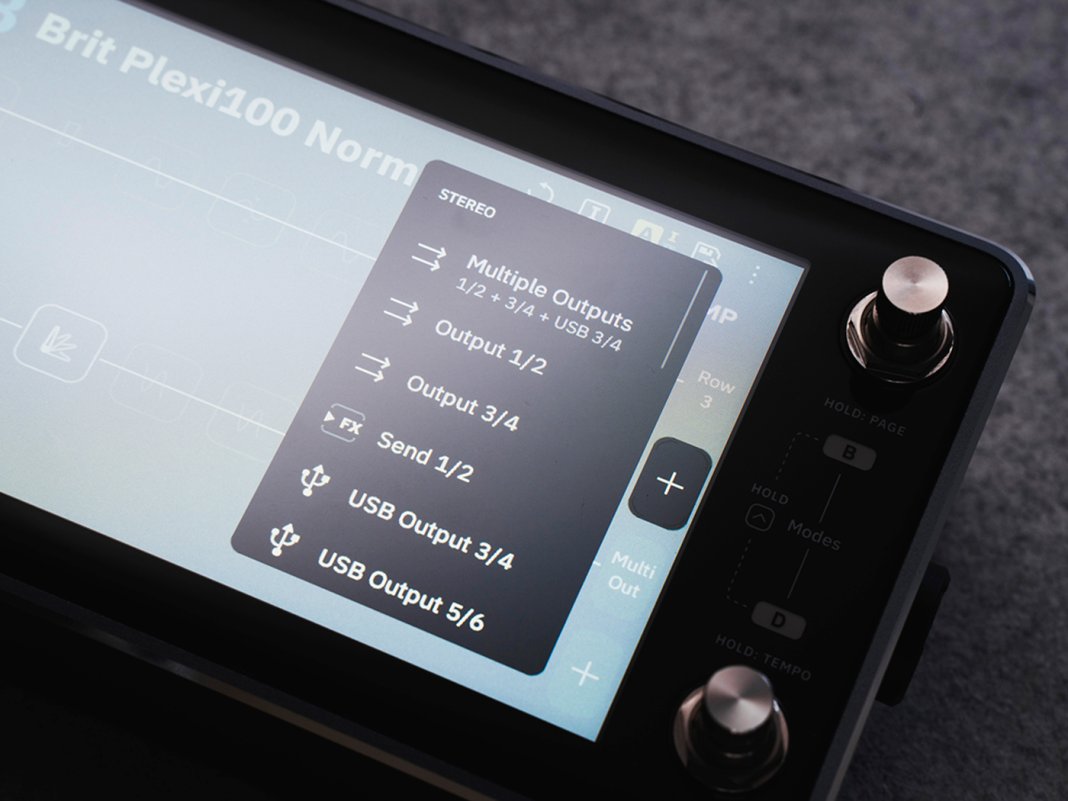
What Is the Neural DSP Quad Cortex Mini?
True to its name, the Neural DSP Quad Cortex Mini is essentially a compact Quad Cortex. Unlike the Nano, which significantly reduced functionality to transform a $1,500 processor into a $500 pedal, the Mini preserves the essence of the full QC—only in a chassis roughly one-third the size. Measuring just eight inches long and slightly over four and a half inches wide, it is designed squarely for modern pedalboards.
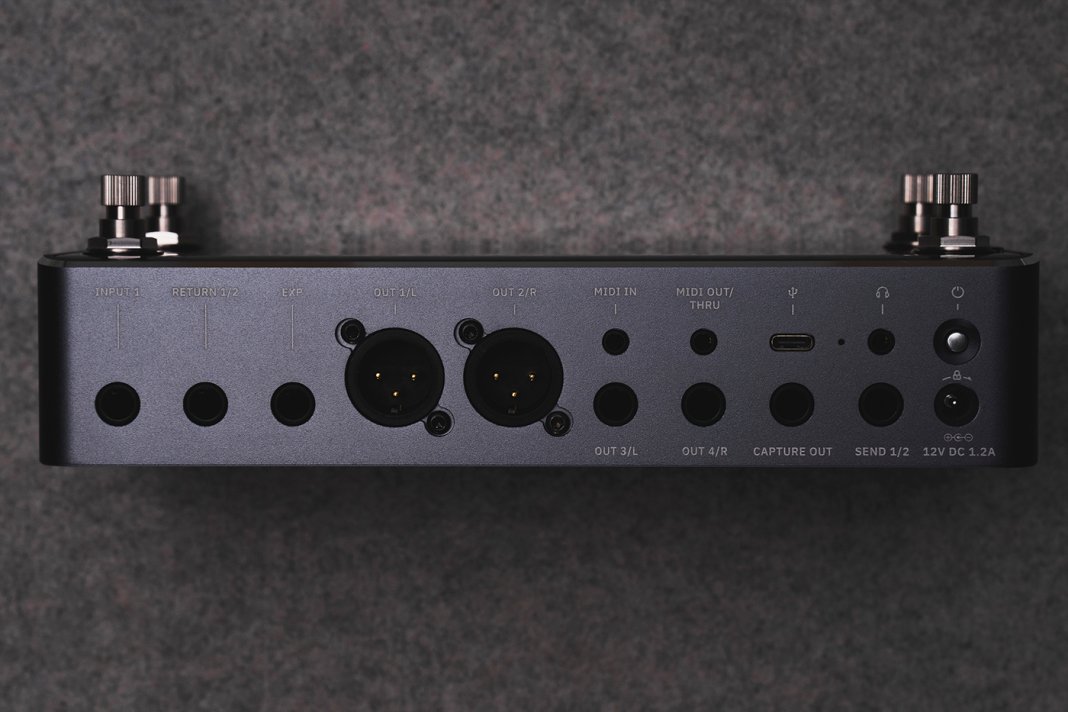
That ambitious goal explains its polarizing appearance. Fitting the essential seven-inch capacitive touchscreen into such a small enclosure required compromises. As a result, seven of the original QC’s eleven footswitches are gone, the rotary master volume knob has been replaced by subtle up-and-down buttons, and parts of the input/output section have been streamlined.
One combination jack input has been removed, though a standard jack input remains for stereo setups. Dual effects loops have been condensed into a single combined input/output, requiring a TRS insert cable to access both. Space limitations also eliminated the second expression pedal output—anyone needing two expression pedals will have to connect one via MIDI.
While these omissions may concern certain users, many players—including the reviewer—will view them as niche conveniences worth sacrificing for a Quad Cortex that fits on a Pedaltrain Nano and costs $400 less. As always, mileage will vary depending on individual needs.
Beyond those changes, Neural DSP is adamant that the Mini is a true Quad Cortex through and through. It uses the same core hardware platform, processing power, and user experience as the original—just squeezed into a form factor that looks like a smartphone after an intense strength-training regimen.
The touchscreen itself has been the most debated design choice since the Mini’s debut at NAMM. Neural DSP insists that a glass-topped pedal designed to be stepped on in dimly lit venues is perfectly safe. According to the company, extensive stress testing confirms the screen can handle normal use. Skeptics, however, may point out that smartphone manufacturers have been making similar claims for years—while screen repair shops remain very busy.
Build Quality
Let us address the elephant in the room first: the screen. I was firmly in the skeptical camp when I first saw the QC Mini at NAMM, but after several weeks of hands-on use, it is impossible to deny the quality on display here.
The unit feels reassuringly solid, precisely machined, and pleasantly heavy. The glass screen is thick and durable, surviving weeks of aggressive footswitch use without a single scratch. As someone who is far from gentle with gear, I have knocked objects onto it, dropped it onto my desk, and generally treated it with little mercy—and it still looks brand new.
A Q&A with Vlad LADKOR after NAMM 2026. Quad Cortex Mini Review
I briefly considered dropping a Les Paul strap button-first onto the screen from height, but I was genuinely concerned the guitar would suffer more than the pedal. Instead, common sense advice applies: do not drop heavy objects onto it or throw it onto concrete floors. Realistically, that advice applies to almost any pedal that does not have “Boss” printed on the footswitch.
That said, the unconventional layout does introduce a slight psychological hurdle. The proximity of the footswitches to the screen—and the need to step across them—does increase the chance of accidental contact compared to pedals with switches aligned along the bottom edge. For this reason, it is easy to imagine DeckSaver doing good business if they release a protective cover.
One unquestionable win is the new locking power connector. It is a simple but brilliant addition that prevents your entire rig from going silent if someone trips over the power cable mid-set—especially important given that the Neural DSP Quad Cortex Mini takes about a minute to reboot after losing power.
Usability
With fewer physical controls, a steeper learning curve is inevitable—and the Mini is no exception. This becomes apparent during the first boot, particularly for players unfamiliar with the Quad Cortex workflow.
Each of the three operating modes—Preset, Stomp, and Scenes—relies on specific combinations of footswitch presses. For example, the tuner is activated by tapping switches A and C simultaneously, but exiting it requires pressing switch B rather than repeating the same action. Holding those switches instead of tapping them performs a completely different function, such as navigating preset banks.
In practice, this becomes second nature fairly quickly, but there is an initial mental adjustment required.
One genuinely clever feature is the use of rotary footswitches. Each switch doubles as a precision encoder, intelligently mapped to key parameters. This allows for fine control over tones both live and in the studio, significantly reducing reliance on constant touchscreen interaction.
Wi-Fi support for wireless updates and preset downloads carries over from the original QC and remains a standout feature. However, the lack of Bluetooth is disappointing. Unlike the Nano, the Neural DSP Quad Cortex Mini cannot connect directly to the Cortex Cloud mobile app for off-pedal editing.
USB-C connectivity to a laptop and the Cortex Control software works well, but for a pedal designed to live permanently on a pedalboard, the need to crouch down or remove it for deep editing feels like a missed opportunity. It is not a deal-breaker—just an unusual oversight from a company typically known for workflow refinement.
Sound Quality
Perhaps the highest praise one can give the entire Cortex ecosystem is that the “sound” section of this review could apply equally to any of its hardware. There is a reason so many major touring acts have adopted Quad Cortex systems: the tonal quality and consistency are exceptional.
Out-of-the-box presets still lean toward heavier styles, though this perception is gradually changing. Regardless, the fidelity, responsiveness, and immediate usability of these tones are impressive. Unlike many multi-effects units, which prioritize flashy demonstrations over practical mix-ready sounds, Neural DSP focuses on realism and musical utility.
The feel of the captures deserves special mention. While no digital system is completely indistinguishable from a tube amplifier, the QC Mini comes remarkably close—particularly in the nuanced mid-gain territory where digital solutions traditionally struggle. Cranked vintage Marshalls and pushed tweed-style combos feel organic, dynamic, and inspiring.
The onboard effects suite is equally strong, especially compared to the stripped-down offering found on the Nano. The ability to load captured drive pedals into the signal chain further expands tonal flexibility. In many cases, players may find external pedals unnecessary.
While the QC Mini integrates seamlessly with pedals both inside and outside the loop, the sheer quality and variety of its internal effects may lead many users to rethink their pedalboard entirely. There is serious processing power under the hood, and it is being used to great effect.
Should You Buy the Neural DSP Quad Cortex Mini?
At this point, it feels as though Doug Castro and the team at Neural DSP are victims of their own success. The original Quad Cortex set expectations so high that anything short of perfection invites criticism.
The backlash toward the Nano felt excessive, and the complaints surrounding the Mini feel even less justified. This is precisely the compact Quad Cortex players have been asking for: a fully capable, pedalboard-ready solution with only minor and reasonable compromises.
A more appropriate competitor is Line 6’s Helix Stadium, which costs roughly the same as the full Quad Cortex and has yet to roll out its profiling technology.
In a crowded market filled with modellers and multi-effects units for every conceivable use case, the Neural DSP Quad Cortex Mini may be the most universally appealing option of them all. Finland seems to know a thing or two about happiness—and plugging into the Quad Cortex Mini makes it very hard not to smile.

