

⭐️ Marcin Patrzalek: “Why would I need one? I already have five picks — right here on this hand.”
Feb. 16, 2026, 9:15 a.m.
Marcin Patrzalek on breaking boundaries while honoring tradition
Polish fingerstyle phenomenon Marcin Patrzalek has never been one to follow convention. One of the most forward-thinking voices in today’s acoustic guitar world, he openly states that guitar picks are “the most limiting thing in the world” — and that using one would be a betrayal of his musical roots.
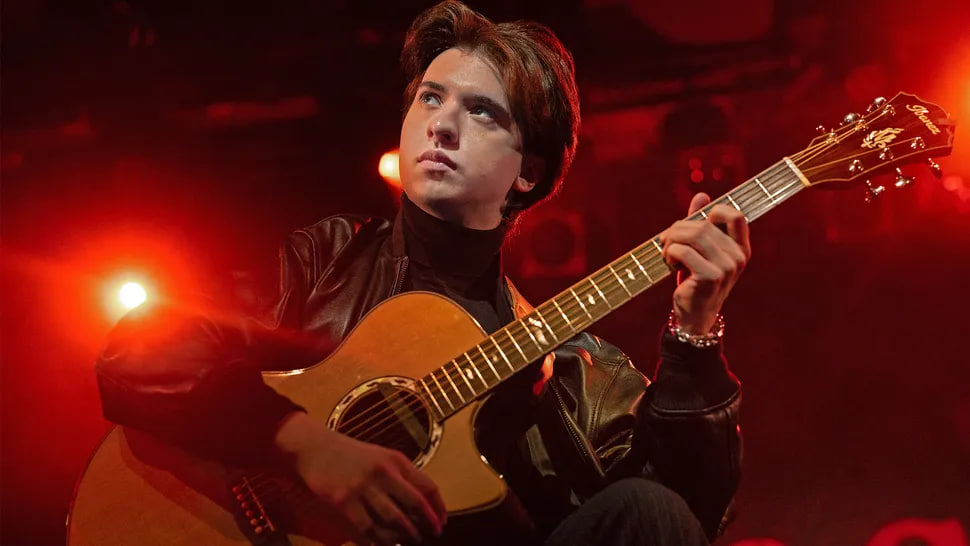
A master of percussive fingerstyle, Marcin Patrzalek first rose to prominence after winning Poland’s Got Talent in 2015. Four years later, he reached the semi-finals of America’s Got Talent. Along the way, he became a viral sensation on YouTube, reimagining symphonic works, rock anthems, and pop classics through his inventive and highly physical guitar approach.
Following the release of his debut album Dragon in Harmony last year, Guitar Player went so far as to suggest that he might be the most important development in acoustic guitar since Andrés Segovia. At the very least, Marcin is redefining how the instrument is perceived by a new generation of players and listeners.
One thing, however, remains completely absent from his playing: a plastic pick striking the strings of his signature Ibanez MRC10.
“Even when I play electric guitar, I’m not going to use a pick,” Marcin Patrzalek declares in a passionate new video filmed with D'Addario. “Why would I need one? I already have five picks — right here on this hand.”

Although the influence of modern electric guitar innovators such as Tim Henson can be heard in pieces like Classical Dragon — which features a solo by Henson himself — Marcin’s musical foundation is deeply rooted in classical guitar and flamenco. That heritage, he explains, is precisely why he considers himself “an enemy of the pick.”
“No self-respecting classical guitarist would ever play with a pick,” he insists. “I can’t even imagine what that would look like. And flamenco? How are you supposed to do rasgueado with a pick? The pick is the nails.”
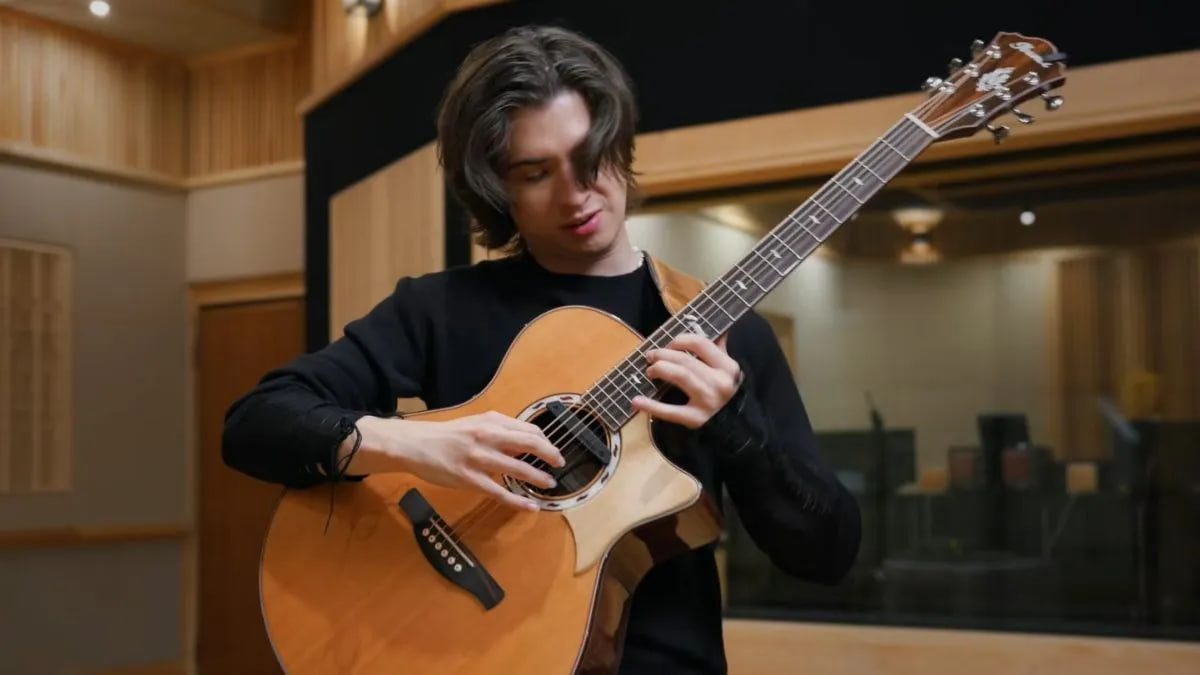
Speaking to Total Guitar last year, Marcin Patrzalek described his hybrid playing style as the result of a classically trained left hand — he began studying at the age of ten — combined with flamenco-driven right-hand techniques. The percussive innovations of Tommy Emmanuel and Jon Gomm also form a crucial part of his musical DNA.
“There’s no space in my brain to approach the left hand differently,” he said of his first, highly unconventional classical guitar teacher. “He gave me a complete vision.”
At just 13 years old, Marcin traveled to Valencia — often referred to as “the Mecca of flamenco” — to completely reshape his right-hand technique. The fusion of these two deeply traditional styles is clearly reflected in his physical and expressive approach to the instrument.
“My left hand is fairly traditional — it needs to tap and function like any guitarist’s,” he explains in the new video. “But I am a true enemy of the pick. I don’t use one. Ever.”
For Marcin Patrzalek, using a pick would mean abandoning four fingers — and, with them, the core philosophy of his art: pushing beyond limitations while remaining respectful of tradition.
“The lamest thing you can say to an artist is, ‘You shouldn’t be doing that,’” he says. “Do you even hear yourself?”
Since the release of his first viral video — a reinterpretation of Toxicity by System of a Down — he has repeatedly encountered listeners who cling to rigid ideas of what guitar playing is “supposed” to be, and who struggle to embrace new forms of expression.
“But that only tells me I’m doing something right,” Marcin continues. “It means I’m reaching new people — people who’ve never seen this style before. And that’s beautiful.”
Today, he performs percussive guitar at major international festivals such as Fuji Rock and the Montreal Jazz Festival — mainstream platforms that rarely give this style such visibility.
“This approach doesn’t usually get opportunities like this,” he reflects. “So even though there’s tension between purists and new ideas, I think that’s healthy. It shows that this could be the next big chapter in guitar music.”

