

🎸 The worn legend: the full story of Rory Gallagher’s 1961 Strat that became a symbol of guitar history
March 31, 2026, 9:15 a.m.
When discussing truly iconic instruments, Fender is always part of the conversation. Yet among all guitars, one stands apart — the legendary Strat from 1961, famously played by Rory Gallagher.
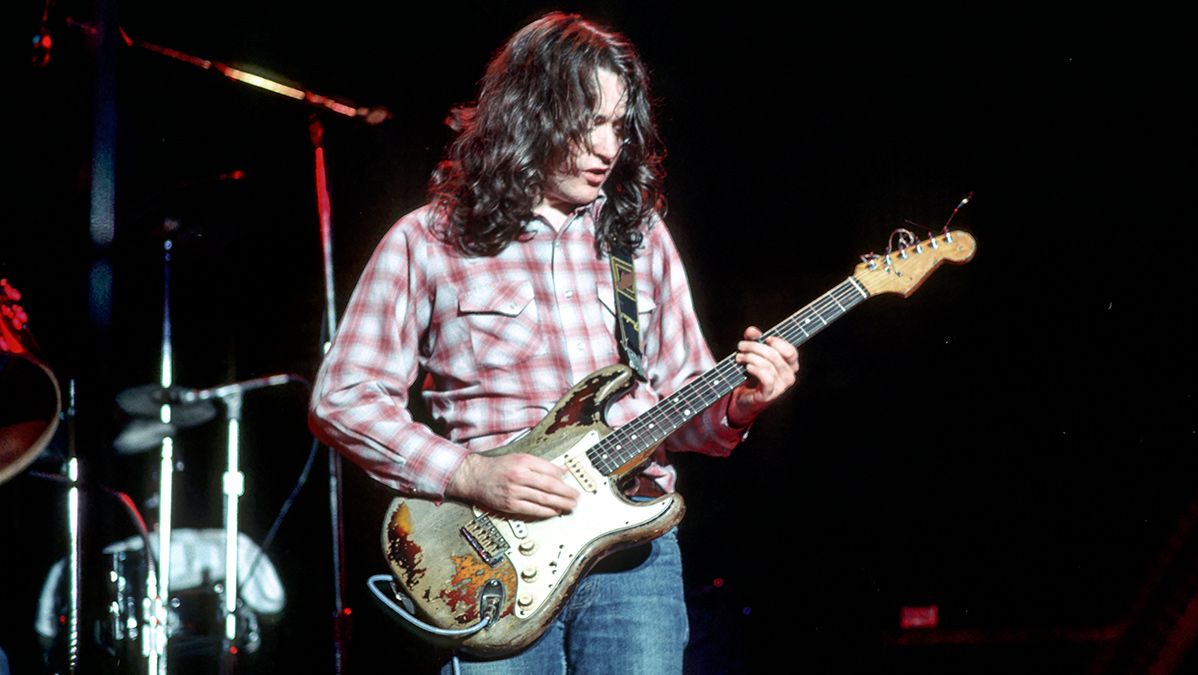
Even Fender executives were reportedly frustrated that such a heavily worn instrument represented their brand. In 1979, they presented Rory Gallagher with a brand-new replacement. However, the new guitar barely saw any use — the original Strat remained irreplaceable.
🔶 A guitar that became the artist
The Sunburst Strat of Rory Gallagher developed a unique visual identity and appeared on numerous album covers, including Deuce (1971), Live in Europe (1972), Against the Grain (1975), Top Priority (1979), Stage Struck (1980), Jinx (1982), and Fresh Evidence (1990).
On some covers, the guitar appears alone — symbolizing the artist himself. The connection between Rory Gallagher and his Strat was so strong that the instrument effectively became a representation of him.
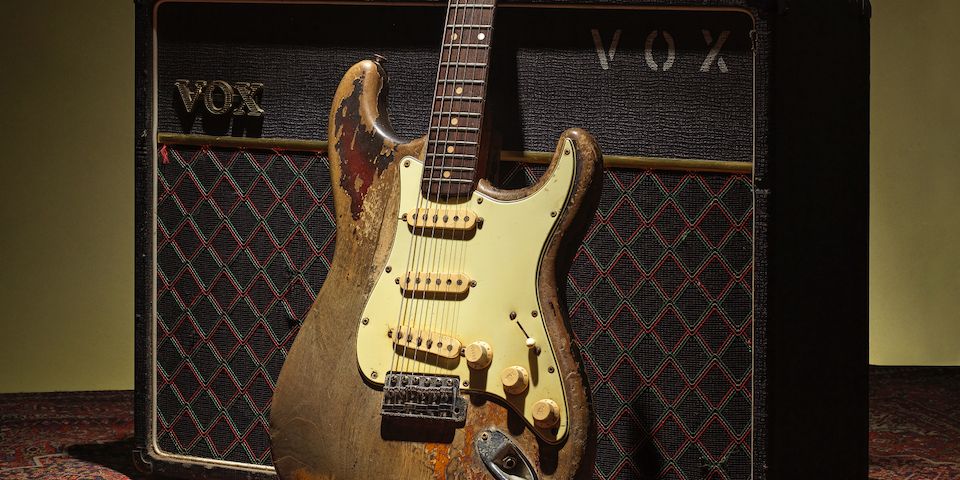
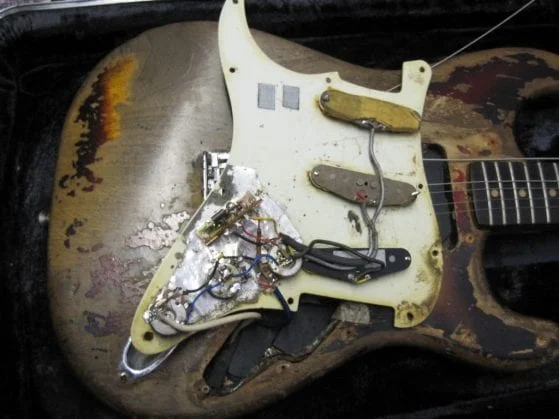
This human-like identity is largely due to its extreme wear. The guitar absorbed every performance and recording session, becoming a true “road warrior” long before the term became common.
Before Stevie Ray Vaughan, few had seen a Strat so visibly worn.
🔶 Wear born from reality, not intention
Importantly, Rory Gallagher never tried to artificially age his guitar. In fact, he was upset when it began deteriorating.
After a show at London’s Marquee Club in the late 1960s, he noticed paint coming off while cleaning it. According to his brother, this was distressing — not intentional.
The guitar had already lived a dramatic life. In 1966, it was stolen along with a Telecaster. After being featured on Irish television, the instruments were abandoned and later recovered — but exposure to harsh weather likely began the finish wear.
🔶 Sweat, playing style, and relentless touring
The main cause of wear was Rory Gallagher himself. His aggressive playing carved a visible trench above the pickguard.
His unusually acidic sweat also accelerated deterioration, affecting both finish and electronics.
From 1971 to 1995, he performed over 1,900 shows — more than 68 per year — not counting earlier performances and recordings. This level of use alone explains the guitar’s condition.
🔶 Modifications and evolving electronics
The neck was removed multiple times for maintenance. Pickup changes were frequent.
In 1975, both bridge and neck pickups failed and were replaced. Later configurations included:
- two Fender pickups (middle and neck)
- one DiMarzio FS-1 in the bridge
This pickup offered higher output and stronger low frequencies, matching his evolving tone.
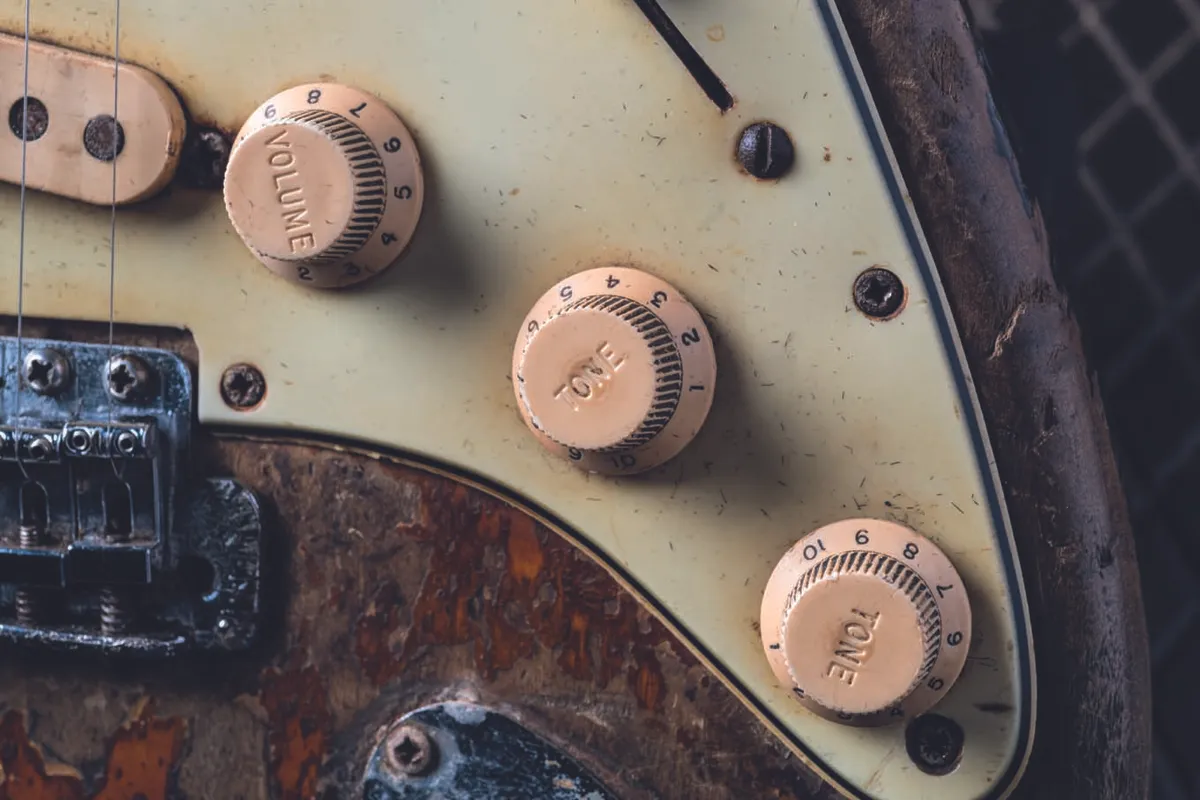
Electronics were also updated with a 5-way switch and modified tone controls.
🔶 Iconic visual identity
The headstock tells its own story:
- faded Fender logo
- extra string tree
- tuners swapped from Schaller to Sperzel, plus one Gotoh
This mixed tuner setup became iconic and was even recreated by Fender Custom Shop.
🔶 A true relic
This Strat is more than a guitar — it is a relic in the truest sense. It was part of Rory Gallagher’s identity.
Seeing it in person is like viewing a masterpiece — subtle at first, but deeply powerful upon closer inspection.
Every mark tells a story:
- screw marks
- tuner holes
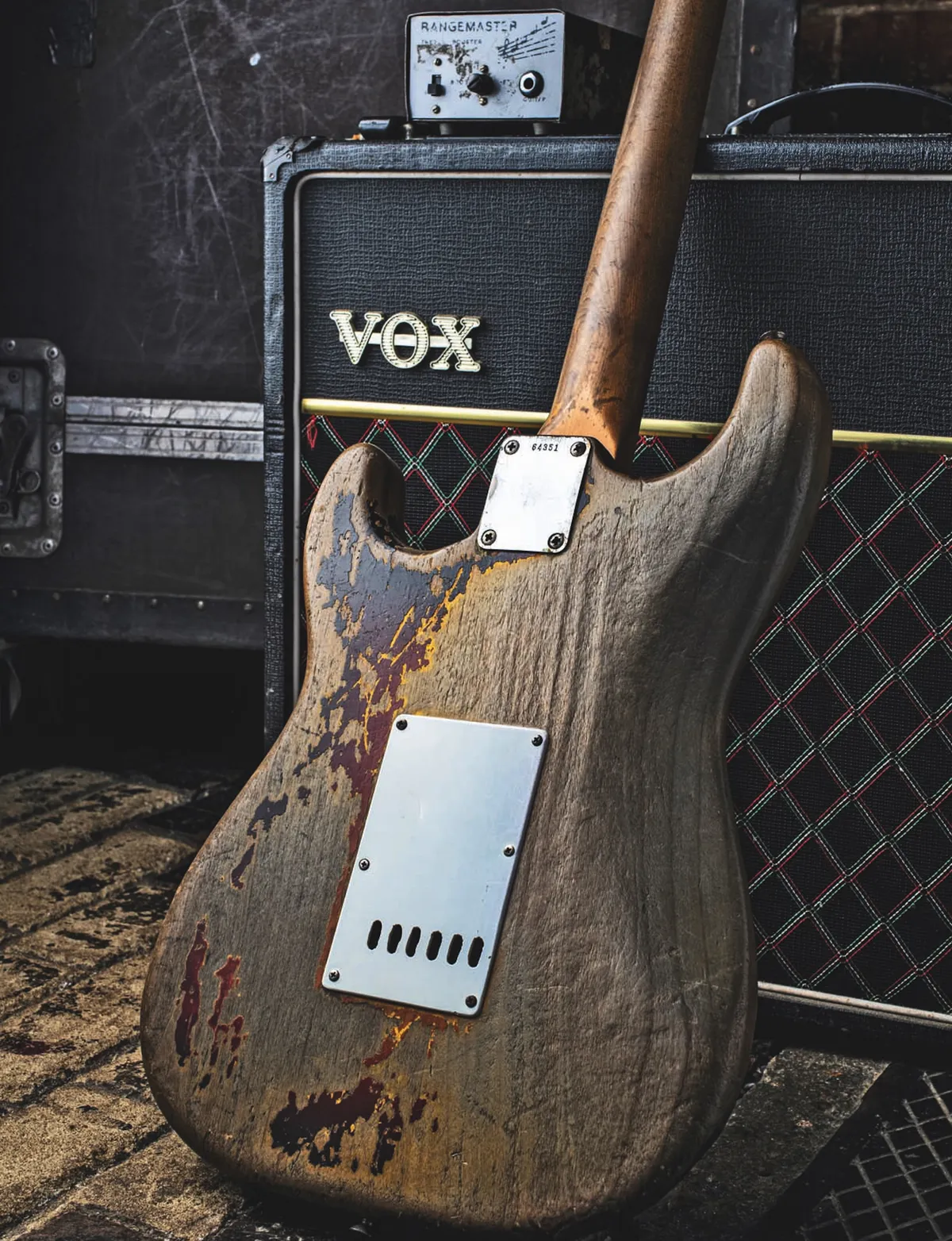
- serial number 64351
- worn neck and weathered body
🔶 Even the case has history
The case itself carries history:
- large molded design from the late ’70s–’80s
- labels “Stage Strat” and “R.G.”
- airline stickers from AER Lingus and British Airways
It no longer travels, but it preserves the story of a life on the road.

