

The Story of PRS Guitars: How a Small Workshop Became One of the World's Most Respected Guitar Manufacturers
July 13, 2026, 9 a.m.
The history of PRS Guitars is a remarkable journey driven by passion, innovation, and an uncompromising pursuit of excellence. Today, PRS instruments are recognized around the world for their exceptional craftsmanship, stunning aesthetics, and extraordinary versatility. Whether it's blues, jazz, classic rock, progressive metal, or modern pop, these guitars have earned the trust of musicians across virtually every genre. Despite being much younger than many legendary guitar manufacturers, PRS has firmly established itself among the elite names in the industry.
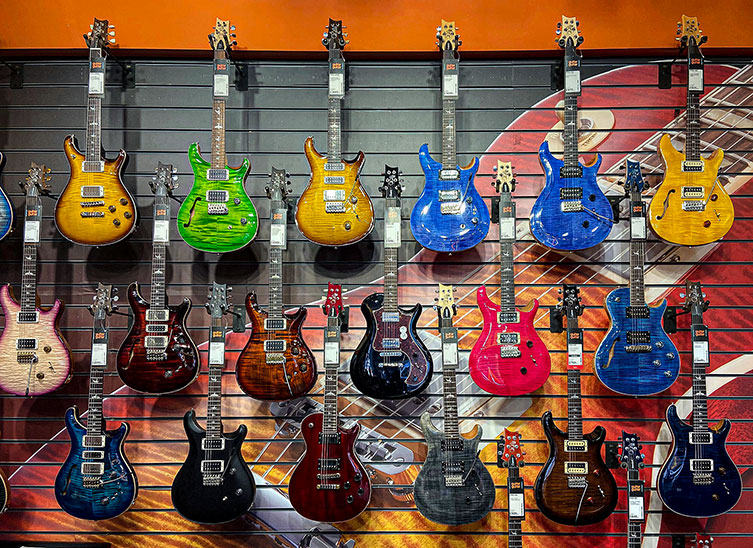
Behind this success stands one man with an unwavering vision. Through determination, creativity, and relentless hard work, Paul Reed Smith transformed a personal fascination with guitars into a globally respected company whose instruments are played by professionals and enthusiasts alike.
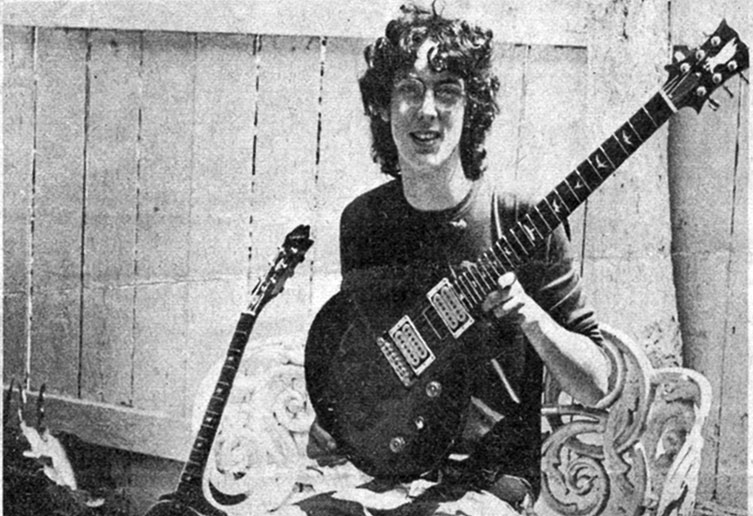
From an early age, Paul Reed Smith grew up surrounded by music. His mother sang and played guitar, while his father led a big band before eventually becoming a mathematics teacher. As a teenager, Paul discovered rock and roll and quickly immersed himself in local bands. Coming from a modest family, he often couldn't afford the equipment he admired, so he learned to build and repair things himself. His natural talent for working with his hands eventually led him to a job repairing instruments at a local music store.
After graduating from high school, Paul Reed Smith initially followed his father's path by enrolling at St. Mary's College of Maryland, majoring in mathematics. However, academics failed to ignite the same passion he felt for music. Recognizing his creative abilities, one of his professors suggested building a guitar as an independent project for extra credit. Paul received an excellent grade—but more importantly, the experience revealed what he truly wanted to do with his life.
Word of his craftsmanship quickly spread throughout the local music scene. One of his earliest high-profile jobs involved repairing the broken headstock of Joe Perry's guitar from Aerosmith. That opportunity convinced Paul that his future belonged in guitar building rather than in the classroom.
Leaving college behind, Paul Reed Smith opened a small repair and guitar-building shop in Annapolis, Maryland. Working alongside only a handful of employees, he produced roughly one handcrafted guitar each month. Being an uncompromising perfectionist, Paul personally tested every instrument during his own live performances. He also spent countless evenings backstage at concerts, introducing his guitars to touring musicians and building valuable relationships throughout the industry.
Before long, several respected artists became his customers, including Ted Nugent, Howard Leese of Heart, and Peter Frampton.

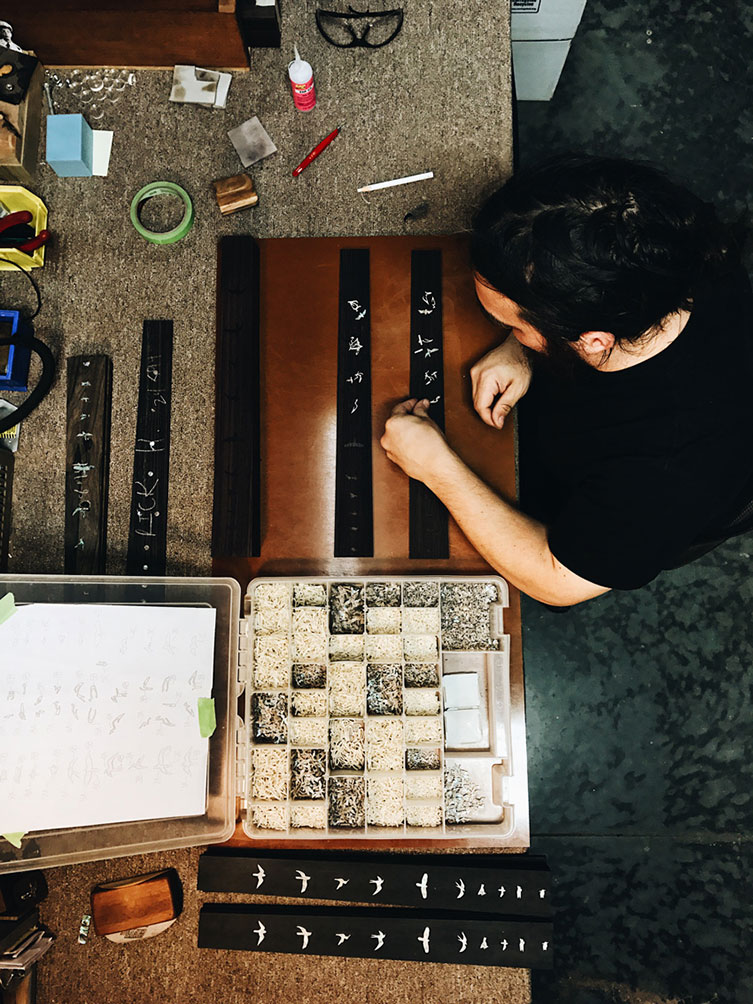
It was Peter Frampton who unknowingly inspired one of the most recognizable design features in modern guitar history. In 1976, he commissioned a custom instrument with distinctive visual details. Up until then, Paul had already been using an eagle silhouette on his headstocks, but this project inspired him to replace traditional fretboard dots with bird-shaped inlays.
His fascination with birds came largely from his mother, who loved birdwatching. To create the new fret markers, Paul carefully traced illustrations from bird identification guides while also drawing several designs by hand together with his team.
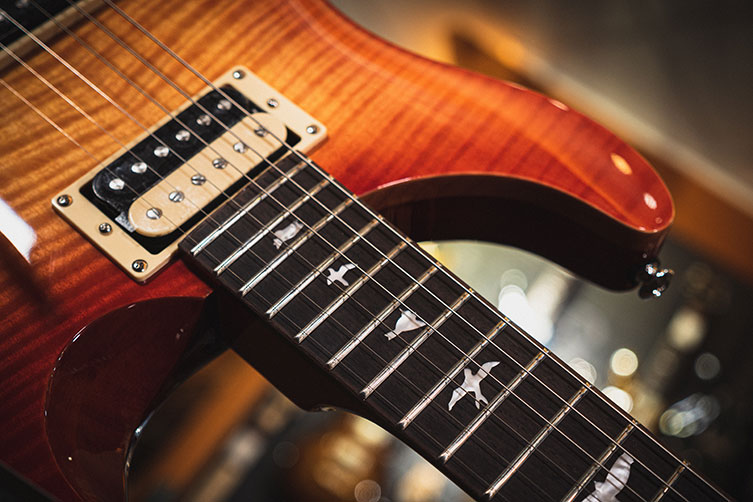
When PRS Guitars officially launched in 1985, customers could choose between two fretboard inlay options: the original Moon inlays or the newly designed Bird inlays. The company initially believed most buyers would choose the more conservative Moon design.
Instead, the exact opposite happened.
The bird inlays quickly became one of the defining visual signatures of PRS Guitars, evolving into one of the most recognizable design elements in the entire guitar industry.
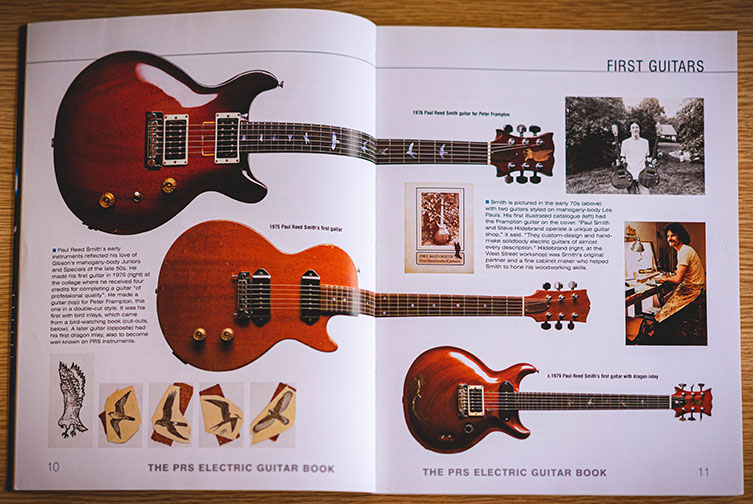
The complete sequence of birds found along the fretboard includes:
- Peregrine Falcon
- Marsh Hawk
- Ruby-Throated Hummingbird
- Common Tern
- Cooper's Hawk
- Kite
- Sparrow Landing
- Storm Petrel
- Hawk Landing
- Screech Owl on a Branch (24-fret models only)
Carlos Santana Helps Shape the Future of PRS
Long before PRS Guitars became an internationally respected brand, Paul Reed Smith had one ambitious dream—to build a guitar for Carlos Santana.
The two had crossed paths on several occasions, and Santana had tested some of Paul's early instruments. However, earning the guitarist's complete confidence proved far from easy.
Finally, in 1980, after several attempts, Carlos Santana officially agreed to endorse PRS. According to Paul, it took four different guitars before Santana was completely satisfied.
That endorsement became one of the defining moments in the company's early history. Having one of the world's most respected guitarists perform with a PRS dramatically increased the brand's credibility and helped introduce it to musicians around the globe.
From Early Experiments to an Iconic Design
The unmistakable shape that defines a PRS guitar today did not emerge overnight. Paul Reed Smith carefully studied the guitar market and understood that players were largely divided into two camps. Some dreamed of owning a Gibson Les Paul, while others preferred the feel and character of a Fender Stratocaster. At the same time, hard rock and heavy metal were rapidly growing in popularity, and aggressive, high-output guitars were becoming the instruments of choice for a new generation of musicians.
Rather than copying existing designs, Paul set out to create something entirely different—a guitar that combined the strongest qualities of both legendary styles while establishing its own unmistakable identity.
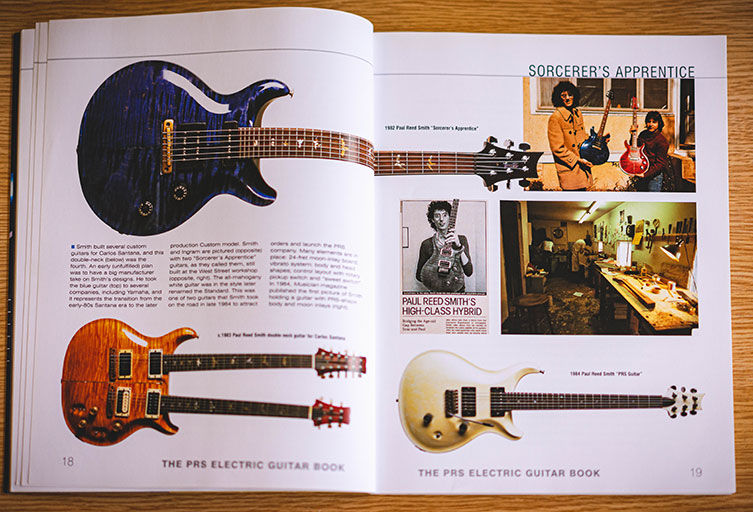
That vision became reality in 1982 with the introduction of the Sorcerer's Apprentice. Featuring a double-cutaway body, 27 frets, and the now-famous bird inlays, this groundbreaking instrument became the direct predecessor of what would eventually evolve into the legendary PRS Custom 24.
What Makes the PRS Custom 24 So Special?
Today, the PRS Custom 24 is widely regarded as the company's flagship model. Since its debut at the NAMM Show in 1985, it has remained one of the best-selling guitars in the PRS lineup and continues to represent the company's philosophy of combining innovation with traditional craftsmanship.
The guitar features a mahogany body topped with beautifully figured maple, creating both visual elegance and tonal balance. It comes equipped with a pair of proprietary 85/15 humbuckers, master volume and tone controls, and a five-way blade selector switch that delivers remarkable tonal versatility.
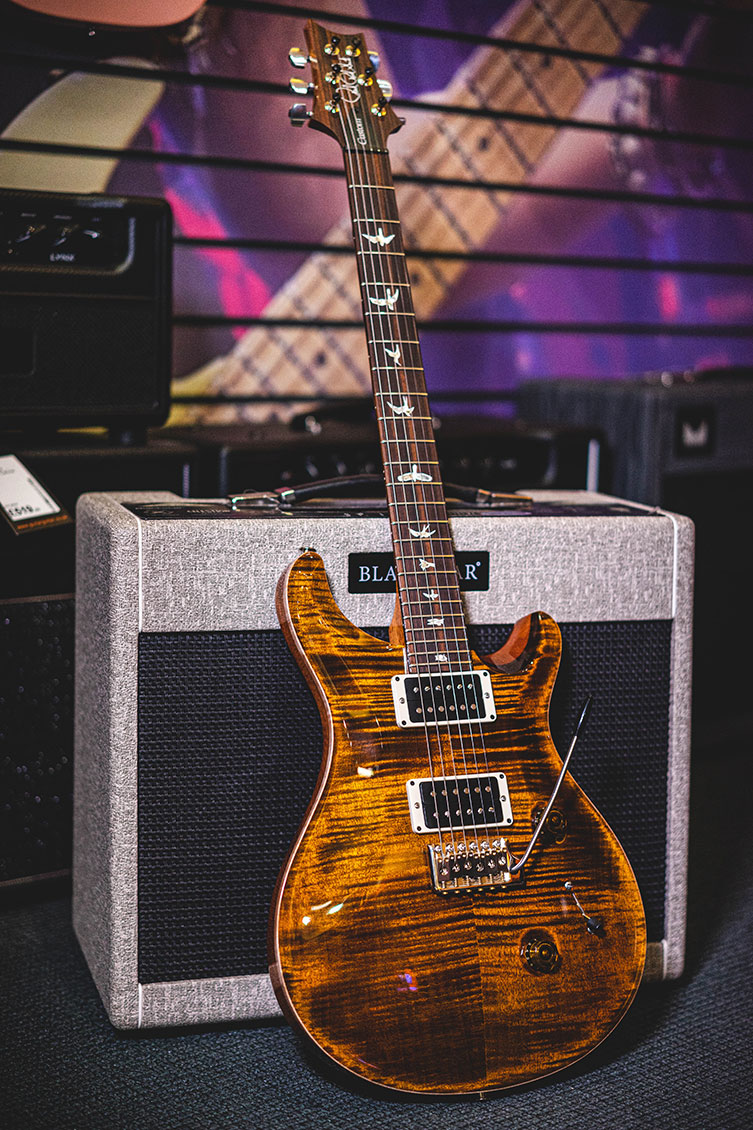
Additional signature features include a 25-inch scale length, a set neck, a rosewood fingerboard adorned with iconic bird inlays, and PRS's patented tremolo bridge system.
For countless players, the Custom 24 represents the perfect all-around electric guitar, capable of handling virtually any musical style without compromise.
The Breakthrough at NAMM
Before becoming an internationally recognized manufacturer, Paul Reed Smith spent years traveling throughout the East Coast of the United States, personally visiting music stores and introducing dealers to his handcrafted guitars. Those trips gradually generated enough business to allow the young company to invest in exhibiting at the prestigious NAMM Show.
Although Paul worried about the financial risk, his wife, Barbara Smith, encouraged him to believe in both his products and his vision.
Her confidence proved well founded.
At the 1985 NAMM Show, the PRS Custom 24 attracted enormous attention from dealers, musicians, and industry professionals. The exhibition became the turning point that transformed PRS Guitars from a promising boutique builder into a rapidly expanding international company.
From that moment forward, the brand experienced steady growth, continually refining its manufacturing techniques, expanding its catalog, and developing new models to meet the changing demands of guitar players around the world.
The Influence of Ted McCarty
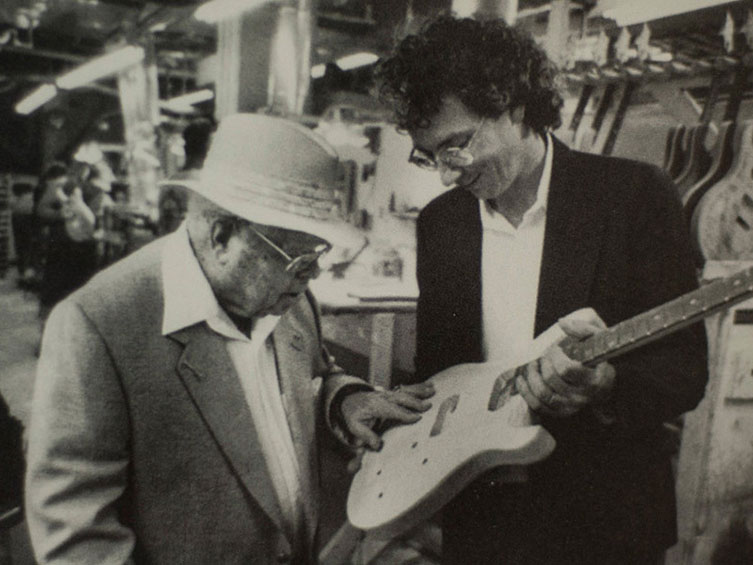
Few people had a greater influence on Paul Reed Smith's career than the legendary Ted McCarty.
As one of the most influential figures in guitar history, Ted McCarty served as president of Gibson during the company's golden era. He played a major role in developing some of the industry's most important innovations, including the humbucking pickup and iconic models such as the Flying V, Explorer, and many other groundbreaking designs.
Deeply admiring McCarty's achievements, Paul Reed Smith once arranged an interview with him. What began as a professional conversation soon developed into a lasting friendship and mentorship that profoundly shaped Paul's philosophy as a guitar builder.
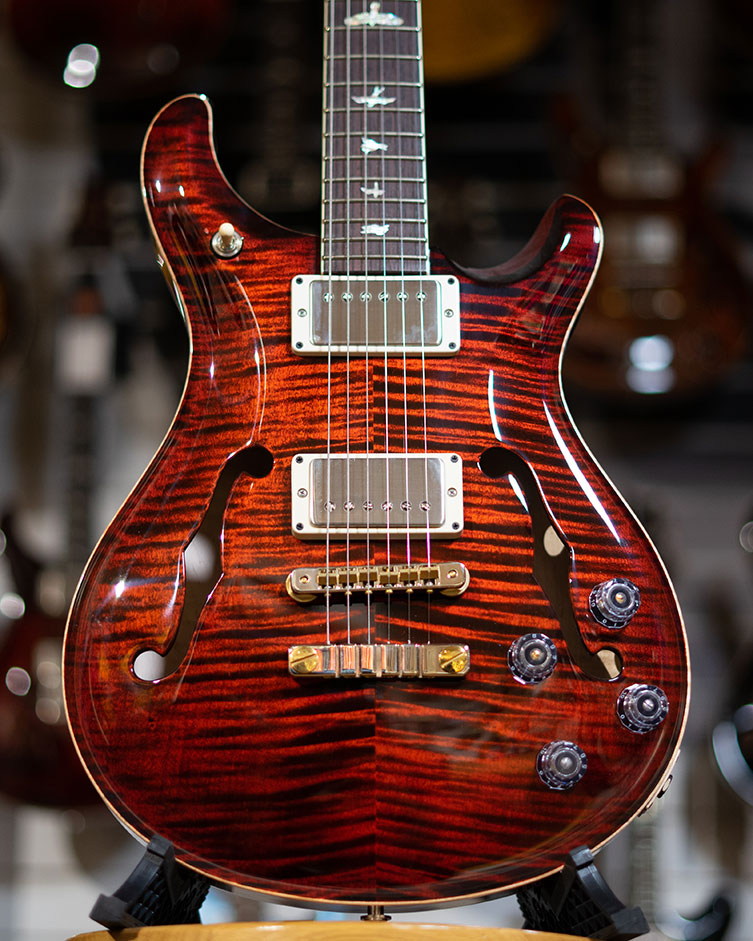
In recognition of his mentor's extraordinary contributions, Paul Reed Smith introduced the PRS McCarty model in 1994—a guitar created as a tribute to one of the most influential innovators in the history of electric guitars.
Rapid Expansion During the 1990s
The 1990s marked a period of tremendous growth for PRS Guitars.
As demand for the company's instruments continued to rise, the workforce expanded significantly. What had once been a small operation eventually grew into a thriving manufacturing company employing hundreds of skilled craftsmen.
In 1996, PRS relocated its production to a larger factory in Stevensville, Maryland, providing the space needed for continued expansion.
That same year also saw the launch of the company's official website and the introduction of the prestigious Private Stock program.
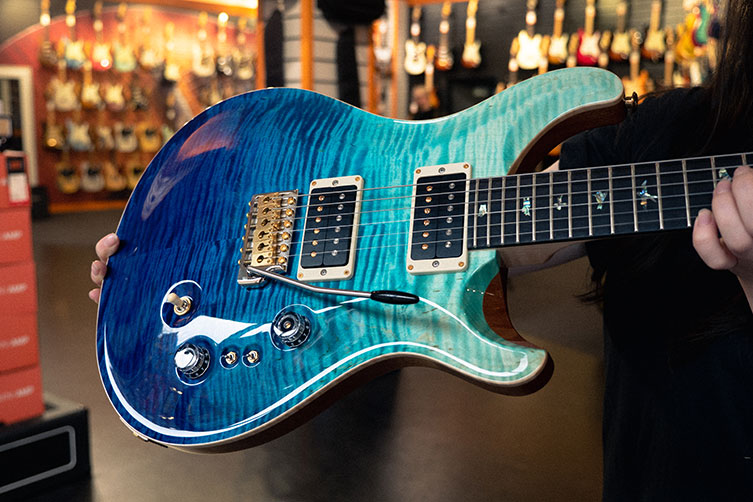
Private Stock guitars represent the highest level of craftsmanship available from PRS. Built using the finest tonewoods, premium electronics, and extraordinary attention to detail, these instruments are individually crafted masterpieces designed for collectors and professional musicians seeking complete exclusivity.
Why Gibson Sued PRS
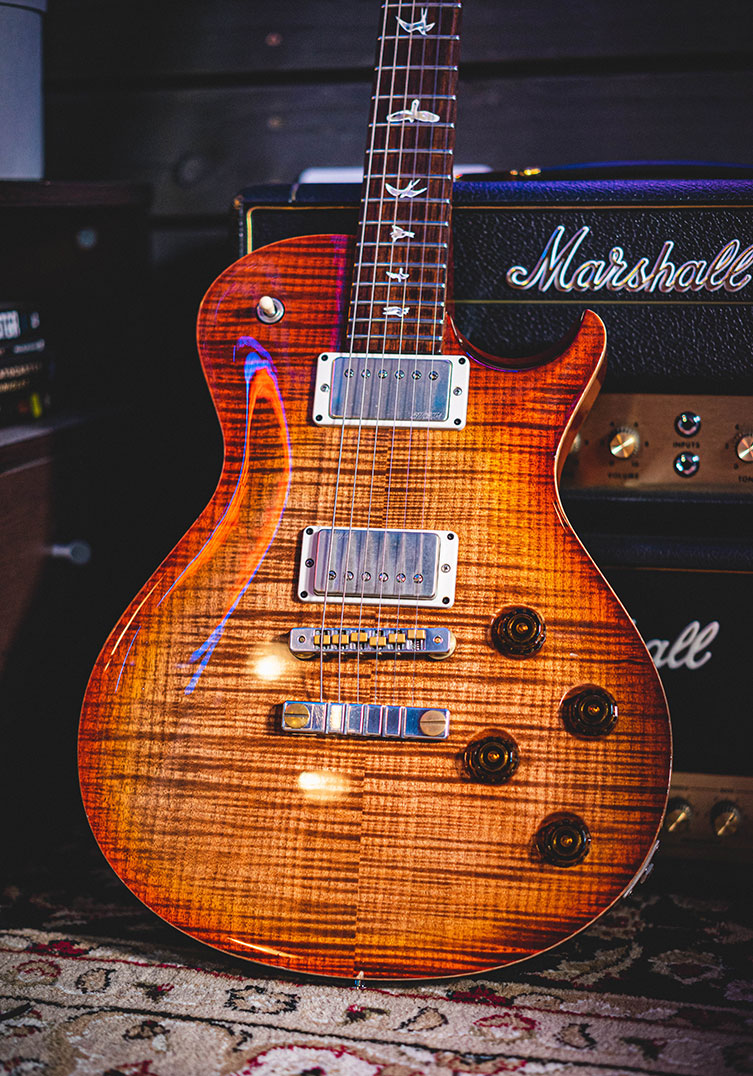
In late 2000, PRS Guitars introduced its own Singlecut model.
Because its silhouette shared certain similarities with the famous Gibson Les Paul, Gibson filed a lawsuit claiming trademark infringement and alleging that the design could confuse customers.
Initially, the court ruled in Gibson's favor, ordering PRS to halt production of the Singlecut.
However, Paul Reed Smith refused to accept the decision.
The company appealed, arguing that nearly thirty significant design differences separated the two instruments.
The legal battle lasted almost five years.
Finally, in September 2005, the United States Court of Appeals for the Sixth Circuit overturned the earlier ruling, concluding that Gibson's claims were insufficient and that prohibiting production would unfairly restrict legitimate competition.
Following its legal victory, PRS immediately resumed manufacturing the Singlecut, which remains an important part of the company's lineup today.
The Rise of the PRS SE Series – Bringing Professional Instruments Within Reach
From the very beginning, Paul Reed Smith set out to build premium-quality guitars that combined exceptional craftsmanship with outstanding playability. As PRS Guitars gained worldwide recognition, demand for its American-made instruments continued to grow. At the same time, the price of U.S.-built models steadily increased, placing them beyond the reach of many aspiring musicians.
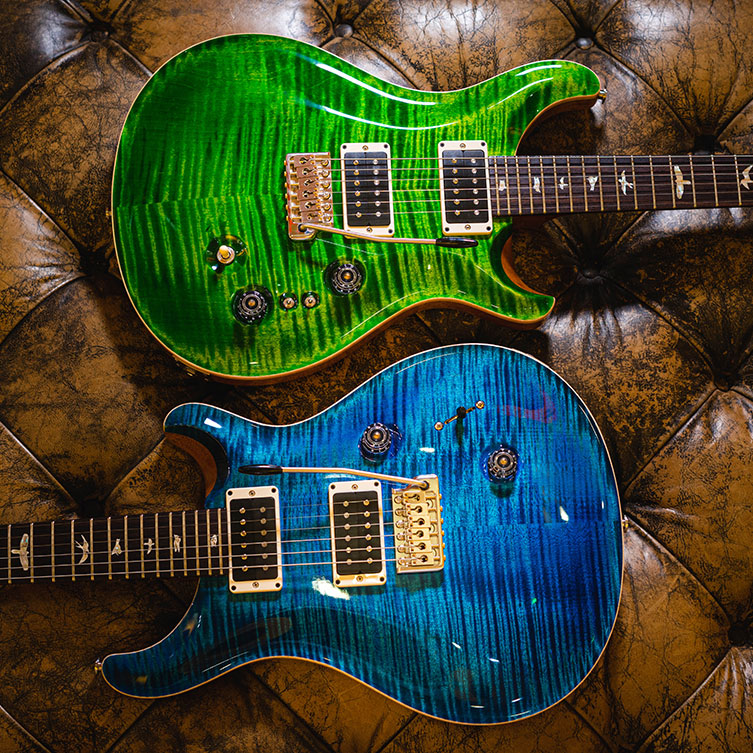
To introduce a wider audience to the PRS philosophy, the company launched the PRS SE (Student Edition) series in 2001.
These instruments were manufactured outside the United States, allowing PRS to significantly reduce production costs while preserving the brand's unmistakable styling, comfortable feel, and many of the design elements found on its American models. The new lineup quickly became a favorite among guitarists worldwide and soon developed into one of the company's most successful product families.
A Golden Era for PRS
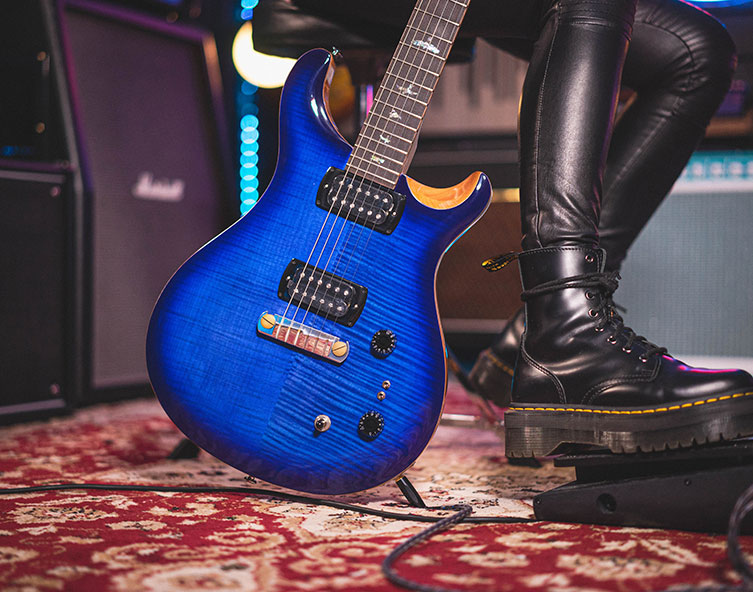
The early 2000s marked one of the most successful periods in the history of PRS Guitars.
Although the company was still involved in its well-known legal dispute with Gibson, it continued expanding its catalog while attracting an impressive roster of world-class musicians.
Artists such as Mark Tremonti, Dave Navarro, Orianthi, Mark Holcomb, David Grissom, Bernie Marsden, Mikael Åkerfeldt of Opeth, and the company's longtime friend and ambassador Carlos Santana officially joined the PRS family.
Working closely with these musicians, the company introduced signature instruments across both the premium American-made Core Series and the more affordable SE lineup.
Entering the Acoustic Guitar Market
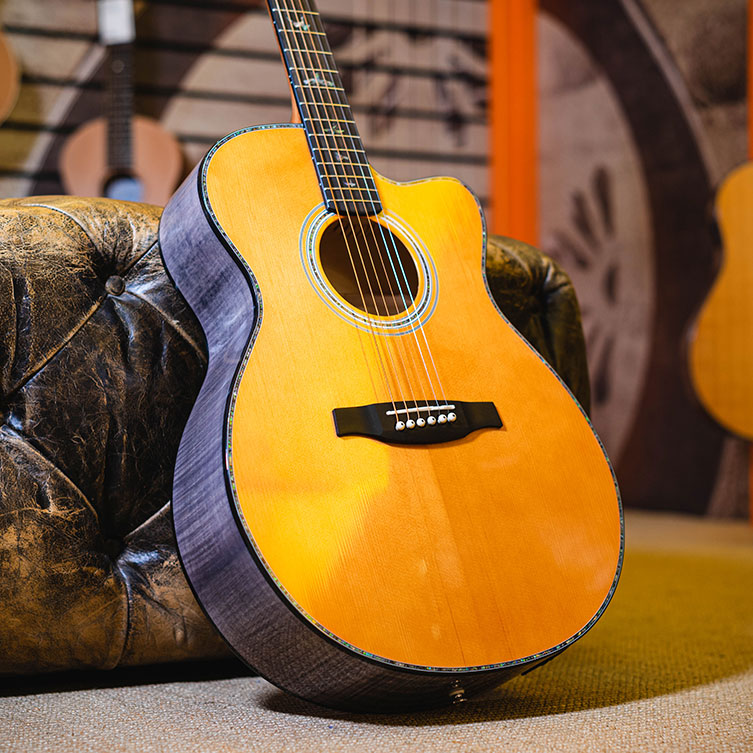
In 2009, PRS Guitars took another major step forward by introducing its own range of acoustic guitars.
The debut of the Angelus and Tonare models opened an entirely new chapter for the company.
The acoustic collection offered multiple body shapes and a variety of tonewood combinations within the SE Series, while the exclusive Private Stock program gave customers the opportunity to commission truly one-of-a-kind instruments built from rare woods with virtually limitless customization options.
Amplifiers and the Introduction of the S2 Series
The company's expansion extended well beyond electric guitars.
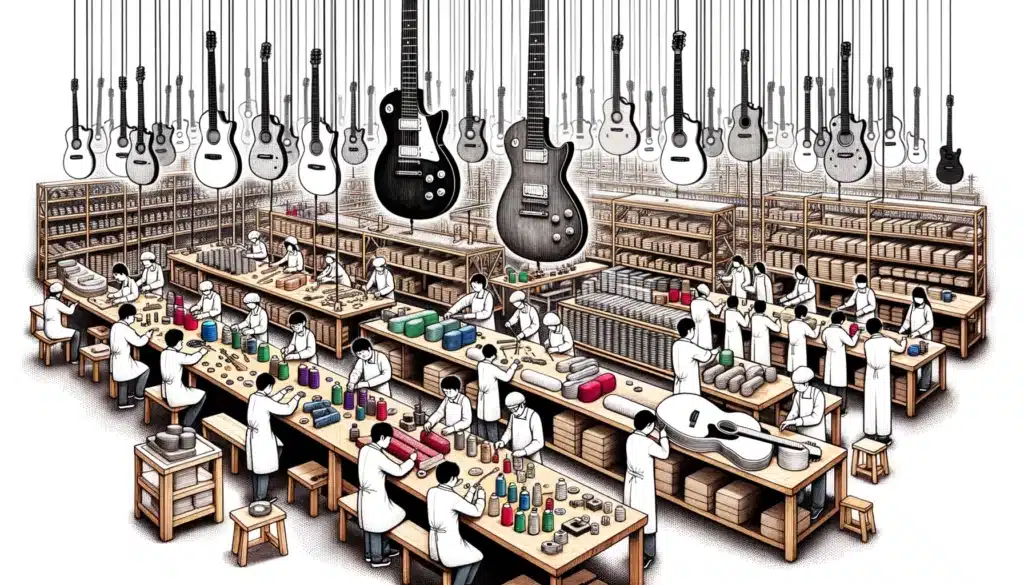
At the beginning of the new decade, PRS entered the tube amplifier market by releasing its own professional amplifier lineup designed for demanding musicians.
Another significant milestone arrived in 2013 with the introduction of the S2 Series.
Positioned between the premium American-built Core models and the more affordable SE range, the S2 lineup offered guitars manufactured in the United States while maintaining the classic Custom 24 design. To achieve a more attractive price point, the instruments incorporated several simplified features, including a beveled top instead of the traditional carved violin top and a three-way pickup selector replacing the standard five-way switch.
This strategy allowed PRS to deliver an American-made guitar at a considerably more accessible price.
The Collaboration with John Mayer
One of the most significant developments in recent years came when PRS Guitars announced its partnership with Grammy Award-winning guitarist John Mayer, following the conclusion of his long-standing relationship with Fender.
The announcement generated tremendous excitement throughout the global guitar community.
Together with John Mayer, PRS developed the Silver Sky, a guitar featuring a classic S-style body and bolt-on neck, carefully designed to meet the artist's exact specifications.
The model became an international bestseller almost immediately after its release.
Its success continued with the launch of the PRS SE Silver Sky, a more affordable version that made one of the world's most sought-after signature guitars available to an even broader audience of players.
The PRS Pulse Artist Program
The outstanding reputation of PRS Guitars has always attracted talented musicians eager to become official representatives of the brand.
However, the company chose to support more than just internationally established artists.
In 2020, PRS introduced the PRS Pulse Artist Program, specifically created to help promising up-and-coming musicians.
Talented guitarists actively performing in their local music scenes while using PRS instruments were invited to apply for the program and receive support from the company.
Developed in cooperation with authorized PRS dealers, the initiative helps emerging artists expand their careers while strengthening the global PRS community.
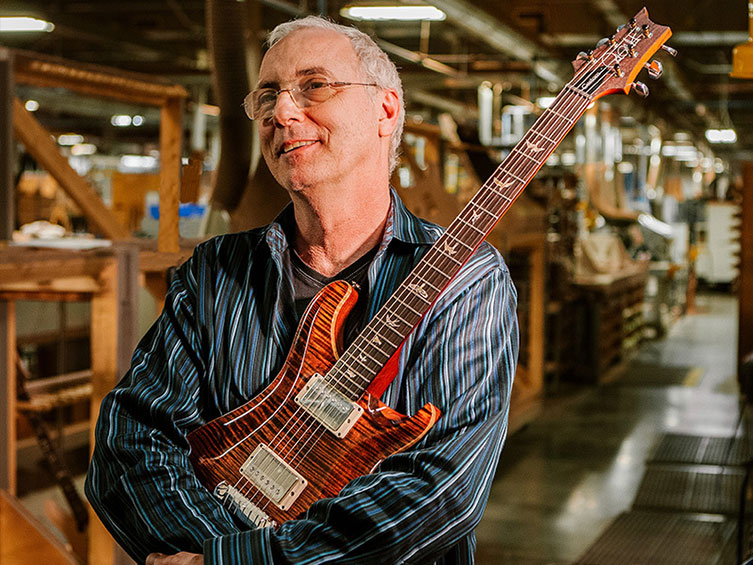
Believe in Your Dreams
The story of PRS Guitars represents far more than the growth of a successful guitar manufacturer.
It demonstrates how talent, perseverance, and genuine passion for craftsmanship can reshape an entire industry.
From a small workshop in Annapolis to becoming one of the world's most respected guitar builders, the journey of Paul Reed Smith continues to inspire countless musicians, luthiers, and guitar enthusiasts.
When Paul Reed Smith was once asked about the most important lesson he had learned throughout his career, his answer was remarkably simple:
"Believe in your dreams."
For decades, those words have remained the guiding philosophy of PRS Guitars, reflected in every instrument that leaves the company's production line.

