

🎸 “It just seemed Looney Tunes to me”: Paul Reed Smith shuts down the myth that you “can’t play solos” on a 7.25-inch fretboard
Feb. 27, 2026, 9:15 a.m.
Why the classic PRS Silver Sky neck radius is a deliberate design choice — not a limitation
Despite their massive commercial success, PRS Silver Sky guitars have not been immune to criticism. One of the most debated aspects is the traditional 7.25-inch fretboard radius, which some players claim makes soloing more difficult.
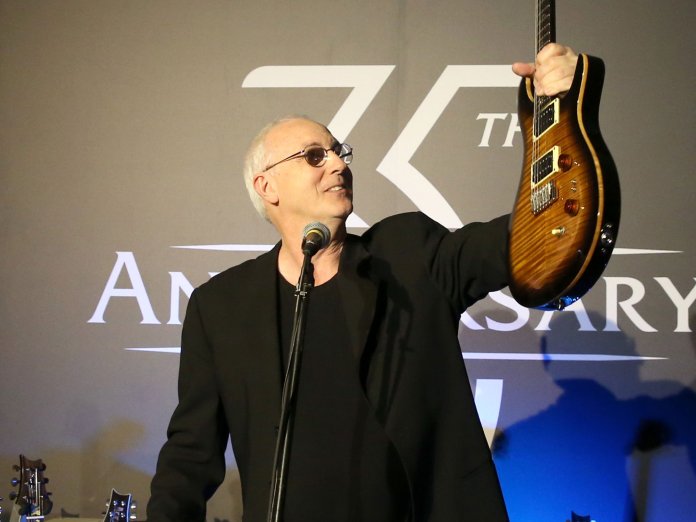
By the numbers, however, the story tells a different tale. The PRS Silver Sky, and especially the more affordable SE Silver Sky, have become two of the most successful electric guitar launches in recent memory. The SE model topped Reverb’s list of best-selling electric guitars for two consecutive years in 2022 and 2023.
As with any widely adopted instrument, increased popularity inevitably brings louder critics. Much of the pushback has focused on the smaller radius used on the premium core Silver Sky models, with detractors arguing that the design choice limits technical playing.

At the heart of the debate lies the fine detail of guitar construction. Advocates of flatter fretboards suggest that a larger radius allows for lower, more consistent action across all six strings and reduces the risk of notes choking out during string bends. Conversely, a tighter radius is often associated with a more curved surface that can, under certain conditions, interfere with aggressive bending.
However, PRS founder Paul Reed Smith has little patience for the claim that such guitars are unsuitable for lead playing. In a recent appearance on the Zak Kuhn Show, he made his stance abundantly clear.
“When I was a kid, nobody ever said you couldn’t play solos on a Telecaster or a Stratocaster,” Paul Reed Smith said. “That idea is brand-new internet mythology.”
He went on to describe the extensive development process behind the Silver Sky, which was designed in close collaboration with John Mayer.
“We tried every single radius, every scale length, every neck position, every body shape. We tried absolutely everything,” Smith explained. “And John Mayer said, ‘I want this guitar to feel like the instruments I already know. I don’t want to have to look down when I’m playing.’”
That decision ultimately led to the 7.25-inch radius — a choice that immediately sparked controversy.
“Everybody pushed back,” Smith recalled. “‘Bad idea. Bad idea. You can’t play solos on a 7.25-inch radius.’”
Despite the criticism, Paul Reed Smith says he found the argument deeply flawed.
While acknowledging that smaller-radius fretboards can sometimes cause bent notes to choke out, he takes issue with the broader claim.
“I understood the choking argument,” he said. “But the idea that you couldn’t play solos on something people have been soloing on forever just seemed Looney Tunes to me.”
He also expressed frustration with the confidence of some critics.
“What hurts is how adamant people are that they know exactly what they’re talking about. Sometimes they do. Sometimes they don’t,” Smith added.
To underline his point, he cited iconic recordings that were made on traditionally radiused fretboards.
“One of the solos in ZZ Top’s La Grange sounds like it was played on a Stratocaster, and it sounds great to me. Sultans of Swing by Dire Straits — don’t even get me started. And Machine Gun by Jimi Hendrix is just ridiculous,” he said.
Interestingly, John Mayer himself has also played down the importance of fretboard radius when it comes to playability. Last year, he even suggested that strap height has a greater impact on how a guitar feels.
“I looked at the guitars I loved the most, and they were all 7.25 inches,” John Mayer said when discussing the Silver Sky.
“That became my measuring stick. Even now that I understand the math, I don’t think about it. The difference between 7.25 and 9.5 inches is less significant than your strap being an inch higher or lower. I’ll fight anyone on that.”

