

“A real privilege”: YouTuber gets to play Gary Rossington’s legendary Free Bird Les Paul/SG — and of course he tries Free Bird
Dec. 11, 2025, 9 a.m.
Lynyrd Skynyrd’s Free Bird is one of the most iconic rock tracks ever written — a rite of passage for countless guitar players. But very few musicians have ever had the chance to play its signature lines on the actual guitar used on the original recording.
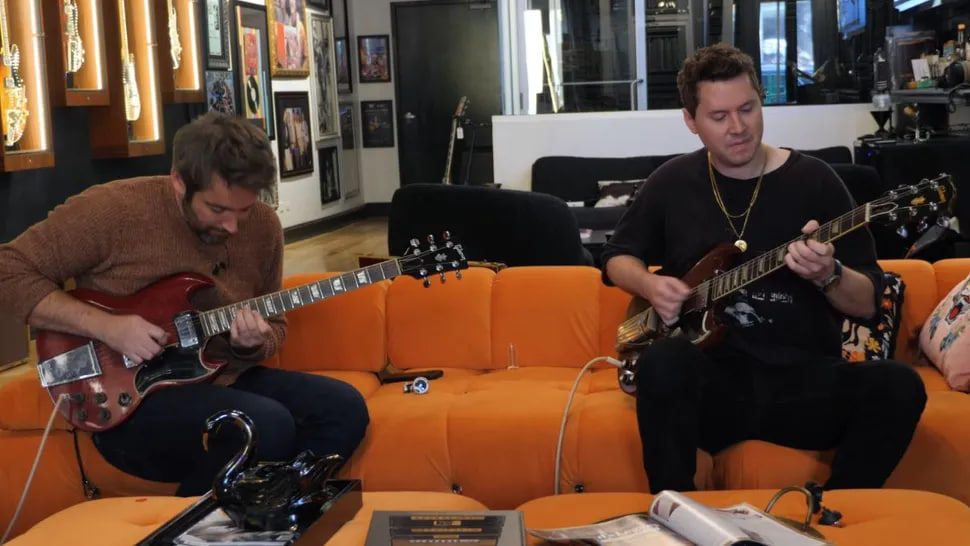
YouTuber Tyler Larson of Music Is Win recently visited Chicago Music Exchange with fellow guitarist Nathaniel Murphy, where they were granted access to a truly historic instrument: Gary Rossington’s 1961 Cherry Red Gibson Les Paul/SG.
A guitar soaked in history
This is the very instrument Rossington used to track Free Bird back in 1973. It still rests in its original hard case, marked with his stencil-printed name and covered in the wear of decades on the road. Only a handful of musicians have ever taken it onstage, including Blackberry Smoke’s Charlie Starr.
Holding the guitar, Larson and Murphy can hardly contain themselves:
“It’s insane to think I’m actually playing this,” Murphy says.
“It smells ancient… important,” Larson adds.
“We almost don’t believe it. We’ll need to watch the footage back later. It’s a true privilege.”
A careful nod to a monumental solo
Larson plays a few recognizable Free Bird licks and even picks up Rossington’s original glass slide — joking that it feels “almost sacrilegious.” He refuses to dive into the entire solo, out of pure respect for the legacy of the instrument.
A guitar that still takes the stage
It was recently confirmed that this historic Les Paul/SG will continue making appearances at high-profile shows. Charlie Starr performed with it again just two weeks ago — and yes, he played Free Bird.
Rossington once recalled the song’s rocky beginning:
“Everyone told us we were crazy to put it on the first album — it was too long. The label begged us not to include it. When it came out, they butchered it with edits until it became big enough that no one cared anymore.”
For him, it was still “just a song.”
For the rest of the world, it's a cornerstone of rock guitar history.

