

Wembley Rebellion: How Nuno Bettencourt Defied the Rules to Honor Queen
May 27, 2026, 9:15 a.m.
Rock history is full of unforgettable performances, but the 1992 tribute concert for Freddie Mercury at Wembley Stadium stands in a league of its own. Among its most talked-about moments was the bold and emotional set delivered by Nuno Bettencourt and Extreme — a performance that broke the rules in the name of respect for Queen.
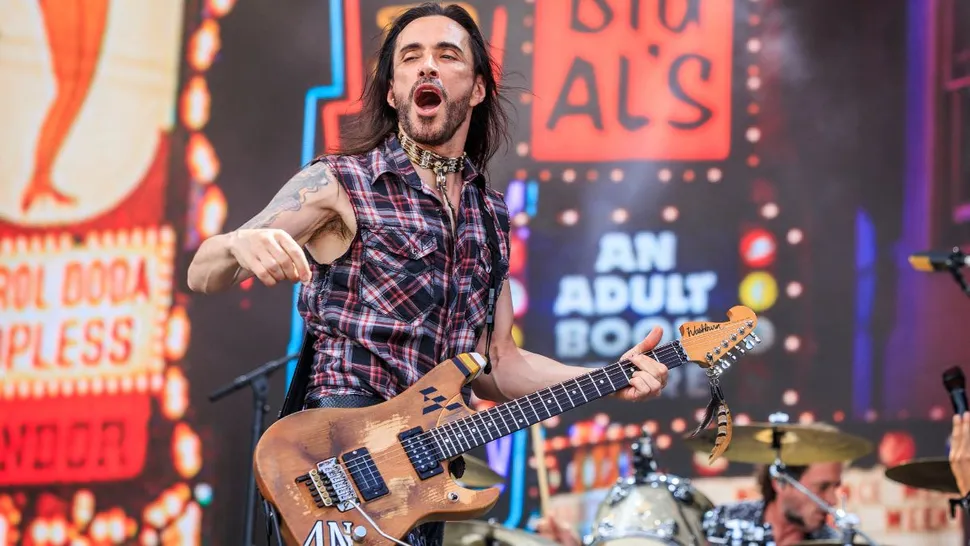
According to Bettencourt, the show remains one of the most meaningful experiences of his career — not just musically, but emotionally.
The event organizers, including Brian May, had made one thing very clear: none of the participating artists were allowed to perform Queen songs during their individual sets. That honor was reserved strictly for the grand finale featuring an all-star lineup. The bill included giants such as Metallica, Guns N’ Roses, and Def Leppard.
But Nuno Bettencourt had a different idea.
Held on April 20, 1992, the concert drew 72,000 fans to Wembley and millions more watching around the world. It was organized to raise awareness about AIDS — the disease that claimed Freddie Mercury’s life.
After Metallica opened the show with a powerful trio of songs — Enter Sandman, Sad But True, and Nothing Else Matters — Brian May stepped forward to introduce Extreme. As Bettencourt later recalled, May did so with visible reluctance, aware that the band had plans to go against the agreed format.
Reflecting on that moment, Bettencourt shared that May’s introduction was incredibly meaningful. While he would usually respond modestly, he admitted that the praise felt completely justified — Extreme truly understood the spirit and legacy of Queen.
Instead of playing their own material, the band took a bold step and performed an entire medley of Queen classics. Their set included Bohemian Rhapsody, Keep Yourself Alive, and Stone Cold Crazy, before closing with a stripped-down, emotional rendition of More Than Words performed by Bettencourt and vocalist Gary Cherone.
Many of these songs were later performed again by Queen alongside guest vocalists such as James Hetfield, Roger Daltrey, and Seal. Still, Extreme’s tribute stood apart — and came with consequences.
Bettencourt openly admits the band faced backlash for ignoring the rules. Artists had been explicitly forbidden from playing Queen songs, yet Extreme went ahead anyway.
He explains that the decision came from a deeply personal place. The band wanted to express just how much Freddie Mercury had influenced them. For Bettencourt, the only authentic way to do that was to perform the music itself — even if it meant taking a risk.
He also pointed out how intimidating the situation was, with legends like David Bowie, Elton John, Guns N’ Roses, and Metallica watching from the sidelines.
Still, he believed it was the only way to truly ignite Wembley — the very stage that Queen had made iconic.
Looking back, Bettencourt describes the experience as almost surreal. He recalls feeling waves of energy and emotion throughout the performance — something so powerful that he has never experienced it again since.
He also expressed gratitude to the Queen fans in attendance, emphasizing that performing for them was both an honor and a privilege — a moment the band will always cherish.
In a 2021 interview, Bettencourt revealed more about his conversation with Brian May before the performance. It was, he says, the first and only time he ever argued with him.
May strongly encouraged the band to stick to their own songs and represent themselves, in line with the rest of the lineup. He repeatedly asked them not to perform Queen material.
Eventually, however, May stepped back and told them the decision was theirs. Although he wasn’t particularly happy about it, he gave them his blessing.
Extreme went on stage and executed their vision — and, as Bettencourt emphasizes, they have never regretted it.
In later years, Brian May has continued to honor Freddie Mercury’s legacy in various ways. He has spoken about how Mercury’s influence is reflected in his first signature Gibson guitar, and he also made a public return after recovering from a stroke, performing Bohemian Rhapsody with Benson Boone at Coachella.

