

Brian May: “He was beyond belief. Nobody could play like that in those days”
Jan. 20, 2026, 9:15 a.m.
Queen’s Brian May on the fireball guitarist who changed his view of the electric guitar forever
There’s no denying that Jimi Hendrix rewrote the rulebook for electric guitar. But long before he left New York City for London — where he sent shockwaves through the blues scene and nearly derailed Jeff Beck’s career — another player had already sparked a revolution in the mind of future Queen guitarist Brian May.
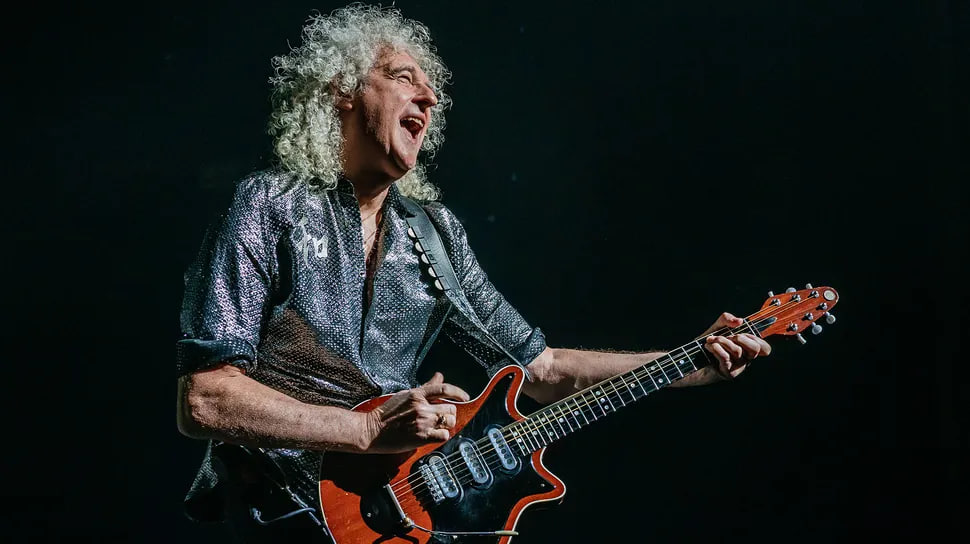
By the end of the 1960s, May was in his early twenties. While Rory Gallagher would go on to have the greatest influence on his signature tone — inspiring him to adopt two hugely important pieces of gear into his rig — it was another British blues-rock icon who showed him what the instrument was truly capable of.
“He was incredible. Nobody could play like that back then”
“He was unbelievable. Nobody could play like that in those days,” May says of Deep Purple cornerstone Ritchie Blackmore.
May made these comments in the 2015 documentary The Ritchie Blackmore Story. For him, it was Blackmore’s “wild and untamed” style that left the deepest impression.
“It’s hard to imagine now,” he explains. “It’s like going back to a time before there were wheels. People simply didn’t play like that back then. You were watching jazz players who were very safe and rather mellow.”
Blackmore’s weapon: a legendary Gibson ES-335
Throughout the 1960s, Blackmore’s guitar of choice was a 1961 Gibson ES-335 — an instrument thrust upon him by future amp legend Jim Marshall. That was the guitar he used to launch Deep Purple, and May was there right at the beginning of that journey.
While studying at college, May fell in love with the band’s 1968 debut album, Shades of Deep Purple. Even then, Blackmore’s reputation was already firmly established.
“Ritchie Blackmore was already a legend”
“Ritchie Blackmore was already a legend,” May recalls. “At that point, I was playing with future Queen drummer Roger Taylor, and Roger had previously worked with Ritchie in his earlier bands down in Cornwall.
Ritchie was a figure of mystery and wonder. He could play incredibly fast, incredibly accurately, and with huge passion. He was thrashing the guitar around, using the tremolo bar, and turning the instrument into something completely different.”
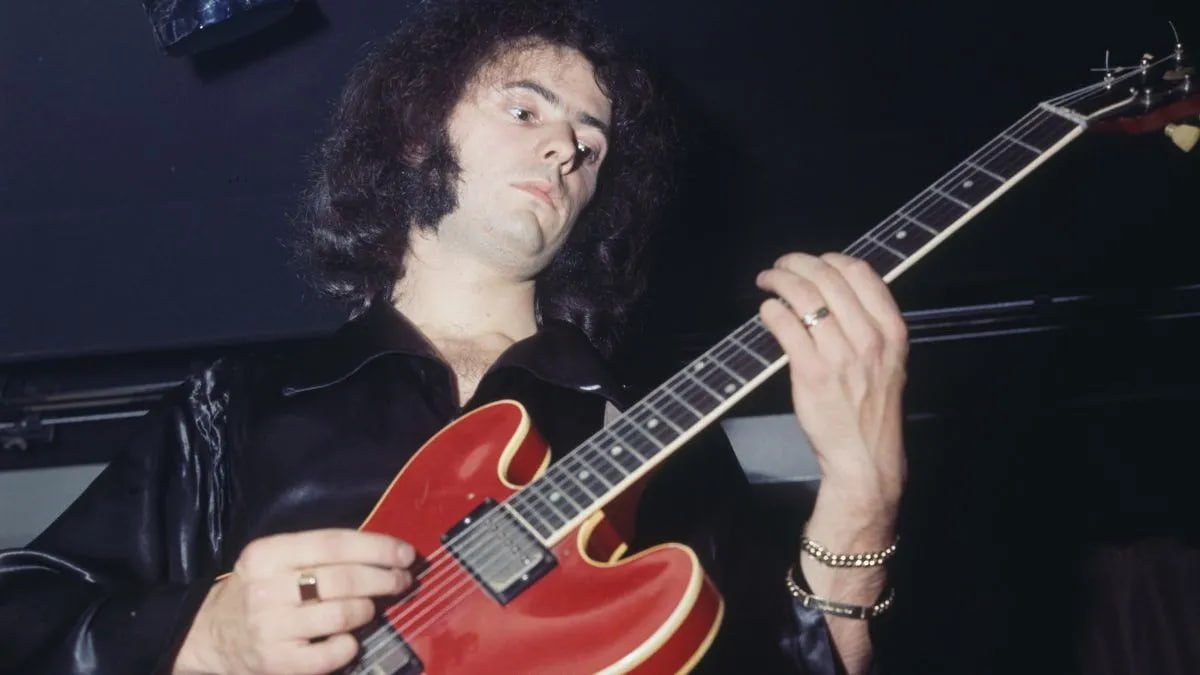
“He was a fireball”
“Ritchie came along and he was a fireball,” May continues. “He was beyond belief. His technique was astonishing. Where it came from, I have no idea. And this was all before Hendrix. Ritchie is a great creator and originator of the wild electric guitar.”
The breakthrough and the first Fender Strat
Despite Blackmore’s formidable reputation, Deep Purple’s early records only achieved modest success. Everything changed with the band’s second lineup and the release of In Rock in 1970, which marked the beginning of their rise to global fame.
Coincidentally, it was also the first album on which Blackmore played a Fender Strat, having switched after striking a deal with Eric Clapton’s roadie for one of Slowhand’s unused guitars.
Clashes, Rainbow, and a new chapter
The Mark II lineup represented the band’s peak, but tensions within the group continued to build. Although Blackmore stayed on for several more albums, he eventually joined forces with Ronnie James Dio in Rainbow before realizing that life in a rock band wasn’t what he had expected.
A legacy that still burns
Today, Blackmore is back on the road after a series of health scares earlier this year cast doubt over his future. His hard-rock days may be behind him, but the impact he has had on the guitar world is still being felt around the globe.

