Audiophile Shockwave: Black Sabbath Reel-to-Reel Reissue Hits Hard
The iconic label Rhino has prepared a truly monumental treat for collectors and die-hard fans of uncompromising sound, launching a powerful statement against modern digital streaming. The first two foundational albums by Black Sabbath («Black Sabbath» and «Paranoid») are officially available on reel-to-reel tape — a premium audiophile format recorded in real-time at a 1:1 ratio directly from American analog master tapes.
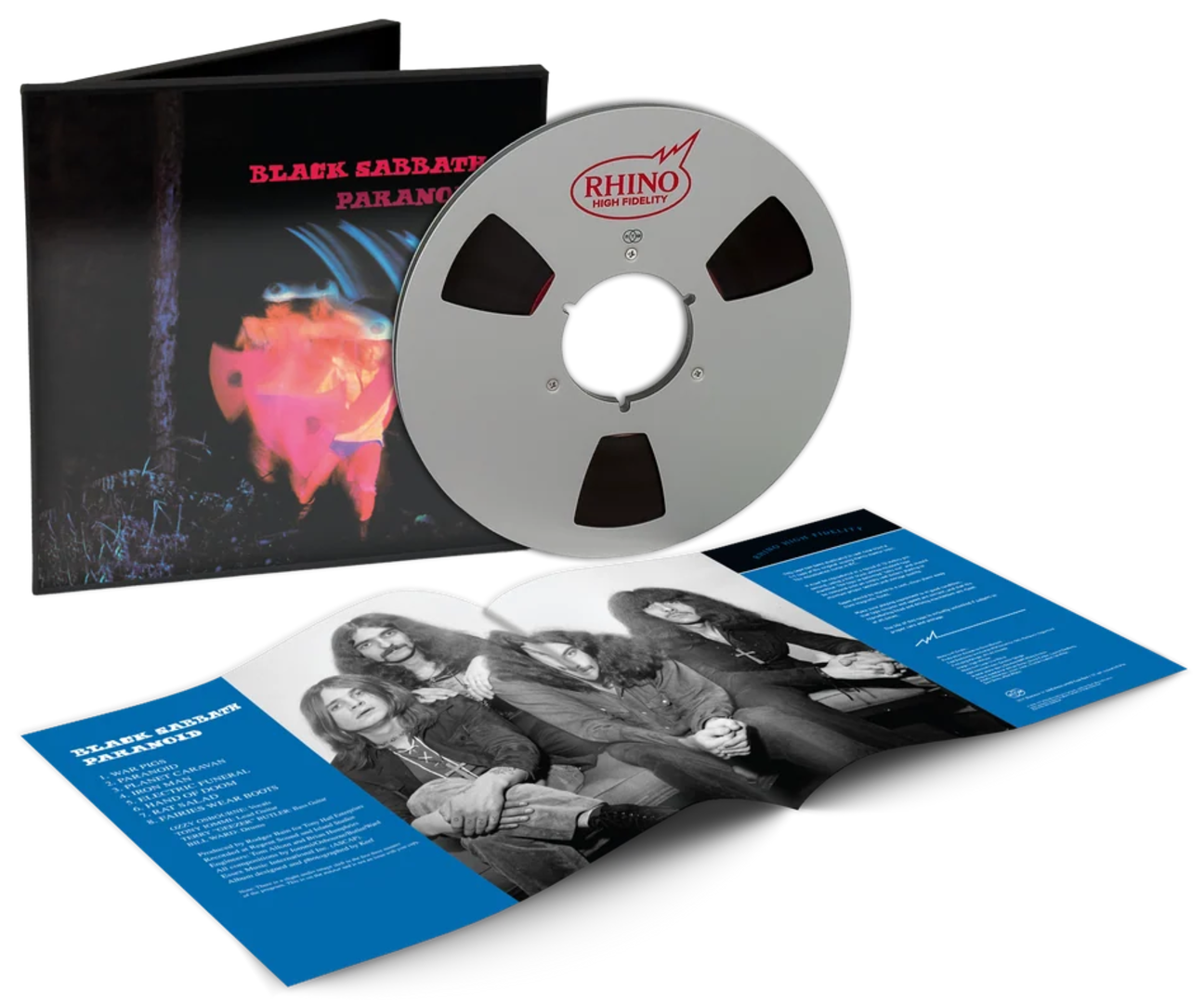
The label asserts that this meticulous process delivers a listening experience as close to the master recording as physically possible, fully preserving the dynamic range of the source material.
This exceptional release utilizes a two-track tape running at 15 inches per second (ips) under the IEC equalization standard. The media is spooled onto a heavy-duty 10.5-inch metal reel using high-grade RTM Lpr90 tape stock. The run is strictly limited to 500 copies worldwide, available exclusively through Rhino.com.
The Heavy Metal Monolith: Technological Leap or Audiophile Fetish?
It is entirely unnecessary to restate the foundational importance of these records to the heavy metal genre. However, the technical merit of this release remains a subject of intense debate: does it offer a genuine engineering advantage, or is it pure audiophile fetishism (which is personally quite welcome, though it is hard not to feel sorry for beginners)?
The tape specification featured in this reissue belongs to the professional studio domain rather than consumer 1970s decks. At 15 ips, a high-end tape machine delivers an impressive frequency response, extremely low distortion, crisp transient attack, and significantly lower noise floors than standard 7.5 ips consumer recordings. Utilizing the full width of the tape for just two tracks also yields a superior signal-to-noise ratio compared to four-track domestic formats.
Analog tape naturally rounds off transient peaks and introduces pleasant harmonic distortions as the recording approaches saturation levels. Premium studio gear generates a rich analog saturation — not necessarily replicating how the band sounded in the room, but introducing pleasing sonic coloration. As a result, the drums, distorted guitars, and bass lines feel simultaneously massive, dense, and less fatiguing to the ear. For early Black Sabbath, this is arguably the ultimate source material: a heavy midrange, organic drums, and an uncompressed original mix. If the reel was mastered straight from a pristine analog safety copy without aggressive limiters or digital processing, the sonic gap compared to standard streaming versions could be astronomical.

The Realities of Analog Playback
That being said, a physical tape cannot mathematically contain more information than the master it was duplicated from. It remains a copy—albeit a magnificent one. Realistically speaking, a pristine High-Res digital file captured directly from that same master via a modern analog-to-digital converter is potentially more accurate to the source.
To fully appreciate such a release, the listener needs a properly calibrated reel-to-reel deck, correctly aligned playback heads, appropriate equalization, and a high-end audio chain. Want to ruin a friend financially? Gift them a vintage reel-to-reel tape machine (or a top-tier turntable). On a mediocre or poorly calibrated playback system, a costly tape can easily underperform compared to a standard digital file.
All in all, Rhino’s analog reissue is brilliant. The strict limitation of 500 copies makes perfect sense — across the entire planet, it appeals to only a few hundred dedicated enthusiasts. Of course, we would love to own one too, but for now, we will simply wait until it is transferred into a proper high-resolution digital format!